#TakeOn Climate Change
[video:https://vimeo.com/107056361?byline=0]
Connecting to #takeon climate change. Find out more about Connect4Climate.

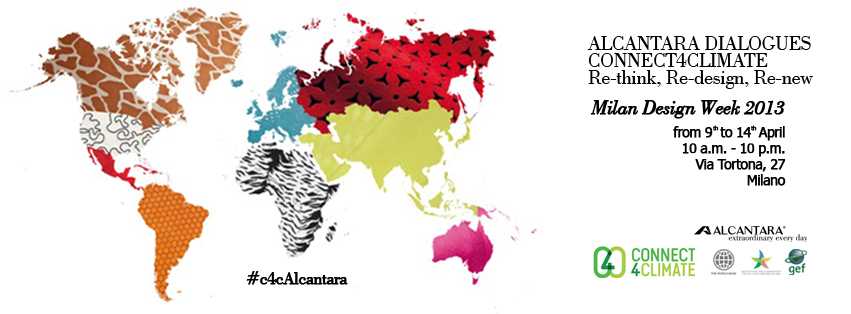
Connect4Climate partnered with carbon-neutral Italian private sector company Alcantara to open a 300-square meter pavilion space at the Temporary Museum for New Design during Milan Design Week (April 9-14, 2013). From April 9th to 12th, 2013, Connect4Climate and Alcantara co-hosted the Alcantara Dialogues/Connect4Climate: Re-Think, Re-Design, Re-New – a series of panel discussions on sustainability featuring high-profile innovators from the worlds of design, architecture, fashion, CSR, global advocacy, entertainment, and the arts (full program below).
As World Bank Group President Jim Yong Kim has said, “To deliver bold solutions on climate change, we need to listen to and engage broader and more diverse audiences.” These discussions did just that – by stimulating new conversations with influencers from a wide variety of disciplines and creating a greater understanding of how sustainable design and business practices can impact and change behavior to mitigate climate change.
Internationally-renowned architect and art director Giulio Cappellini designed theConnect4Climate/Alcantara pavilion using carbon-neutral Alcantara materials to create a sensory experience that will also feature a C4C exhibition on climate change issues and action for the more than 300,000 visitors during Milan Design Week.
Alcantara’s CEO and Chairman, Andrea Boragno, said, “We view sustainability as an opportunity, not a cost. Given our shared objectives and values, partnering with the World Bank's Connect4Climate is a natural step for Alcantara - not only because of our long-standing commitment to carbon neutrality, but also because of our desire to provide a platform for meaningful dialogues which will spur people to re-think, re-design, and re-new.”
All events will take place at:
Temporary Museum for New Design
Superstudio Più, Via Tortona 27
Milan, Italy
Browse the programme below or download it.
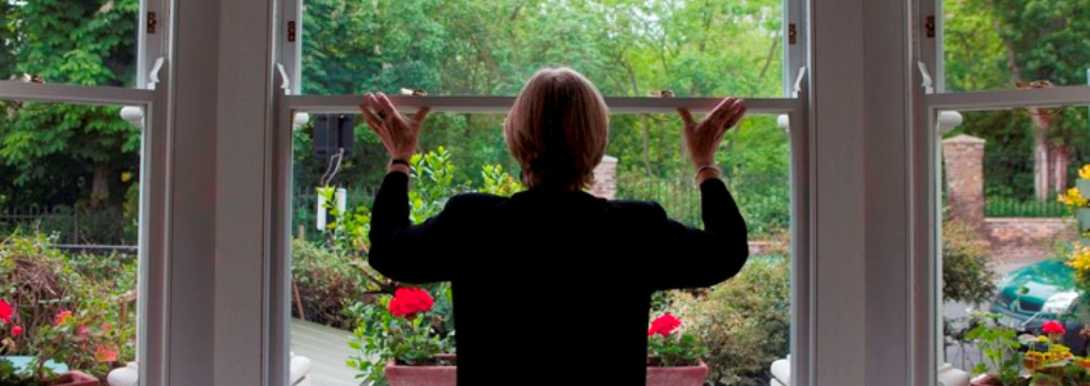
There are 26 million homes in the United Kingdom. Together they contribute 27% of the UK's carbon emissions, making the housing sector a vital part of the goverment's committment to an 80% reduction in carbon emissions by 2050.
Since 2007, the award-winning SuperHomes network has promoted the benefits of eco refurbishment using free Open Days. Pioneering owners of some of the UK’s most energy efficient homes host free tours and Q&A’s each September. SuperHomes are older homes that have been refurbished for greater comfort, lower bills and at least 60% fewer carbon emissions.
Currently there are over 180 registered SuperHomes in the UK and over 70,000 people have visited one. The aim is to inspire visitors to take action to green their own homes, by providing actionable ideas, such as improving insulation, installing alternative heating sources or producing their own renewable energy. The network hopes to register 500 SuperHomes by 2020 and attract 2 million visitors.
.jpg)
Visitors at a modern SuperHome in Birmingham
It is estimated that as many as 80% of all UK homes that will be in standing in 2050 have already been built. Of particular concern are the 7 million solid wall properties, most of which are difficult to heat. To meet its target of an 80% reduction in carbon emissions by 2050, the UK should be refurbishing 600,000 homes a year. At the current rate of change it will take over 500 years to refurbish these homes.
Jurgen Huber, who recently joined the network says:
"My house is now 100% carbon neutral. Along with my wife and two children, we use and generate 3300 kWh of electricity. We have no gas connection so we cook with the most energy efficient induction cooker, we heat water with an electric instantaneous water heater, and we heat rooms with a highly air source heat pump and electric underfloor heating. This is only possible because we insulated the house to a very high standard."
Huber explains that the first phase of his home renovation was done on a budget of £4000. This paid for all insulation materials, the air source heat pump, an induction cooker, and LED lighting. The PV solar panels added afterwards cost £12,000 and were financed with a bank loan. In 8 years Huber may make a bit of money but that’s secondary. He wanted to prove that anyone can have a retrofitted energy neutral house on a tight budget.
"The result is that we’ve a very comfortable home that can be quickly heated or cooled at very little cost. At the same time we’ve maintained the 1920s period character of the property which is something we love."
Huber's testimonial is a good example of how the SuperHomes network harnesses the enthusiasm of pioneering households to demonstrate the benefits of switching to low energy living.
The network's open days help visitors gain the confidence to green their own homes. Free tours and Q&A sessions allow visitors to find out more about both the benefits and the challenges involved in refurbishing an older home.
Find out more about SuperHomes' September Open Days.
SuperHomes is a National Energy Foundation (NEF) project. NEF is an independent charity working to improve the use of energy in buildings.
[video:https://vimeo.com/95527812]
White Roofs is an Action4Climate documentary about another initiative to reduce household emissions, the White Roof Project in New York. Entered by Matt Dunne.
Every year, 24 billion tons of fertile soils are lost to us from erosion while 12 million hectares of land are degraded through drought and the steady encroachment of desert. With every hectare of land we lose to drought or the desert, we also lose tons of potential grain which makes life even more of an ordeal for the 1.5 billion people worldwide who make their living off degraded land.
But as we celebrate World Desertification Day this year, there is also new hope as two billion hectares of degraded land have the potential to be restored. In the Maradi and Zinger regions of Niger, sustainable practices led to the spontaneous regeneration of 200 million trees that now secure the livelihoods of 4.5 million people. Regenerated trees such as Faidherbia albida, apple-ring acacia, used for food, fodder and nitrogen fixing have been protected and managed by farmers with no tree nurseries, no planting and nearly no cost – just dedication. On Mali’s Seno Plains, farmers have protected and managed trees on 450,000 hectares of their land.
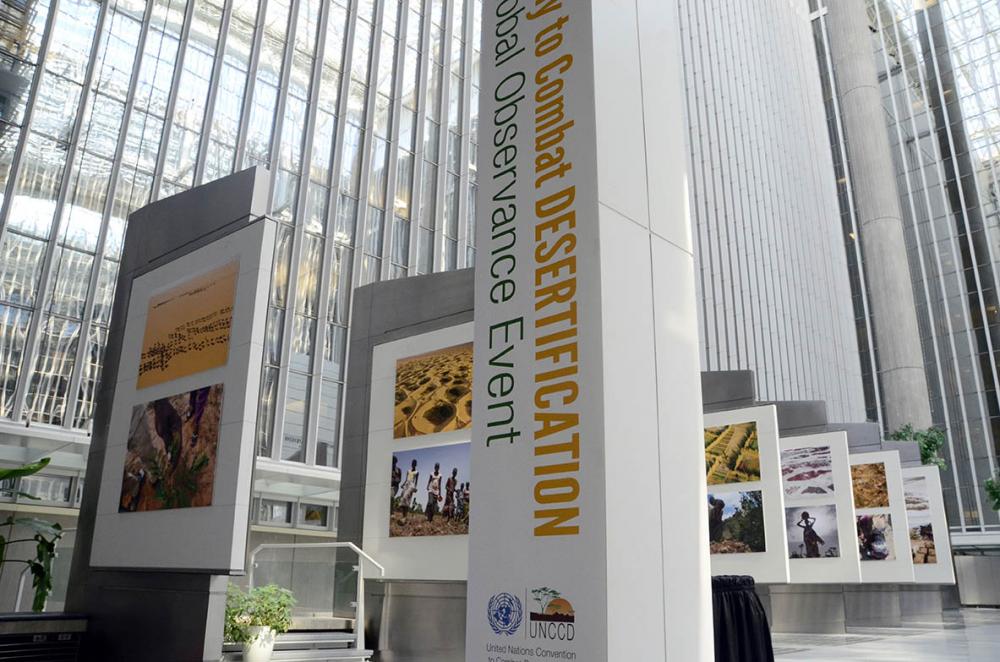
Word Day to Combat Desertification Global Observance Event: “Land Belongs to the Future – Let’s Climate Proof It.”
To keep that hope alive, hundreds of thousands of people across the world recently celebrated World Day to Combat Desertification, along with many at the World Bank, to raise public awareness about desertification, and promote a global collective response, especially in Africa.
The global observance organized by the UN Convention to Combat Desertification (UNCCD) and hosted by the World Bank in partnership with the Global Environment Facility, TerrAfrica and Connect4Climate, focused on the theme of ecosystem-based adaptation, with a rallying call“Land Belongs to the Future – Let’s Climate Proof It.”
“Africa is already feeling the harsh bite of climate change, especially in the countries of The Sahel and others affected by prolonged drought and desertification. We are working closely with communities to build up their resilience to adverse weather conditions and invest in climate-smart agriculture,” said AFRVP Makhtar Diop in a special video address to the special Bank-sponsored event. “Our natural allies in this work are collaborative agencies such as TerrAfrica, and UNCCD, which champion existing local innovations that safeguard the environment and create ecosystems that keep the world’s lands alive and productive.”
Climate change is pushing our ecosystems to breaking point and the failure to act may result in food, water, income and security threats. The price to fix degraded land on a large scale and minimize these outcomes is only a fraction of the cost paid through social and political unrest, conflict, forced migration or internal displacement. Restoring a hectare of degraded and fragile soils, in The Sahel, costs as little as US$ 25 to 65.
“The international community must find ways to secure the long-term resilience not only for ecosystems, but also for people and for the poor who are the most affected by desertification,” said Mahmoud Mohieldin, Corporate Secretary and the President’s Special Envoy for the MDGs, in his opening remarks. “To address the unique issues faced by the most vulnerable, we must invest in applicable solutions that are transformative, and can be scaled up.”
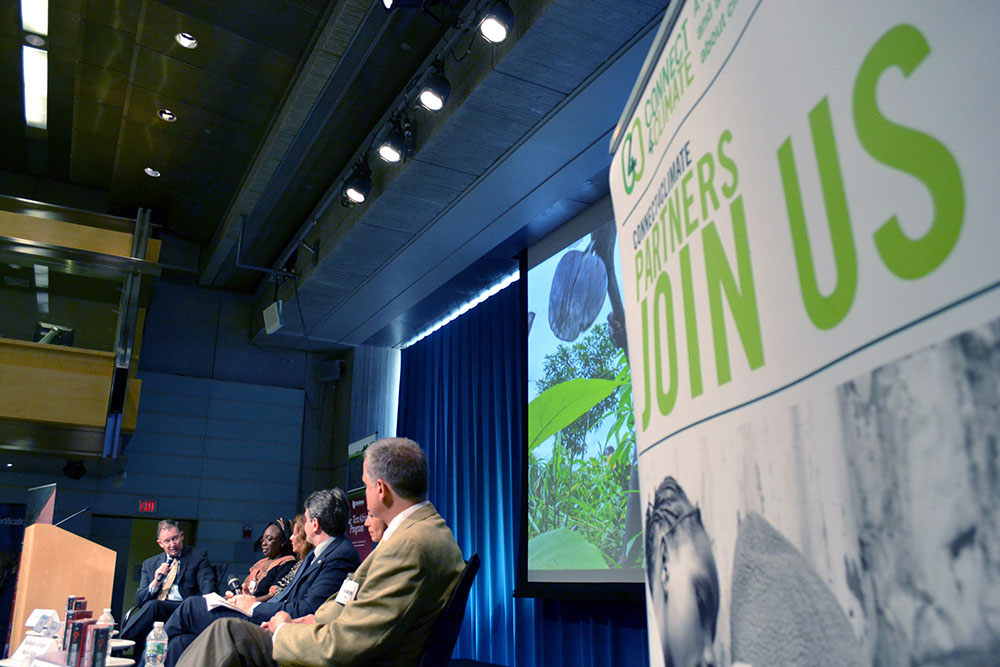
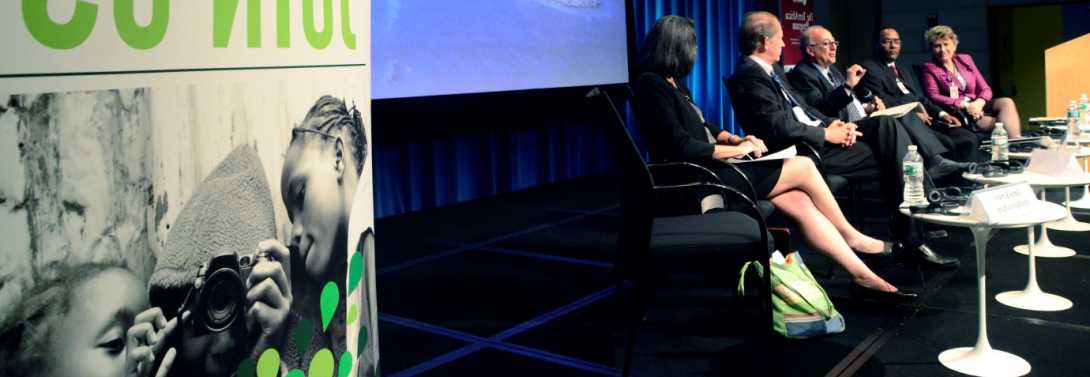
Panel discussion at World Day to Combat Desertification "A Conversation on Drylands: Perspectives from Africa, LAC and the Middle East"
Desertification-fighting champions include Ethiopia whose success was featured through the Bank-produced documentary Greening Ethiopia’s Highlands: A New Hope for Africa. The movie highlights how a landscape approach was used to manage land, water and forest resources to meet the goals of food security and inclusive green growth.
Niger’s effort in the restoration of degraded land and reforestation was also highlighted in the keynote address by its Prime Minister, Brigi Rafini. “Niger is one of hardest hit by desertification with the drying up of Lake Chad,” he said. “But, we have achieved incredible results on the sustainable management of ecosystems through local solutions and the Great Green Wall Initiative. The fight against desertification and climate change is within our reach.”
However, as Magda Lovei, ENRM Sector Manager, remarked, commitments from the top, mobilization at the grassroots and strong policies are necessary to find and deliver solutions. “If all these ingredients for success can be put in place and people do the right thing, nature can heal itself,” she said.
Juergen Voegele, Senior Director for the Agriculture Global Practice, reiterated the need for an approach that lets nature do the job. “Landscapes don’t need to be managed,” he said. “It is the people that need to be managed.”
This point was emphasized with the screening of the Why Poverty? documentary Solar Mamas, which depicts the encouraging training of illiterate mothers and grandmothers to become solar engineers through the Barefoot College in India. The film (embedded below) was screened following a presentation by Raffaelo Cervigni, World Bank Lead Environmental Economist, on the flagship drylands report to stimulate the panel discussion A Conversation on Drylands: Perspectives from Africa, LAC and the Middle East.
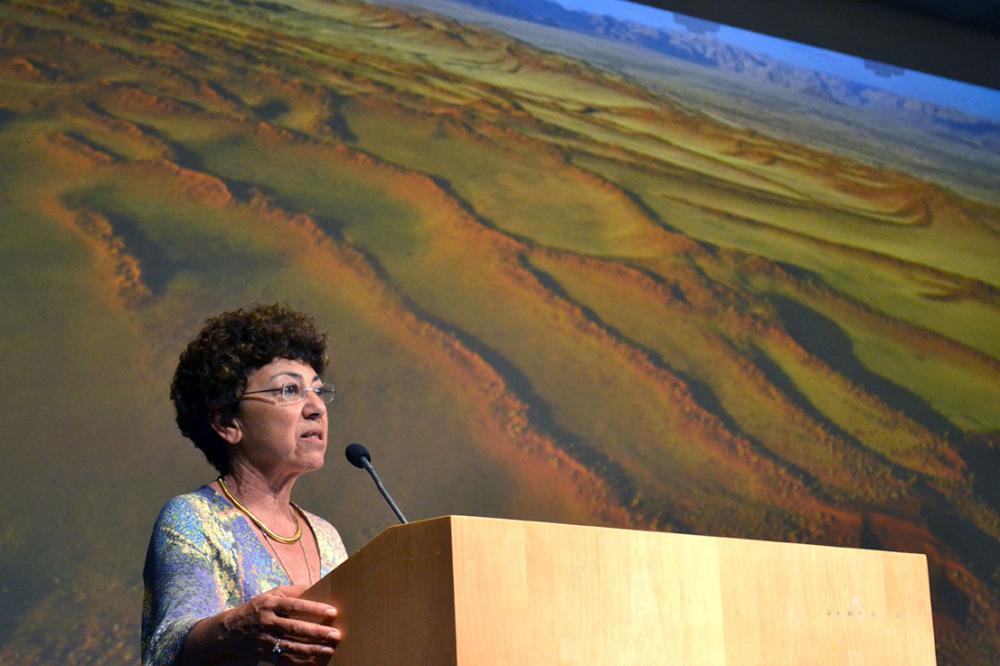
Monique Barbut, Executive Secretary, UNCCD
In her closing remarks, Monique Barbut, Executive Secretary, UNCCD, reiterated that insufficient attention is paid to land in climate change adaptation. She emphasized that it is not a matter of inventing solutions - many proven and effective measures exist and should be brought to scale. She pointed out that, while climate change negotiations tend to center around the largest greenhouse gas emitters, when climate change is put in terms of land, the negotiation dynamics can change as 169 countries claimed to be affected by desertification.
There is hope that, as the global community is debating the post-2015 development agenda and the future of climate action, the path chosen would lead towards land-based resilience.
Original post can be accessed on the World Bank website.
[video:https://vimeo.com/96813617]
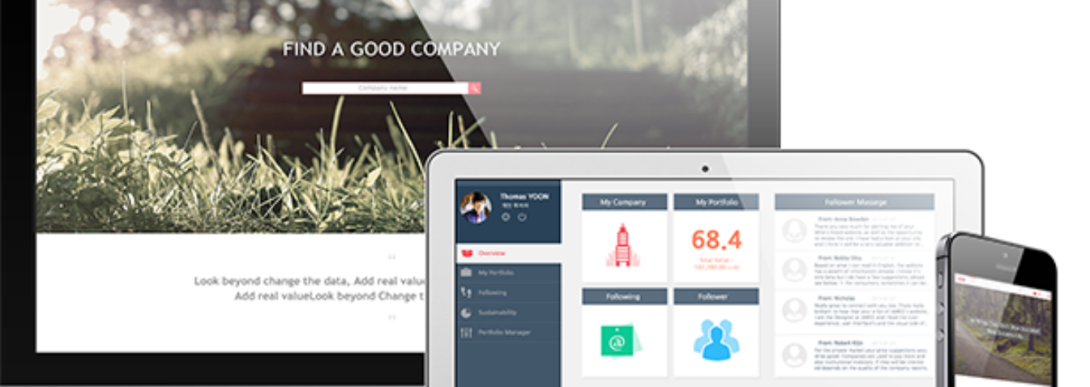
Connect4Climate is very excited to announce our new partnership with Whos Good: The Institute for Sustainable Development, an innovative, cutting-edge web platform to provide dynamic data on Environmental, Social, and Governmental (ESG) risks for companies.
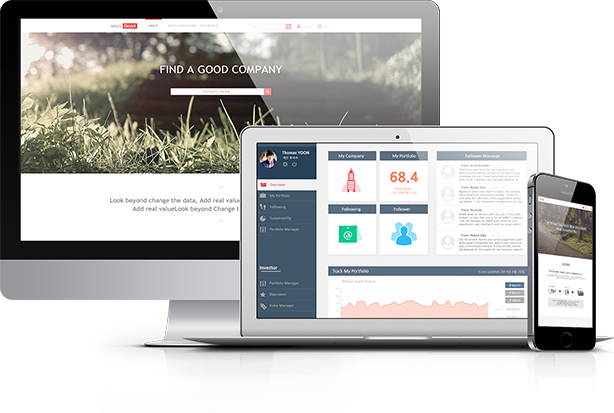
Based in Korea and the United States, Who's Good allows corporations and companies to identify and manage the Environmental, Social, and Governance issues thus enabling them to monitor risk over time by identifying trends and create customized watch-lists and tailored alert services.
Who's Good believes that because businesses are key components of any society, corporate responsibility is fundamental. Environmental, social and governance issues have an impact on economies and financial markets. Thus, ESG factors must be incorporated into financial factors and the investment process of any company. By helping companies do this, they limit future risks by minimizing harm to people and planet.
We, at Connect4Climate, are thrilled to learn more about social responsibility practices for accountable companies. We welcome this innovative entrepreneur to our partnership team and look forward to joining forces to find ways to shift to a more sustainable future!

We at Connect4Climate are very excited to announce our new partnership with Orange Fiber, an innovative and cutting-edge textile company based in Italy that makes sustainable fabric from fruit. Thats right. Fabric from fruit.
This companys concept for textiles is just plain genius: Take the "waste" from citrus transformation - what happens to the orange peels when producers make orange juice, anyway? - and turn it into sustainable textiles. Cellulose is extracted from the leftovers that would normally be discarded after pressing an orange, then treated with a special process using nanotechnology and essential oils, and applied to fabric. Wearing products made out of Orange Fiber is like wearing a vitamin cream; its nourishing for the skin - and the effects are guaranteed for twenty washes - for now. Orange Fiber creators are working on a way to refresh the textiles with softeners.
The idea is the brainchild of Sicilian Adriana Santanocito, who wrote about creating a vitamin-enriched textile from citrus waste in her university dissertation while she was studying fashion design at the Afol Institute in Milan. She shared her idea with Enrica Arena, a fellow Sicilian and communications postgrad, and they began Orange Fiber. In 2013, they patented the innovation in Italy and, in 2014, received their international patent. With help from investors, they opened for business and now have two headquarters one in Catania, on the east coast of Sicily, and one in Rovereto, in northern Italy.
Santanocito and Arena view Orange Fiber as a continuation of Italian tradition. "We want to transform citrus wastecurrently valuing 700,000 tons just in Italy - into a sustainable and vitamin - enriched textile that would represent a brand new opportunity for Italian tradition in high quality textiles and fashion", they write on their website. They are also using one of the most familiar products of their homeland of Sicily - oranges! Each year more than 25 percent of Italys oranges are not even harvested because the cost of collection exceeds the sale price.
Connect4Climate is thrilled to have such innovative, socially responsible entrepreneurs on our partnership team and we look forward to joining forces to help them with their effort towards creating a more sustainable fashion industry.
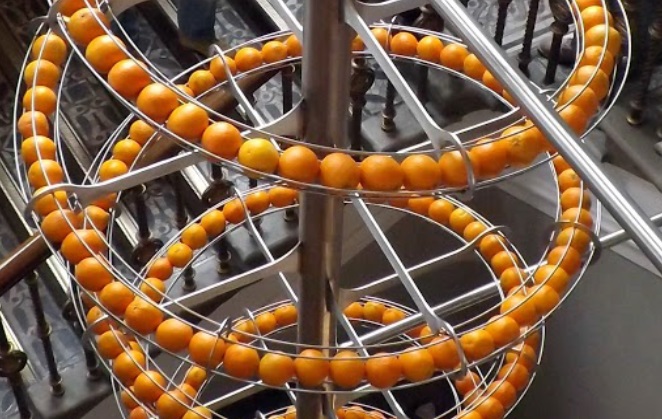
Oranges being used for Orange Fiber process. Photo by Orange Fiber
Our friends at Education Africa, Model UN South Africa and UNIC Pretoria put together this primer on the origins of the climate change debate ahead of the Model UN debates kicking off October 21st through 24th. This is a helpful resource for those of you engaging with us during AVCC week (October 24-31). While this primer doesn't address all the details of all the climate change agreements since 1992, it does provide a little bit of insight into where this conversation began and just how far the parties are on getting to an agreement on this very complex issue of climate change.
During AVCC week, we would like to hear what regular Africans (and policy-makers if possible) have to say about climate change and their local community and country. For Africa to develop, it will require massive amounts of energy. How developing regions access and generate that energy is a major component of this debate. How is Africa expected to develop without access to energy? What are some ways in which the continent can develop clean energy systems in enough capacity to address growing populations and an emerging middle class that is consuming resources at an alarming rate. Does the consumer bear a certain responsibility in changing their consumption habits? If so, how?
As you can tell, there are many angles to this debate. And that is why AVCC matters. Take part, and engage in the debate. What is your climate change story? What are some solutions? More importantly, share with us what YOU as an individual are doing to address the problem. Stories matter, and they begin with yours.

NYU Heyman center for philanthropy and fundraising partners with World Bank’s Connect4Climate initiative to raise awareness about climate change issues around the world.
New York University’s George H. Heyman Center for Philanthropy and Fundraising (NYUHC) is the latest educational institution to partner with the World Bank and a broad range of partners in Connect4Climate (C4C): a campaign, a competition, and a community dedicated to raising awareness about climate change issues in Africa and around the world. The C4C global partnership initiative uses social media and the web to give voice to local stakeholders who have stories to tell about climate change.
C4C’s goal is to create a participatory open knowledge platform that engages the global community in climate change conversation to drive local action. In just nine months, C4C has created a Facebook community of nearly 300,000 followers. Across multiple social media platforms and the www.connect4climate.org site, C4C’s weekly online reach is between 4 to 6 million.
According to NYU Heyman Center’ Executive Director Naomi Levine: “Our faculty is in a unique position to contribute its expertise in cause marketing, digital advocacy and fundraising, to help advance solutions to this key issue, affecting our planet and future survival. The C4C partnership will also enable us to provide access to our distance learning courses designed to help nonprofits and activists better engage their supporters.” Upcoming Heyman Center online courses are Always On/Always There: Leveraging Mobile Applications and Engaging Supporters, taught online by faculty member, Elizabeth Ngonzi (C4C partnership liaison) on Wednesdays from 10:00am-12:30pm ET, June 6 - June 27; and Fundraising Concepts and Practices, available May 21 - August 10 (10 sessions individually arranged), accessible to anyone around the world via Internet.
Lucia Grenna, C4C Program Manager, sees the partnership with NYUHC as a vehicle to provide educators, students and activists around the world with access to critical strategies and tactics that will help them activate policy makers and increase stakeholder engagement in a meaningful manner, so as to lead help address climate change issues more effectively. Other U.S. educational institutions participating in C4C include: Columbia University Center for Research on Environmental Decisions, Johns Hopkins University School of Advanced International Studies, MIT Center for Collective Intelligence-Climate Co-Lab, and Yale Project on Climate Change Communication.
Contact: Elizabeth Ngonzi
Telephone: +1 732.208.3304
Email: en33@nyu.edu
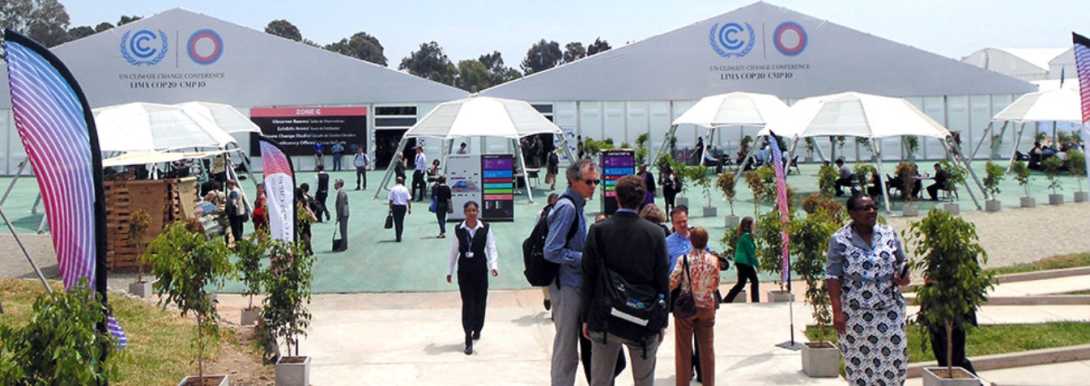
The United Nations Framework Convention on Climate Change (UNFCCC) negotiations in Limahave come to an end. Due to last minute haggling, the climate conference ran until Sunday morning, well after the official deadline on Friday. In the end, 190 countries agreed on the next steps needed for tackling climate change – what needs to be done now, and what information should be included in pledges by countries for COP 21 in Paris in December 2015, when countries are expected to submit commitments to reduce carbon emissions, and much more.
“Governments leave Lima on a fresh wave of positivity towards Paris with a range of key decisions agreed and action-agendas launched, including on how to better scale up and finance adaptation, alongside actions on forests and education,” said Christiana Figueres, Executive Secretary of the UN Framework on Climate Change. View more about the final outcomes on the UNFCCC website.
The Conference of Parties got off to a good start, thanks to the building momentum around the world calling for action on climate change. Before the Climate Summit in New York in September, hundreds of thousands took to the streets in 166 countries, calling for immediate action. At the UN Climate Summit businesses joined national and regional governments supporting a price on carbon.
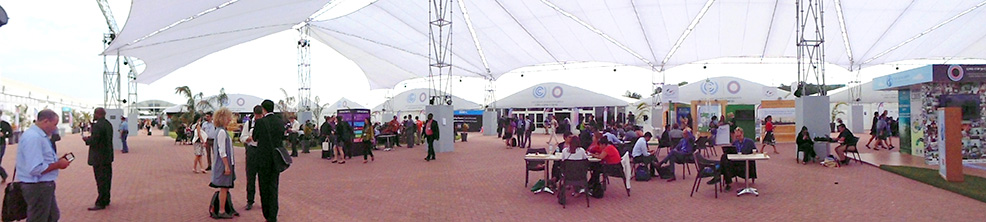
In addition, the European Union reached agreements and, on November 12, the United States and China announced an ambitious cooperation plan for Paris 2015 and actions on climate change after 2020. This year has also played an essential role in preparing the “field” for solution-oriented agreements that will help fulfill the climate agenda in 2015 leading up to COP 21 in Paris in December.
In Lima, Connect4Climate supported several high-level sessions at COP 20, in particular the Global Landscapes Forum, organized by CIFOR, the Sustainable Innovation Forum, and events hosted by Connect4Climate partners such as TerrAfrica’s panel discussions, UNFCCC youth sessions and the Italian Ministry of the Environment’s high-profile events.