The Green for Growth Fund (GGF) aims to enhance energy and resource efficiency as well as foster renewable energy in the Southeast Europe Region including Turkey, the European Neighborhood Region-East, and the Middle East and North Africa (MENA). This is achieved predominantly by providing dedicated financing to businesses and households through partner financial institutions and through direct financing of eligible projects.
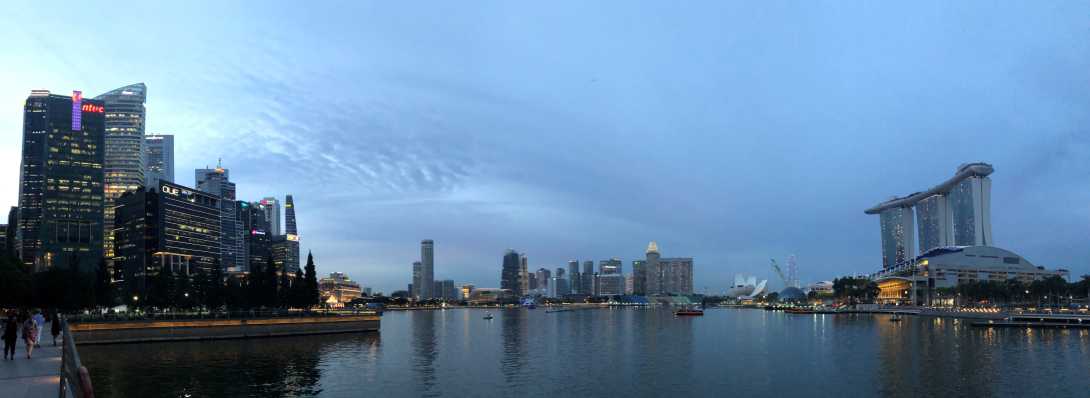
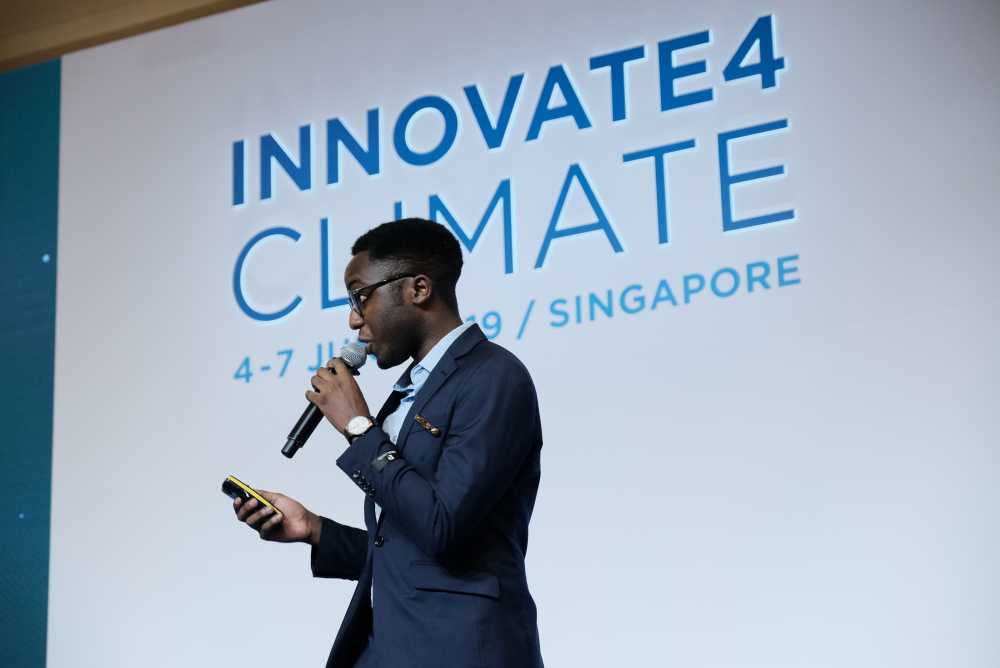
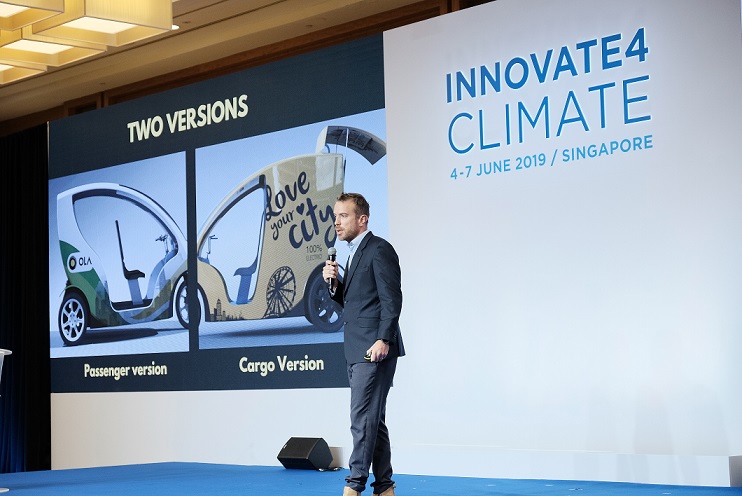
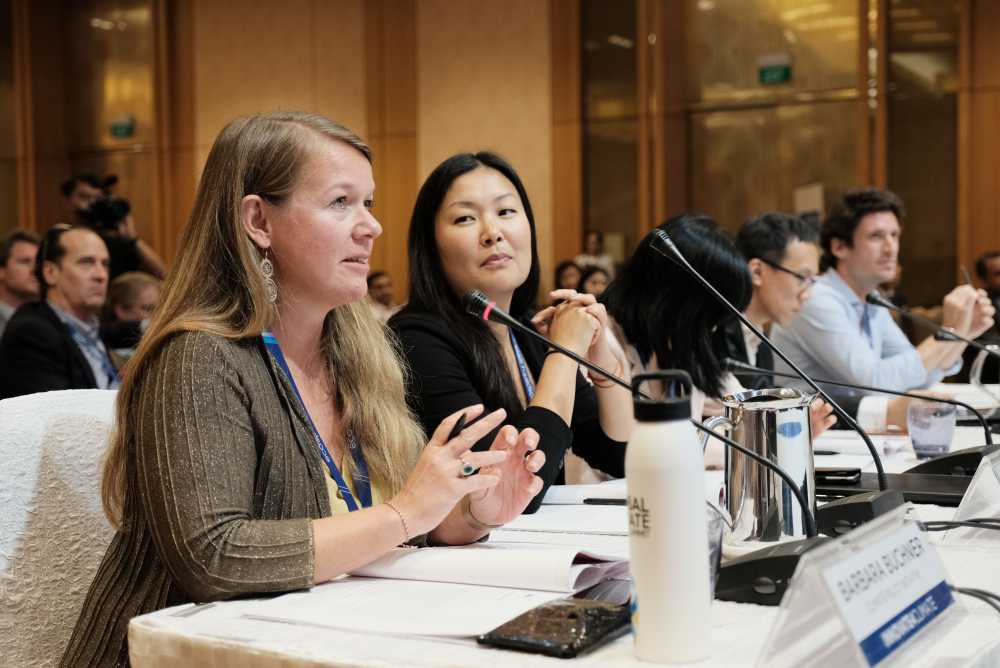
Innovate4Climate 2019 saw hundreds of climate leaders congregate in Singapore to hash out knotty green finance issues and brainstorm about the road to global sustainable living. In addition to veteran eco-advocates, though, the organizers of Innovate4Climate were sure to highlight the achievements of younger people and up-and-comers in the movement. One of the most exciting examples of this was the Pitch Hub Competition, in which hundreds of teams representing groundbreaking green start-ups submitted concepts to a panel of discerning judges. Of an initial 239 high-quality entries from teams spanning 81 countries, the judges selected 5 finalists to pitch their ideas live in Singapore for a chance to win thousands of Amazon Web Services dollars to infuse into their businesses.
The Wastezon team, who "envision a waste-free world," delivered a pitch on a mobile app that would allow its users to interface directly with the recycling industry, enabling them to regiment their consumption and disposal much more effectively and to be active participants in a circular, waste-free economy. The app was also built to be of use to manufacturers, who can capitalize on its blockchain features to get discarded products recycled and back in consumer hands much more efficiently. Everybody wins.

Positive Energy Ltd. centered its presentation on renewable energy, pushing for a "drastic shift from large fossil fuel infrastructure to smaller solar and wind distributed assets." Seeking to help people passionate about sustainable energy avoid the usual discouraging inefficiencies of non-specialized investors and local banks, Positive Energy offers a blockchain-driven service that pairs project developers with investors free of middle men in a secure digital environment.
Mellowcabs, which earned the third-place spot on the Pitch Hub podium, shared its concept of a fully electric minicab taxi service that urban travelers could enlist at will via a dedicated mobile app. Specifically, Mellowcabs wants to cut back on the substantial carbon emissions arising from short-range trips in trafficky city conditions. The app will be tapped in to public transit options as well to give users the most efficient, pleasant, and eco-friendly trips possible, and the sides of the taxis will be emblazoned with advertising from green-minded sponsor organizations.
Nodis took second place for its presentation on revolutionary window technology. By suspending sheets of color-coated nanoparticles between panes of laminated window glass, Nodis is able to produce windows whose tint can be set by consumers with the push of a button and changed whenever desired. Any degree of tinting, from fully translucent to fully opaque, is possible for purchasers of Nodis windows, and the levels of tinting can be preprogrammed by building managers or homeowners to maximize eco-efficiency and minimize headaches.
Sinba was unanimously awarded the Pitch Hub Competition's top prize for plan to cultivate a world "sin basura" (without waste). In particular, Sinba's focus is the food industry: its business model centers on buiding relationships with restaurants and other food businesses and helping them cut back on costs by sustainably integrating their organic waste back into their own supply chains. Instead of getting dumped in landfills, food waste can be reprocessed for use as future fertilizer or pig feed, saving food vendors money and helping to save the planet too.

In addition to Amazon's cash infusions for the winning teams, all five teams who reached the finals were awarded the chance to attend a three-day start-up strategy boot camp put on by ImpacTech.
We at Connect4Climate offer our congratulations to all these teams of game-changing innovators, including the hundreds of entrants who didn't make it onto the podium this time around but who clearly have great ideas for a greener future.
On the occasion of World Environment Day 2019, celebrated on June 5, the Jadir Taekwondo Association launched the third edition of AJTKD Environment Week. Several activities were planned and executed throughout the week aiming to raise awareness of the importance of the environment and its preservation.
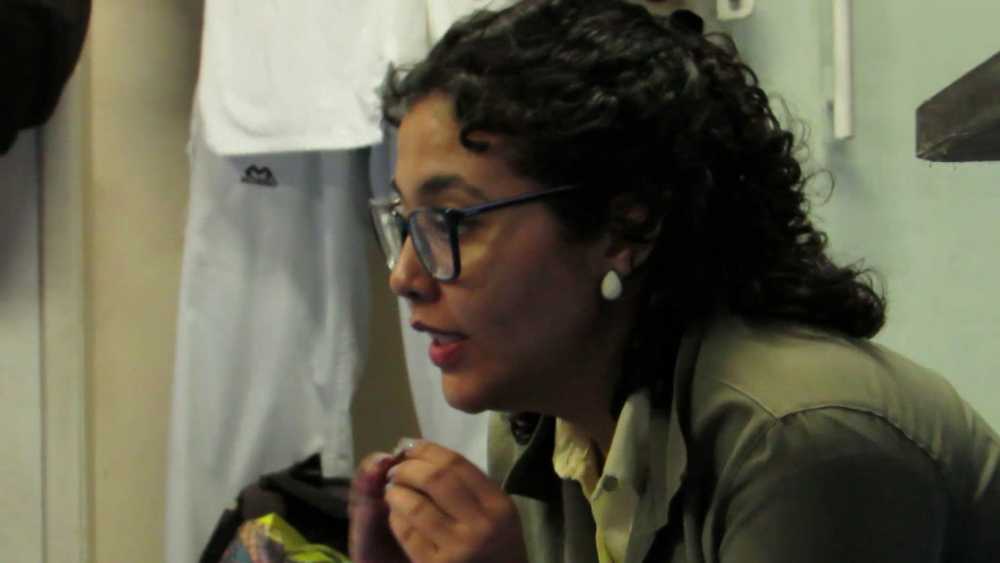
The event began with lectures on the themes "Sustainable Use of Energy" and "The Sustainable Development Goals", carried out by prof. Paulo Rocha, Ph.D. in Electrical Engineering at COPPE-UFRJ and volunteer at AJTKD.

Rocha explained how "the efficient use of electric energy reduces the emission of greenhouse gases and contributes to the environment," and how "it minimizes electricity bill expenses at the end of the month."
Youth participants then had the opportunity to watch a cartoon animation about the UN's Sustainable Development Goals, which reinforced the importance of preserving the environment in order to keep the planet sustainable.

Perhaps most exciting of all for the students was a virtual reality experience whereby they got the opportunity to visit the largest rainforest in the world - the Amazonia. Virtual reality makes it possible to take students into places that would otherwise be physically unviable.
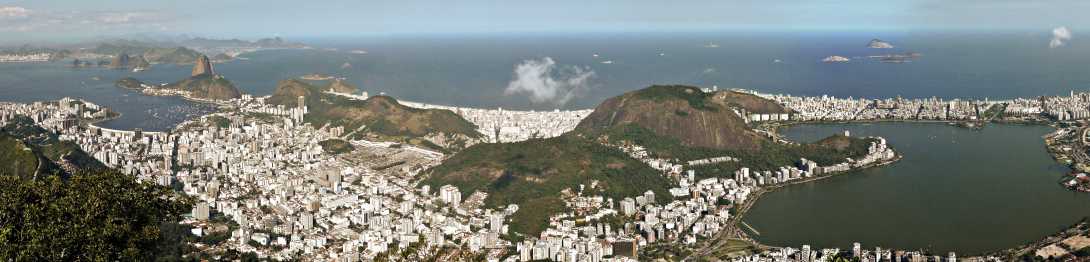
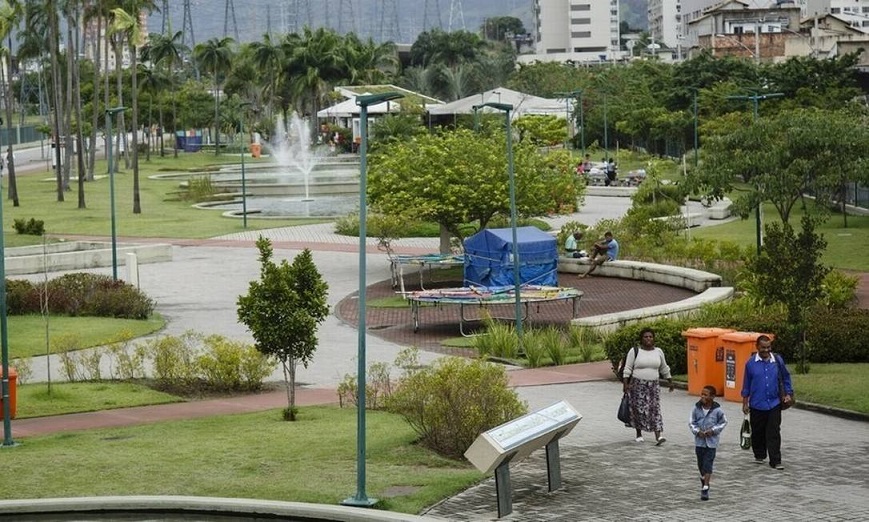
Parque Madureira, the third largest public park in the city of Rio de Janeiro, was the host of the sports activities held during the event. Several Taekwondo classes were held, as well as presentations aimed at students, their families and the community.
The park has an area of 109,000m², and is home to more than 800 planted trees.

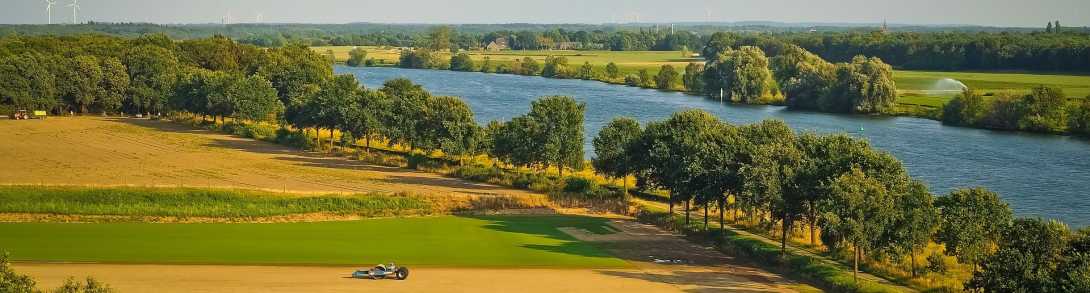
Banner image from Jens Hausherr. Others courtesy of the Jadir Taekwondo Association.
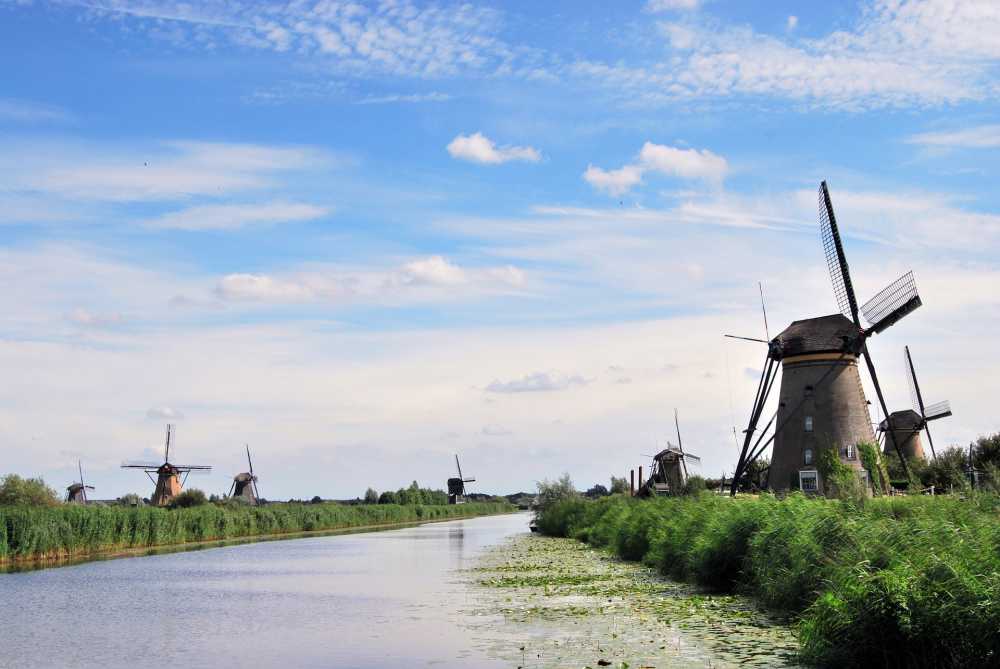
Global investors have enthusiastically embraced a national Netherlands 5.98 billion euro green bond designed to fund projects to cope with current and future climate change impacts and an advanced low-carbon economy. Much of the bond focuses on using coastal and river ecosystems as a safeguard for negative climate impacts such as high flood risk. Investors responded to the bond immediately, oversubscribing the issuance by more than 15.2 billion euros.
This green bond is the first globally to employ resilient nature-based solutions certified using the Water Infrastructure Criteria of the Climate Bonds Standard. A consortium of organizations led by the Climate Bonds Initiative, the Alliance for Global Water Adaptation (AGWA), the World Resources Institute (WRI), CDP, and Ceres launched water resilience bonds criteria in May 2018 to inform investors about the climate risks and solutions embedded in the green bonds market. Globally, the green bonds market reached about 168 billion USD in 2018.
Niels Vlaanderen, Policy Advisor for International Affairs at the Department of Infrastructure and Water Management for the Netherlands, commented: “We realized that we needed new solutions — automatically building flood dykes higher was no longer a sustainable solution. We had to change a system we had worked with for centuries and broaden our goals. We must future-proof our country by incorporating cultural and ecological values into our adaptive decision making.”
According to John Matthews, Executive Director of the Alliance for Global Water Adaptation and lead author of the Water Infrastructure Green Bonds Criteria, “For the past thousand years, the Dutch have reclaimed land from the sea. Today, the sea and their rivers are growing higher in a country where half of the country is already below sea level. With this bond issuance, the national government is signaling to investors the scope of the financing needed to adjust to climate change — and how we must link economies and ecosystems together to secure a joint future in a shifting climate.”

The bond also plays a role in sustainable development according to Henk Ovink, Special Envoy for International Water Affairs, Kingdom of The Netherlands Sherpa to the UN/WB High Level Panel on Water, adding, “This green bond is spot on, aimed at creating added values across the board of the sustainable development goals, leveraging investments for social, cultural, economic and environmental needs and challenges. Using water as leverage to catalyze transformative climate action.”
Justine Leigh-Bell, Deputy CEO at Climate Bonds Initiative (CBI) in London, stated, “Resilience is a powerful new target for investment. The Netherlands has just shown that investors are eager to see policymakers investing in long-term resilience and in working with rather than against nature. Using the Water Infrastructure Criteria rewards issuers and investors together, providing market and citizen confidence for innovative approaches such as nature-based solutions to flood risks.”
Niels Vlaanderen continued, “In Dutch, we say, ‘Als er één schaap over de dam is, volgen er meer,’ or ‘We need only a few to lead.’ Indeed, this bond is the beginning of a very promising area where we expect large funding requirements in the near future. We have proven that the Netherlands can shift strategies to prepare for a changing climate. With our room for the river projects, we have shown that we can combine flood protection and social values through nature-based solutions.”
The benefits of this bond are not limited to at-risk communities and ecosystems. The Netherlands’ Minister of Finance, Wopke Hoekstra, stated, “Our aim is to give an extra boost to the Dutch green capital market through the issuance of the Green Bond.”
The green bond finances low-carbon projects (renewable energy, energy efficiency, clean transportation). Perhaps the most innovative aspects of the bond, however, are projects designed to help the Netherlands adjust to climate change adaptation through sustainable water management, particularly the use of nature-based solutions and green infrastructure approaches for reducing increasing flood risks in coastal and low-lying areas.
Banner and thumbnail images courtesy of, respectively, Michael Gaida and Andželina Hanke from Pixabay.
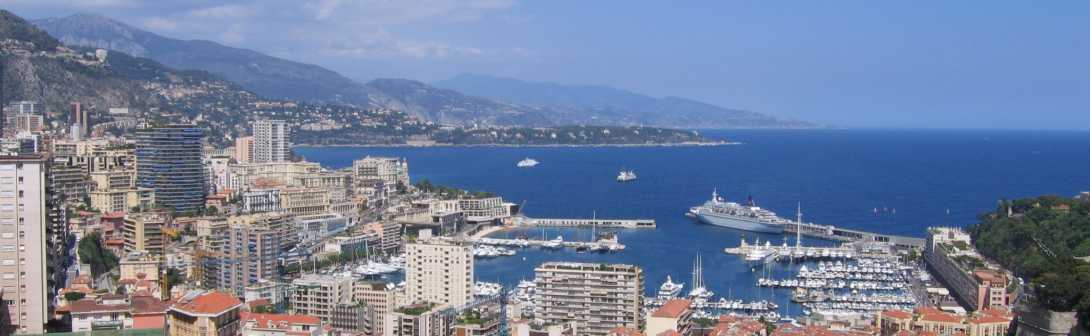
Following a successful launch last year, TRANSITION Forum returns to Monaco on 26 and 27 June to accelerate the transition to a low-carbon future through investment and collaborative climate action. Under the High Patronage of His Serene Highness Prince Albert II, TRANSITION mobilizes a multi-disciplinary community of global business leaders, policymakers, investors, innovators, scientists and members of civil society to find concrete solutions for humans to prosper while preserving our planet.
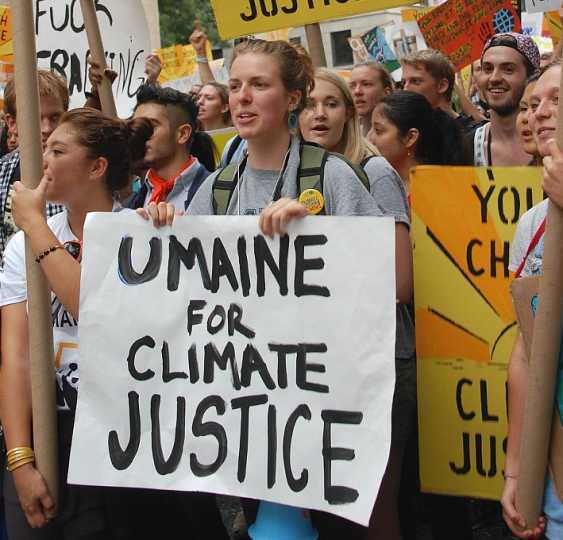
A new study by international law expert and Nurture Nature founding adviser Manuj Bhardwaj argues that the framing of global climate commitments in terms of "climate justice" is paramount if we are to successfully bridge the economic and developmental gaps between nations and work together toward a greener future.
Looking to take your first steps toward a more eco-friendly life? For most lifestyle changes, you really have to begin at home, and going green is no exception. Before you can become an eco-warrior in other aspects of your life, you must first gain control of your environmental footprint where you live. Here’s how to get started.
Save Water Wherever You Can
It costs you nothing to practice water conservation — in fact, it will save you money in the long run. You may not think that saving a gallon or so here and there helps, but it adds up. Take showers instead of baths (10 to 25 gallons vs. 70-plus). Save the water you use to cook pasta and potatoes and water your plants with it, and don’t leave the faucet running while you’re brushing your teeth. These are simple steps, but don’t be afraid to get creative!
Swap Out Energy-Hogging Appliances
There’s no reason that your fridge, dishwasher, washer/dryer combo, and HVAC unit should be anything less than truly energy-efficient. Not only is this better for the environment, but it will also save your family money. Replacing an old washing machine with a newer, energy-efficient model can save a family of four $100-plus a year, for example. Angie’s List also notes that your city/local government might offer rebates for buying energy-efficient appliances.
While you’re doing this, don’t forget to improve efficiency all around your home. For example, insulate your windows, replace your light bulbs with more efficient models, and seal your leaky faucets. These little fixes make a big difference.

Swap Out Your Cleaners
Most traditional household cleaning products aren’t that eco-friendly. Regular paper towels, kitchen sponges, and cleaning chemicals aren’t always biodegradable, can be toxic to wildlife/plant population, and may produce volatile organic compounds that can harm your family and the environment. Swapping these out for more environmentally sound options is an easy fix. Beware of generic “eco-friendly” labeling, however, as it might not be legitimate. Look specifically for packaging that is recyclable or biodegradable, and know what chemical compounds to avoid (check here for more on that).
Make Reusing Containers a Habit
Most of what resides in our nation’s landfills is plastic, and the average homeowner’s biggest plastic footprint comes from food, water, and personal hygiene containers. You and your family should commit to reusables. Simply purchasing reusable water bottles can save over 1,000 plastic water bottles and $2,000 per year. Save those yogurt and cottage cheese containers and repurpose them. By getting creative, you can make a big step toward meaningful change.
Leave Your Car in the Garage
When you think about it in terms of the environment, your wallet, and your waistline, your car is the worst way to travel anywhere. Any form of transportation — save a plane or boat — is better for the environment. This means you should walk as much as you can. You should bike as much as you can, and you should certainly use public transportation if possible. Not only will this help you make your family’s footprint greener, but it will also help you get more exercise and save you money in the short and long term.
The great thing about making your life at home more eco-friendly is that it’s not just great for Mother Earth — there are plenty of selfish reasons to do it too. It can improve the overall health of you and your family. It will make you feel accomplished. And, maybe above all else, it is cheaper in the long run. Do it for you. Do it for the environment. Just do it, period.
Jennifer McGregor is a pre-med student, who loves providing reliable health and medical resources for PublicHealthLibrary.org users. She knows how difficult it can be to sift through the mountains of health-related information on the web. She co-created the site with a friend as a way to push reputable information on health topics to the forefront, making them easier and quicker to find.
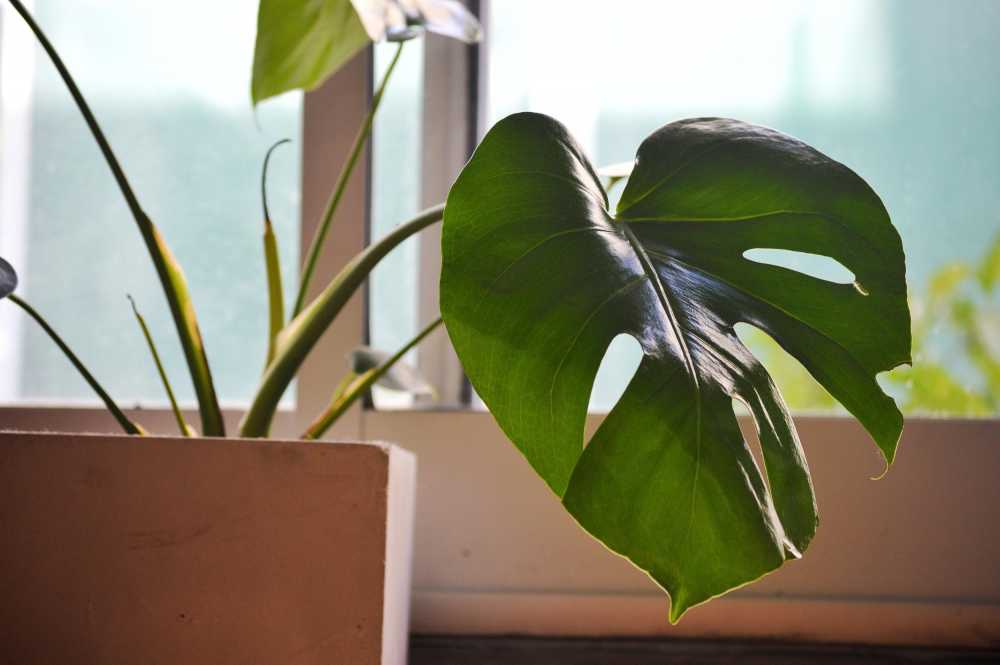
Plant photo by Matias Difabio on Unsplash. Banner and thumbnail courtesy of Dorcha.
Given the dire state of the Earth’s climate and the mounting frequency of natural disasters, it can be tempting for even the staunchest climate activists to fall into a spirit of pessimism. One way of overcoming these feelings is by celebrating the resilience of communities and countries the world over that are actively fighting for a sustainable future in spite of the many challenges nature has thrown at them.
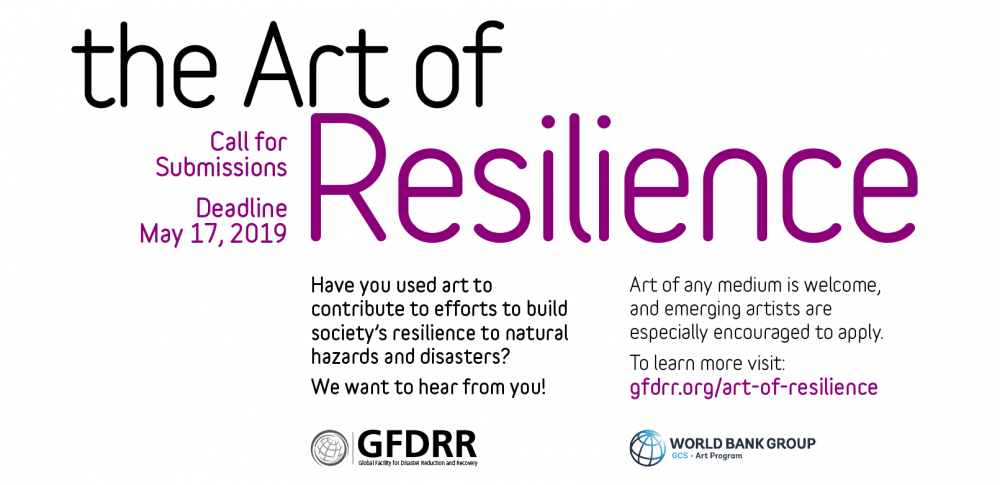
This theme of resilience in the face of disaster is at the heart of the Global Facility for Disaster Risk and Reduction’s ongoing art competition The Art of Resilience, put on in collaboration with the World Bank Art Program. Any artist who has produced work inspired by resilience and feels comfortable sharing it should submit their art—up to 5 pieces in total—for consideration using the instructions found at this link. Submissions will be accepted through May 17.

Competition winners will see their art exhibited at World Bank Group Headquarters in Washington, D.C. for three months beginning in October of this year. Their reflections on resilience will be available for viewing by visiting delegates, Bank staff, and members of the public. Later, in 2020, the winning artists’ pieces will also feature at the Understanding Risk forum in Singapore, which the artists themselves will all be invited to attend. Lastly, the artworks will be preserved for posterity in a creative online database.
Communicating the necessity of climate action and poverty mitigation is no simple task; art stands alone in its power to bridge disparate communities, remind us of our shared humanity, and inspire the bold, innovative action that the Global Facility for Disaster Risk and Reduction, the World Bank Art Program, and we at Connect4Climate strive to encourage every day.
This competition presents a thrilling opportunity to bring to light moving and inspirational works that will motivate all of us down the path to a better future.
This Earth Day, Monday, April 22, is sure to inspire exciting climate action all over the world from a wide variety of eco-minded organizations and individuals. Part of what makes the day so special is the diversity of those who participate—and this diversity will itself be the focus of a wide-ranging 2:00 PM-6:30 PM Earth Day event in Stockholm (8:00 AM-12:30 PM Eastern Time), the second annual We Don’t Have Time Earth Day Conference.
What word comes to mind when you think of “cities”? Busy? And when you think of “forests”? Peaceful? What if cities could be something different?
To date, cities have largely been problematic for the environment. They occupy just two percent of the world’s land. However, they account for over 60 percent of global energy consumption, 70 percent of greenhouse gas emissions and 70 percent of global waste. Because of their historical impact on air quality, fresh water, natural resources and energy, the current growth of cities and megacities is a worrying trend. In 1990, there were 10 mega cities with more than 10 million inhabitants. In 2014, there were 28 mega cities. Today, over 50 percent of the global population lives in cities and by 2050 that number will rise to 70 percent.
But cities don’t have to be this way. New strategies and technologies are emerging every day to make cities a cleaner, safer, nicer place to live, both for the benefit of the environment and for the humans who make them their home.
How 7 cities are harnessing the power of urban trees:
1. Using parks to preserve biodiversity - In 2015, the City of Johannesburg in South Africa united all of its parks under one management in order to reduce confusion about areas of responsibility and ensure a set of common standards. This new agency’s goal is to build and maintain more parks with existing funds. Parks, trees and well-managed forests in and around cities help to counteract the impact that growing cities have on habitat loss. Instead, parks and forests maintain and increase biodiversity by providing habitats, food and protection for many plants and animals.
2. Boosting happiness with urban trees - In 2010, Vancouver, Canada adopted a bold strategy called “Green Vancouver,” an initiative to reduce the city’s environmental footprint. With ten goals, including green buildings, energy efficient transportation, zero waste, clean water and air, the city of Vancouver also highlighted the importance of access to nature. The strategy aimed to ensure that, by 2020, every person will live within a five-minute walk of a park, greenway or other green space, pushing the municipality to plant an additional 150 000 urban trees between 2010 and 2020. By 2014, the city had already planted 37 000 trees. Studies show that trees boost happiness and reduce stress levels. Incorporating them in cityscapes makes neighborhoods more liveable places and improves the well-being of its inhabitants.
3. Cooling cities naturally - In May 2013, the European Commission promoted the use of green infrastructure, which it defines as “a network of spaces with public or private agricultural or landscaped natural vegetation.” In response, Barcelona, Spain created a Green Infrastructure and Biodiversity Plan, where green corridors connect green urban spaces such as forests, parks and vegetable gardens. Green spaces within a city and strategic placement of trees in urban areas can cool the air by up to 8 degrees Celsius, reducing the need for air conditioning by 30 percent.
4. Removing pollutants from the air with urban forests– Arnhem, Netherlands implemented urban forests as part of its new “Green Agenda.” The municipal government, along with NGOs and experts, helped to develop and define the implementation of green infrastructure in the city. Urban trees are important parts of a city’s infrastructure because they serve as effective air filters, removing harmful pollutants in the air. They also store carbon which helps mitigate the impacts of climate change in and around urban areas.

5. Promoting healthy lifestyles with green spaces- In 2004, China’s State Forestry Administration officially launched the “National Forest City” programme with both strong national policy support and successful local community involvement. It had two main goals: planting trees and “growing green minds” among its citizens. To acquire the status of a national forest city, a city must meet 38 standards and indicators in the areas of administration and organization, management and forest development. By 2015, more than 170 cities and 12 provinces were actively involved the National Forest City programme. Tree cover in these urban communities had increased to 40 percent or more, up from less than 10 percent in 1981. Nine cities on the Pearl River Delta in South China will become the country’s first national forest city cluster which should be completed by 2020. Urban green spaces, including forests, encourage active and healthy lifestyles, improve mental health, prevent disease and provide a place for people to socialize.
6. Planting trees that provide food and medicine for local populations -In the Arabian Peninsula in general and the Gulf countries, such as the United Arab Emirates and Sultanate of Oman, in particular, palm trees are specifically bred, grown and planted on streets to produce dates for public consumption as "sadaqua”, which means charity. In Abu Dhabi, for instance, several million palms were grown to line avenues for passersby to pick; the rest is harvested by municipalities. Similarly, in many homesteads in Sudanese cities, date palms are planted to produce fruits that will be consumed at home or offered to guests at Ramadan and other important occasions. Along with many other benefits, trees can also provide local populations with fruits, nuts and leaves as food or medicines for use in the home or as a source of income.
7. Creating planted forests to reduce pressure on natural forests - Dhaka has a population of more than 14 million people and a poverty rate of 30.5 percent. In 2006, FAO analysed the contribution of urban forests to the livelihoods of poor people in the city and found that urban forestry can increase their quality of life by providing, for example, employment in nurseries and other forest-related industries. Most of the poor in Dhaka lack access to city services, such as electricity and safe drinking water; urban forestry can help fill the needs gap by supplying wood fuel and helping purify water. Wood fuel sourced from urban trees and planted forests on the outskirts of cities provides renewable energy for cooking and heating and reduces the pressure on natural forests. These forests also help to filter and regulate water, contributing to high-quality freshwater supplies for millions of people.
Urban trees and sustainable cities aren’t just environmental choices. There are also many economic benefits of urban trees and forests. In the city of London, it is estimated that trees help save GBP 260 million every year in buildings’ energy costs. Forests in cities and surrounding areas generate tourism, create tens of thousands of jobs and advance city beautification schemes, building dynamic, energetic and prosperous green economies.
For whatever the reason, and there are many, urban forests should be a part of how we rethink our current and future cities. The environment and the city dwellers of the future will thank us.
Banner image courtesy of Jeff Gunn. Thumbnail from the FAO's original article.