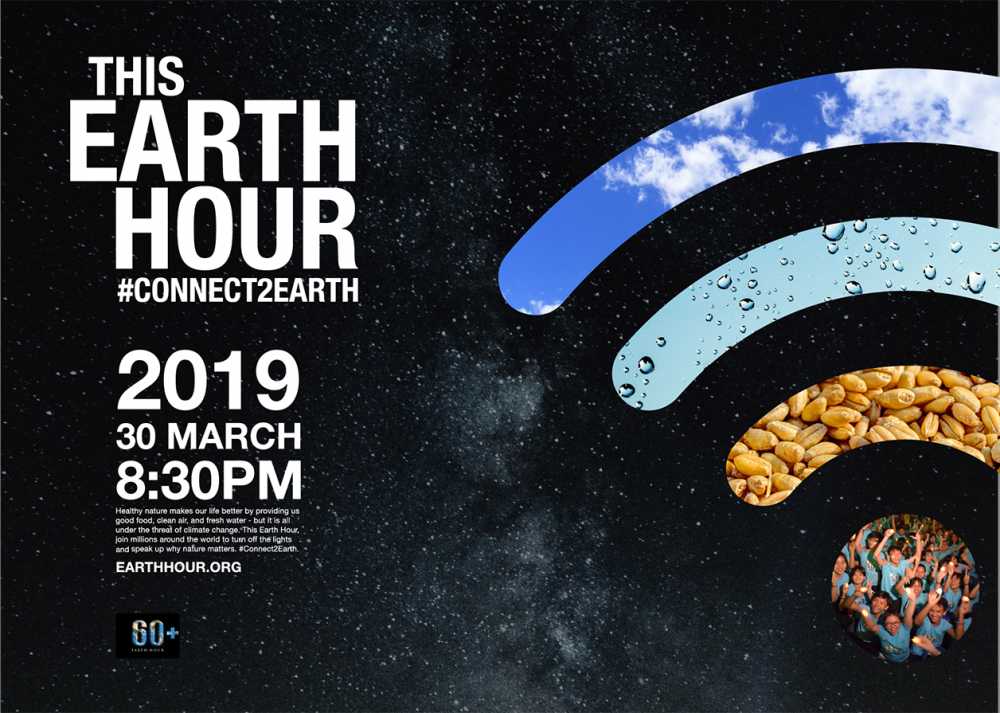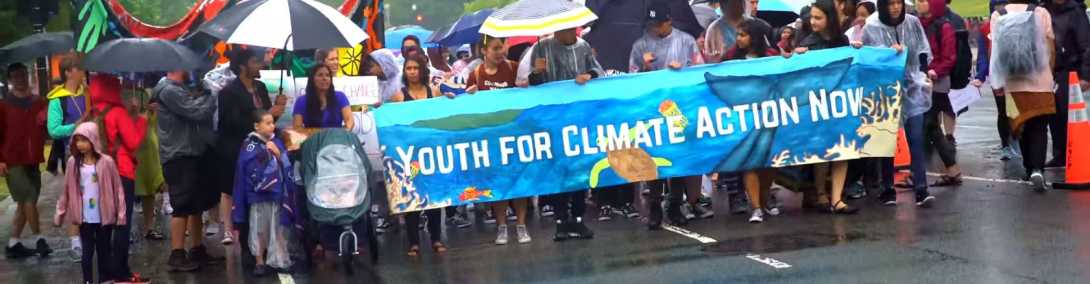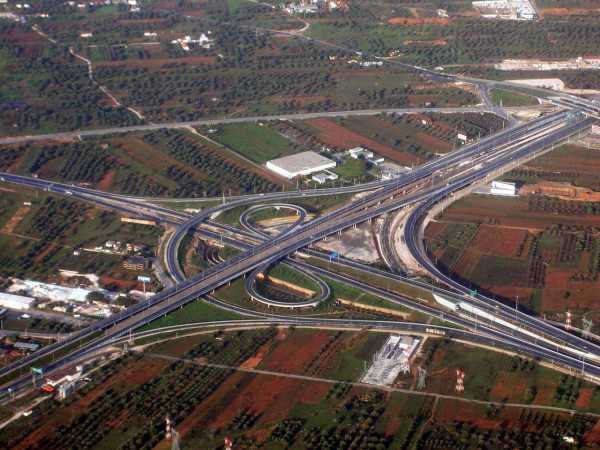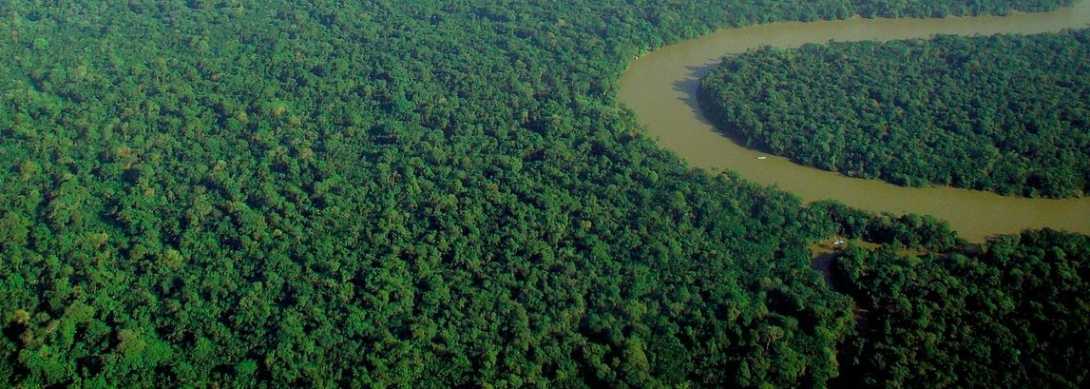
If the world is to keep climate change at manageable levels before the middle of the century, changes in lifestyles are not only inevitable, but would need to be radical, and start immediately. Considering current consumption levels, citizens in many developed countries would have to cut their lifestyle carbon footprints by about 80-90% or more, and some in developing countries by about 30-80% within the next 30 years.
Huge honour to meet HE The President of Suriname! His Excellency’s support for youth is very encouraging! #HFLD #FinanceTheForests #Agenda2030 #YouthEmpowerment #ProtectOurForests @FinanceForests pic.twitter.com/yLXz36JKS5
— Kehkashan Basu (@KehkashanBasu) February 16, 2019
In the context of rapidly evolving climate conditions, a new study by Bioversity International and partners addresses the challenge of climate adaptation in a way that is both scalable and targeted. Scientists demonstrate a unique approach using crowdsourced citizen science that capitalizes on farmers’ knowledge.
Crop adaptation to climate change has become an increasingly necessary and also risky task for smallholder farmers. Farmers need access to crop varieties and recommendations on the variety best suited to their local conditions. And, they need it fast. Existing approaches to generate recommendations in marginal production environments, however, lack two essential factors: scalability and ability to generate recommendations that are representative of the environments and conditions under which farmers grow crops on their fields.
A new paper by Bioversity International and partners published in PNAS shows how approaches using crowdsourced citizen science – in which farmers themselves are involved in the scientific studies – improve and accelerate variety recommendations. The farmer trials conducted in the study resulted in variety recommendations with important differences from the current recommendations.
![]()
“This work started with the idea that in the agricultural sciences we could learn from ecologists and environmental scientists who get massive feedback from citizen scientists,” explains Jacob van Etten, senior scientist at Bioversity International and lead author of the paper. Bird ecologists compile data obtained from the observations of bird watchers into a large database. This allows them to trace bird movements and understand how climate change affects migration patterns. With so many data-contributing bird watchers, ecologists can track the impact of climate change as it happens. “It occurred to us that we need a similar citizen science approach in agriculture to help farmers to adapt to climate change.”
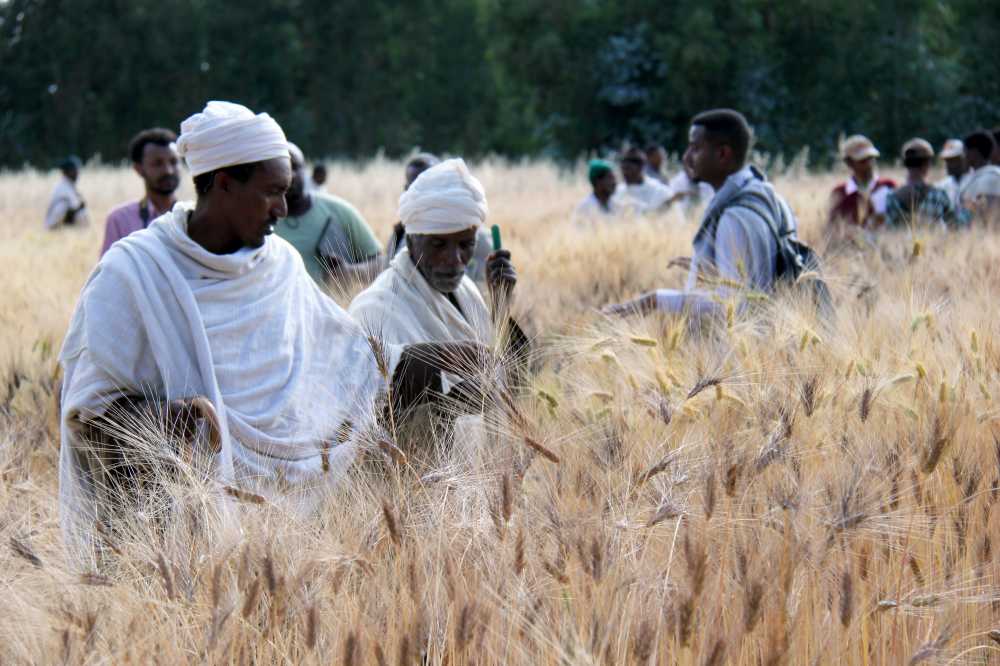
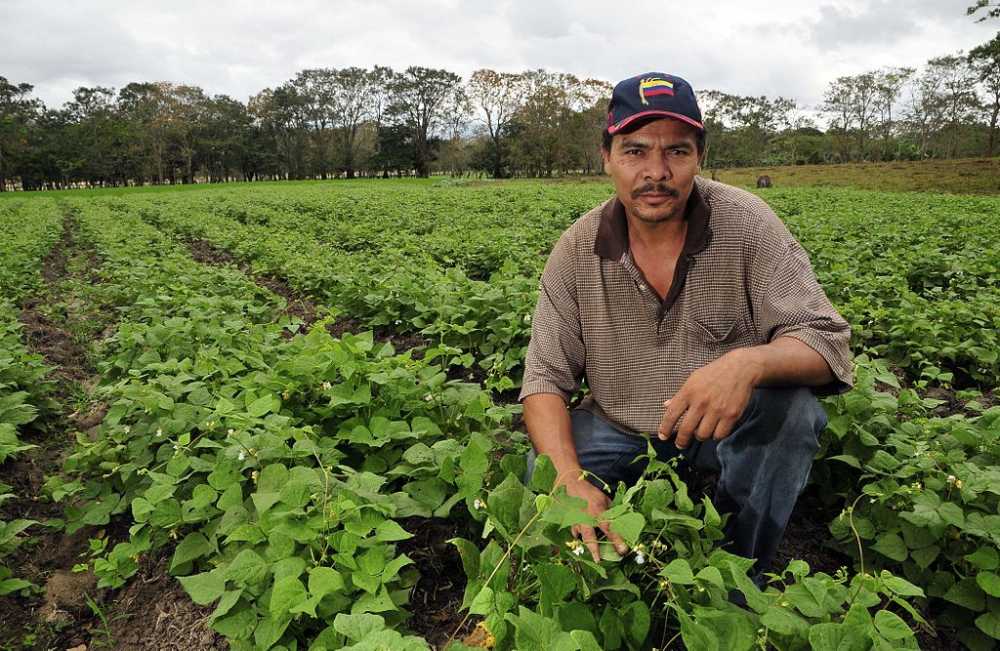
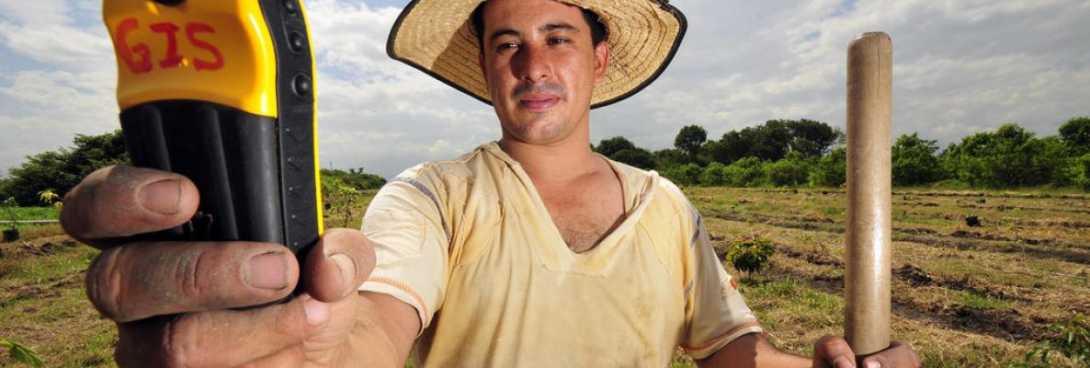
The researchers applied a citizen science approach recently developed by Bioversity International called tricot – triadic comparisons of technologies – by which each farmer plants seeds from a test package of three varieties randomly assigned from a larger pool of varieties. The researchers organized the tricot trials over different seasons and landscapes to obtain a unique dataset covering 842 plots of common bean in Nicaragua, 1,090 plots of durum wheat in Ethiopia and 10,477 plots of bread wheat in India. Scientists then linked the farmer-generated data with agroclimatic and soil data.
The format used allowed even those with low literacy skills to contribute their evaluation data through various channels, including mobile telephones.
"We used climatic data to try to explain why certain varieties perform better than others," says Kauê de Sousa, a research fellow at Bioversity International and one of the joint lead authors of the study. "The results were very interesting. Farmers were clearly able to distinguish stress-tolerant varieties. We could also generate variety recommendations for different agroclimatic zones."

To assess what the tricot trial results mean in practice, the scientists contrasted them with existing recommendations, which in the case of the Ethiopian highlands were for modern wheat varieties. The tricot trials produced more geographically specific recommendations, and demonstrated the superior performance of farmer varieties that were approved for official release in March 2017.
The farmer-generated recommendations improved existing approaches. They can be directly translated into actionable information for climate adaptation on the ground, and can be used to create variety portfolios or, if combined with seasonal climate forecasts, climate information services to further diminish climate risk.
The novelty of this study is the demonstration that in vulnerable, low-income areas, climatic analysis of variety performance is possible using data generated directly by farmer citizen scientists on farms. The unique contribution of the tricot approach is that it integrates aspects of the existing approaches into a simple format that addresses the challenge of climate adaptation in a way that is scalable and targeted.
“This study confirms that our initial hunch was correct – citizen science can help farmers with climate adaptation. It also shows the enormous potential of citizen science in agriculture,” says van Etten. “It opens a whole new area of possibilities.”
Ethiopia image courtesy of Bioversity International/S. Collins. Nicaragua image courtesy of Neil Palmer (CIAT). India image (banner) courtesy of Thakur Dalip Singh.
The United Nations Environment Assembly was founded in 2012 to conduct regular assessments of international climate policy and to keep the global community on track through bold initiatives. This year, the UNEA is convening in Nairobi, Kenya for its fourth session, which will focus on the spirit of innovation and its role in supporting sustainable practices in goverment, in business, and among everyday citizens.
Bonn, Germany, 11 February 2019 – Starting today, organizations, cities, industries, universities, governments, and others taking bold leadership on climate change can nominate their work for a UN Global Climate Action Award.
The award, the focus of United Nations Climate Change’s Momentum for Change initiative, recognizes the most innovative projects in the field of climate action.
Winning activities encompass scalable and replicable examples of what people are doing to address climate change, in the hope of inspiring others to act. The selected activities will be recognized and celebrated at the UN Climate Change Conference (COP 25) in Chile.
Past recipients of the award have maximized their impact and scaled up globally.
For example, Bhungroo, a rainwater management system used in dry spells to provide food security and sustainable livelihoods to marginal farmers across India, won the award in 2015. Today, Bhungroo is also being implemented in Ghana, Zimbabwe, Togo, and Madagascar.
Liter of Light, a solar lighting project that can be implemented with everyday objects and carpentry skills, won the award in 2011. It began in the Philippines and has since spread to 30 countries. In 2015, Liter of Light went on to win the coveted Zayed Future Energy prize.
Past winners have also included Google, Microsoft, and the Government of British Columbia, Canada.
“With the adoption of the Katowice Climate Package, we have entered a new era in our collective efforts to address climate change; one demanding increased climate action at all levels,” said Patricia Espinosa, Executive Secretary of UN Climate Change.
“The UN Global Climate Action Award is an opportunity to recognize leaders who are not only taking such action, but providing an inspiring example for other governments, businesses, cities and communities to follow. I therefore encourage those currently leading projects—from large corporations to small cooperatives—to apply.”
The 2019 award will recognize climate action that is already achieving real results in four categories:
- Planetary Health: recognizing novel solutions that balance the need for both human health and a healthy planet.
- Climate Neutral Now: recognizing efforts by individuals, companies and governments that are achieving real results in transitioning to climate neutrality.
- Women for Results: recognizing the critical leadership and participation of women in addressing climate change.
- Financing for Climate Friendly Investment: recognizing successful financial innovations for adaptation and climate mitigation.
The award’s Advisory Panel, made up of senior experts from various fields and countries, will select the winners. The panel is part of the secretariat’s Momentum for Change initiative, which is implemented with the support of The Rockefeller Foundation and operates in partnership with Climate Neutral Now, donors supporting the implementation of the UNFCCC Gender Action Plan, and the World Economic Forum.
Applications for the 2019 UN Global Climate Action Award will be accepted from 11 February through 30 April 2019 at: https://momentum.unfccc.int/
For more information, please contact:
Sarah Marchildon, Momentum for Change Team Lead, UN Climate Change
SMarchildon@unfccc.int | +49 228 815 1065
Melissa Angel, Momentum for Change Communications Specialist, UN Climate Change
MAngel@unfccc.int | +49 228 815 1602
Digital assets available for download here.
Venice International University and Alcantara are organizing the symposium "Climate 'How': How to Engage Society and Deploy Decarbonization," which will explore the question of how best to generate engagement with climate change issues across different levels of society. The symposium is supported by the World Bank Group’s Connect4Climate global partnership program.
- Indigenous and rural women make up more than half of the up to 2.5 billion people who use and rely on the world's collectively held lands.
- Indigenous and rural women are advocates, leaders, and experts on issues like food security and climate change. Recognizing their rights is not only a matter of justice but also critical to achieving global climate and development goals.
- Yet for too long, global development agendas have overlooked their specific needs and contributions, or chose to view them only as victims.
- In a new video, advocates from around the world speak out on why land rights hold particular significance for indigenous and rural women.
|
“The earth is what gives life. It is that which gives food; It is the dispensation of traditional medicines. And for people who depend on forests in their territory, it is very important because without it there is no health, there is no education, there is no collective life for Indigenous Peoples, and above all for women.”
— Fany Kuiru, indigenous Uitoto leader (pictured above)
|
|
|
|
|
|
|
|
|
Governments have adopted a robust set of guidelines for implementing the landmark 2015 Paris Climate Change Agreement.
The implementation of the agreement will benefit people from all walks of life, especially the most vulnerable.
The agreed ‘Katowice Climate Package’ is designed to operationalize the climate change regime contained in the Paris Agreement. Under the auspices of the United Nations Climate Change Secretariat, it will promote international cooperation and encourage greater ambition.
The guidelines will promote trust among nations that all countries are playing their part in addressing the challenge of climate change.
"All nations have worked tirelessly. All nations showed their commitment. All nations can leave Katowice with a sense of pride, knowing that their efforts have paid off. The guidelines contained in the Katowice Climate Package provide the basis for implementing the agreement as of 2020."

The President of COP24, Mr. Michal Kurtyka
The Katowice package includes guidelines that will operationalize the transparency framework.
It sets out how countries will provide information about their Nationally Determined Contributions (NDCs) that describe their domestic climate actions. This information includes mitigation and adaptation measures as well as details of financial support for climate action in developing countries.
The package also includes guidelines that relate to:

The process for establishing new targets on finance from 2025 onwards to follow-on from the current target of mobilizing USD 100 billion per year from 2020 to support developing countries

How to conduct the Global Stocktake of the effectiveness of climate action in 2023

How to assess progress on the development and transfer of technology
"This is an excellent achievement! The multilateral system has delivered a solid result. This is a roadmap for the international community to decisively address climate change. The guidelines that delegations have been working on day and night are balanced and clearly reflect how responsibilities are distributed amongst the world’s nations. They incorporate the fact that countries have different capabilities and economic and social realities at home while providing the foundation for ever increasing ambition."

The UN’s Climate Chief, Ms. Patricia Espinosa
The agreed guidelines mean that countries can now establish the national systems that are needed for implementing the Paris Agreement as of 2020. The same will be done at the international level.
Functioning together, these systems will ensure that nations can act in an atmosphere of trust and assess the progress of their climate actions.
“While some details will need to be finalized and improved over time, the system is to the largest part place,” Ms. Espinosa said.
Photo Credits: Kaia Rose / Connect4Climate
The main issues still to be resolved concern the use of cooperative approaches, as well as the sustainable development mechanism, as contained in the Paris Agreement’s article 6. These would allow countries to meet a part of their domestic mitigation goals through the use of so-called “market mechanisms.”
Market mechanisms provide flexible instruments for reducing the costs of cutting emissions, such as carbon markets.
Here, the Paris Agreement recognizes the need for global rules to safeguard the integrity of all countries’ efforts.
These global rules are important to ensure that each tonne of emissions released into the atmosphere is accounted for.
In this way, progress towards the emission limitation goals of the Paris Agreement can be accurately measured.
Photo Credits: Kaia Rose / Connect4Climate
“From the beginning of the COP, it very quickly became clear that this was one area that still required much work and that the details to operationalize this part of the Paris Agreement had not yet been sufficiently explored,” explained Ms. Espinosa.
“After many rich exchanges and constructive discussions, the greatest majority of countries were willing to agree and include the guidelines to operationalize the market mechanisms in the overall package,” she said.
“Unfortunately, in the end, the differences could not be overcome.”
Because of this, countries have agreed to finalize the details for market mechanisms in the coming year in view of adopting them at the next UN Climate Change Conference (COP25).
Talanoa Dialogue and Action Before 2020
The Fiji-led Talanoa Dialogue, a year-long inclusive dialogue around ambition as it relates to the Paris Agreement, concluded at COP24, with the Global warming of 1.5C report by the Intergovernmental Panel on Climate Change (IPCC) as a major input.
“As the decision adopted indicates, there is a clear recognition of the IPCC’s role in providing scientific input to inform countries in strengthening their response to the threat of climate change,” Ms. Espinosa underlined.
“I thank all experts for their hard work and important contribution to the IPCC’s work,” she added.
The final High-Level session in Katowice resulted in the Talanoa Call for Action, which calls upon all countries and stakeholders to act with urgency.
Countries are encouraged to factor the outcome of the dialogue into efforts to increase their ambition and to update their nationally determined contributions, which detail nations’ climate actions, in 2020.
A High-Level stock-taking of actions taken before 2020 gave countries the opportunity to assess their current level of ambition. Another stock-taking is planned for 2019.
“While there are clearly gaps that remain, the stock-take of actions taken before 2020 and the Talanoa Dialogue have clearly shown that the world has built a strong foundation for climate action under the Paris Agreement”, said Ms. Espinosa.
Photo Credits: Kaia Rose / Connect4Climate
Major Announcements
Many developed countries pledged financial support to enable developing countries to act. This is especially important for the replenishment of the Green Climate Fund.
Countries have sent significant positive signals towards GCF’s first formal replenishment, with Germany and Norway announcing that they would double their contributions.
The Adaptation Fund received a total of USD 129 million.
The engagement of multilateral development banks (MDBs), international organizations, businesses, investors and civil society at COP24 helped to build the political will towards the outcome in Katowice.
Many made key announcements that were critical to building momentum. These include:

The World Bank’s pledge of $200 billion in climate action funding for the period 2021-2025;

The MDBs announcement to align their activities with the goals of the Paris Agreement;

The commitment of fifteen international organizations to make their operations climate neutral;

The announcement by the C40 Cities coalition, which includes cities across the globe, to work with the IPCC to identify how the Global Warming of 1.5C report can apply to cities’ climate actions.
The next United Nations Climate Change Conference will take place in Chile and consultations will provide clarity on the city and the exact date of the conference in due course.
Banner photo credits to Kaia Rose / Connect4Climate. Thumbnail photo credits to UNFCCC
Today, at the closing of the Talanoa Dialogue, the Presidencies of this and last years’ UN Climate Change Conferences (COP24 and COP23) issued the Talanoa Call for Action. This statement calls for the urgent and rapid mobilization of all societal actors to step up their efforts intending to meeting the global climate goals agreed in Paris in 2015. The calls to action were delivered by youth champions Timoci Naulusala from Fiji and Hanna Wojdowska from Poland.
The closing session concluded 21 ministerial roundtables – convened on the previous day at COP24, which runs to the end of the week here in Katowice, Poland. The roundtables brought together nearly 100 ministers and over 40 non-Party stakeholders to chart a way forward for global climate action.

“It is with great joy and commitment that the Polish Presidency co-leads with Fiji the Talanoa Dialogue. The exchange of experiences and good practices, which is guided by the idea of Dialogue, is particularly important at this stage – the Dialogue’s discussion will focus on the question: how do we want to achieve the goal? A similar question constitutes the main issue of COP24, that is, the establishment of the Katowice Rules mapping out the viable paths that each country will follow in their efforts at intensifying actions for climate protection. The Talanoa Dialogue is therefore closely interwoven with the main task of COP24 – developing specific methods of combating climate change that is optimal for each Party.”

COP 24 President Michał Kurtyka
Afterward, the Prime Minister of Fiji, H.E. Frank Bainimarama, President of COP23, said that the time for talking and listening – as important as that has been and will continue to be in the Talanoa process – must now also give way to action.

“The Talanoa Dialogue now must give way to the Talanoa Call for Action. Together, we must recognize the gravity of the challenge we face – the need to increase our collective nationally determined contributions fivefold – five times more ambition, five times more action – if we are to achieve the 1.5-degree target. Together, we must unreservedly accept the science and the advice that our present NDCs have us on target for warming of at least 3 degrees by century’s end. Together, we must commit to continuing exchanging ideas and best practices to raise our NDCs and achieve net-zero emissions by 2050. Together, we can overcome the greatest threat humanity has ever faced – with the entire global community eventually emerging more prosperous and more resilient."

Prime Minister of Fiji, H.E. Frank Bainimarama, President of COP23
Overall, today’s “call for action” represents the outcome of a year-long process that has, for the first time in UN Climate Change’s history, brought together governments and thousands of actors from across the world in informal discussions on international climate policy that have seen virtually all segments of society have their say.
The call is issued against the backdrop of stark warnings in several recent UN reports – including the IPCC’s Special Report on 1.5 and UNEP’s Emissions Gap Report – which show that greenhouse gas emissions continue to grow and only rapid and far-reaching action on an unprecedented scale, together with adequate resources and technology, can prevent the worst climate impacts, and help transition economies to a just, clean future.
It, therefore, sends a critical political signal to governments as they embark on updating their national climate pledges and preparing long-term climate strategies, due by 2020.

Prime Minister of Fiji Frank Bainimarama and COP 24 President Michał Kurtyka. Photo Credits: Kaia Rose / Connect4Climate
In the spirit of the Talanoa Dialogue – which was inclusive of the inputs of all actors throughout 2018 – the statement captures a series of “calls” directed at governments, international agencies, non-Party stakeholders, civil society, spiritual leaders and youth, as a means of fostering stronger political will and action. The Presidencies now invite all stakeholders – including the general public – to join the Talanoa Call for Action to amplify the message and spread support.
The Talanoa Dialogue – borrowing from the traditional Fijian way of holding conversations to tackle collective issues – was convened as part of the UN climate talks and gathered views on three guiding questions concerning the climate crisis: Where we are? Where do we want to go? How do we get there?
Its purpose was to take stock of global efforts since the Paris Agreement was adopted and inform the preparation of nationally determined contributions. The response has been overwhelming, showing unprecedented levels of climate action by governments, businesses, civil society, citizens, and many others. Under the third question, the process identified myriad solutions and ways forward to meet the Paris goals.
It is noteworthy that in many cases the views gathered from non-Party stakeholders are those of coalitions of actors spanning many different countries and representing a sizeable share of the world population and world economy.
Virtually all contributions show alarm at the gap between current levels of ambition and action and what is required to achieve Paris Agreement goal and call for an enhanced determination from all to create an enabling environment and remove barriers to unleash untapped potential.
Banner and thumbnail photo credits to Kaia Rose / Connect4Climate
Hosted by the World Bank Group and supported by Italy’s Ministry of the Environment and Energy Security and Germany’s Federal Ministry for Economic Cooperation and Development, Connect4Climate (C4C) is a global partnership for a livable planet that connects, creates, and communicates to build long-lasting change for future generations.