Under quarantine around the world, many are taking this moment to reflect on the transition needed to ensure a sustainable future for our planet and our children. What exactly should this transition look like? And once the COVID-19 crisis has passed, what should our strategy be for guaranteeing its implementation across industries in an efficient and responsible manner?
Such are the questions posed by the Transition Forum, a climate event bringing together global business leaders, innovators, investors and visionaries whose third annual meeting this year was to take place in Nice, France. Given the circumstances, the event has migrated online, but it promises to be as thorough and insightful as always and to offer more direct interactivity to audience members than ever before.
The online Transition Forum kicks off on Thursday, May 28 at 5:00 PM Paris time (CEST), or 11:00 AM Eastern. Four additional sessions, tackling respectively the vital issues of Food, Housing, Mobility, and Production & Consumption, have been slated for June 4, June 11, June 18, and June 25. All participants will have the opportunity to get involved via interactive Q & A's and breakout sessions and to capitalize on special one-on-one networking opportunities powered by AI on a dedicated event platform.
Want to be a part of the conversation? Register now on the Transition Forum website!
As humans, we are responsible for the earth we call home. You’ve no doubt heard about the issue of global warming, caused by increased atmospheric carbon dioxide. It has triggered a pattern of climate change that NASA explains is pretty clearly the result of human activity—so it’s going to take human activity to stop it.
“But I’m just one person.”
As with most large-scale efforts, every individual has a part to play in reversing the damage we’ve caused to our planet. And, considering even the most energy-conscious person in the United States emits more than twice the amount of carbon as people in other countries, every single action you take to reduce your environmental impact matters. Here’s the good news: You don’t have to change your entire lifestyle to lessen the damage you cause to the environment!
Small changes add up
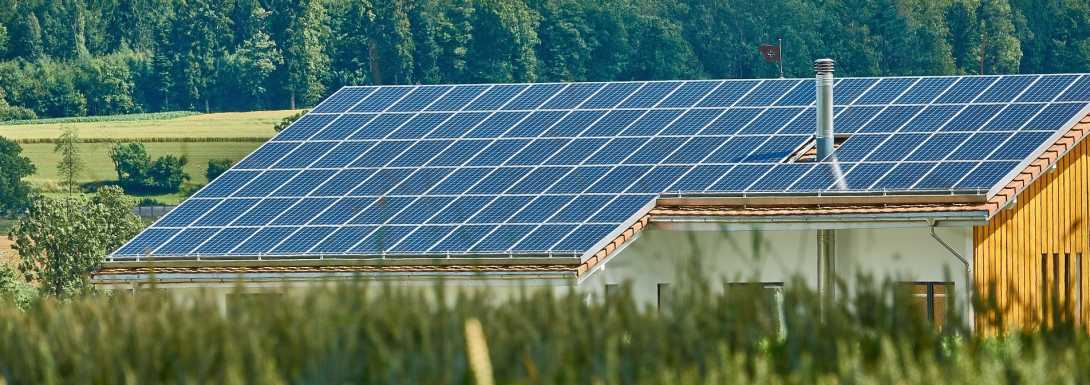
There are many major home improvements—such as adding solar panels or a geothermal heat pump—that can slash your energy consumption. But these are expensive and impractical for most existing homes. If you’re like the vast majority of Americans, you’ll need to start small with upgrades that don’t require a complete overhaul of your home. As HomeAdvisor explains, proper insulation is one of the best ways to reduce heat transfer. Insulation comes in rolls or can be blown into an attic to keep your home’s temperature stable. Other minor energy-saving remodels include swapping your old appliances and electronics for Energy Star-certified versions and using recycled materials when possible.
There are also improvements you can make to your landscape that will have a positive impact on the environment. Planting native trees, flowers, and shrubbery is an excellent way to provide a habitat and food source for local wildlife. Further, adding trees to your landscape can help reduce CO2 levels and counter the effects of global warming. And Canopy.org asserts that a single tree delivers the same cooling power as 10 residential air-conditioning units operating almost around-the-clock.

A community effort
If you’re more of a team player, there are plenty of ways to take your cause and make it a community interest. Ideas include starting a community garden and launching a carpool. Not only does a community garden have a cleaning effect on the environment, it also provides members of your neighborhood the opportunity to enjoy fresh produce. This is important, as many seniors and low-income people don’t have regular access to healthy fruits and vegetables. If you live in the city, you can still create opportunities to grow food and plant trees—which has the added upside of providing an education on environmental topics to city dwellers (many of whom may have never seen a farm). Children especially benefit from knowing where their food comes from and how it’s grown. If a garden is out of the question, shop at your local farmers market and encourage others to do the same. Sourcing food locally cuts down on water consumption and vehicle emissions, since it isn’t traveling hundreds of miles to your table.
Carpooling is another means of having a positive impact, by reducing the number of personal vehicles on the road. You can start your own carpool by simply reaching out to people in your neighborhood or in the office where you work.
There is no wrong way to save the environment. Every change you make is a change for the better. Don’t ever feel that one person can’t make a difference because you can. Whether you choose to plant a single tree or crusade for Mother Earth, your actions truly do matter.
Banner image courtesy of Roy Buri, Pixabay. Thumbnail/article image courtesy of Pexels.
The bus swayed back and forth, traveling down a narrow dirt road with so many potholes that it looked like a WWI battlefield. There was green everywhere, but not from the tall Amazonian trees that you would expect to see here in the heart of Brazil. Instead, huge soy fields lined both sides of the road for a good part of the 9-hour trip. It was hard not to take notice.
Our air conditioning was broken and dust blew in from the open windows as we sped towards the Xingu River, trying to get there before the rain. It was futile. Soon enough, rain was pounding on the old dirt road, turning the golden orange dust into a dark brown mud. At this point, the huge probability of getting stuck in a pothole meant that the driver couldn’t slow down. So, we pressed on.
Why were forty people shaking around in the back of an old bus in the middle of the Brazilian Amazon? Because we had all been invited to a meeting called by one the world’s most important indigenous leaders: Chief Raoni.

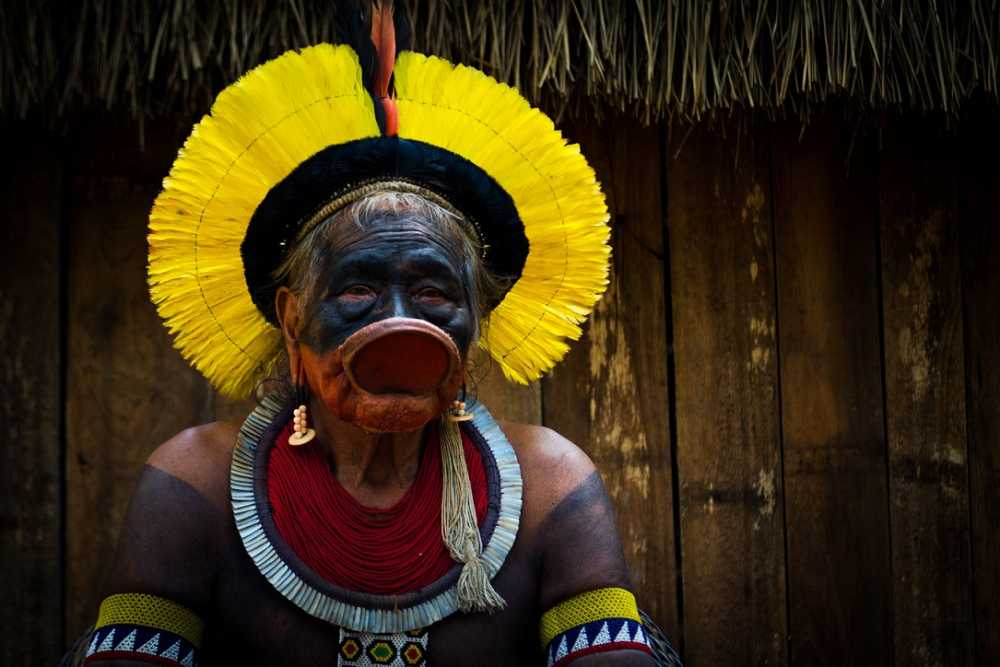
Chief Raoni in ceremonial war paint. (Photo by Rafael Forsetto)
Raoni Metuktire is a 90-year-old indigenous chief of the Mebengokre (Kayapó) people living in the state of Mato Grosso, Brazil. He rose to international fame in the ’80s and ’90s for his struggle to protect the Amazon and its indigenous population—his face and emblematic lip plate were all over the media of the time. Since then, he has led a quieter life back in his village, deep in the Brazilian Amazon.
Over the past year, however, Raoni has grown more vocal about the suffering of Brazil’s indigenous population and environmental destruction in the rainforest. He has gained momentum once again and is drawing everyone’s attention to an Amazon plagued by wildfires, logging and mining. His efforts have resulted in a nomination for the 2020 Nobel Peace Prize. If successful, Raoni, an indigenous man, will become Brazil’s first Nobel Laureate.
Rampant deforestation has put Brazil’s native population in a critical position. In response, Raoni issued a call this January urging indigenous leaders and supporters to meet at Piaraçu village, on the shores of the Xingu River, to debate and prepare a plan of action to present at Brazil’s National Congress. I was one of the few press observers invited to attend—a 9-hour ride on the rickety bus was a small price to pay to witness this event.

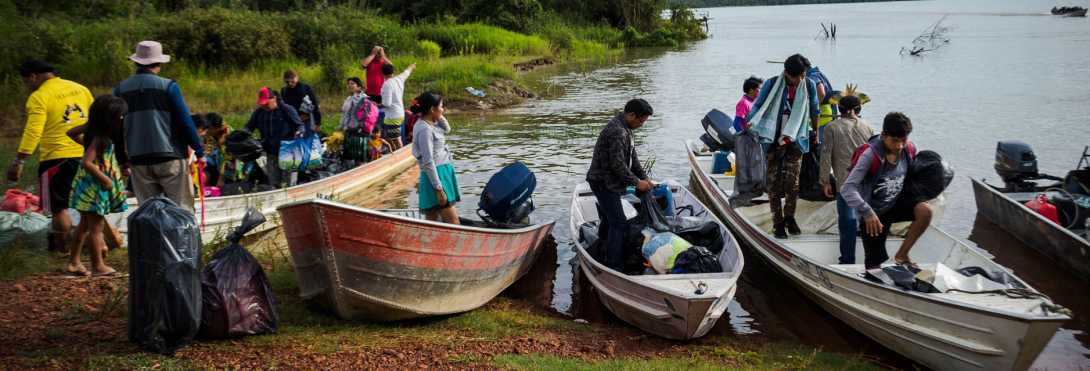
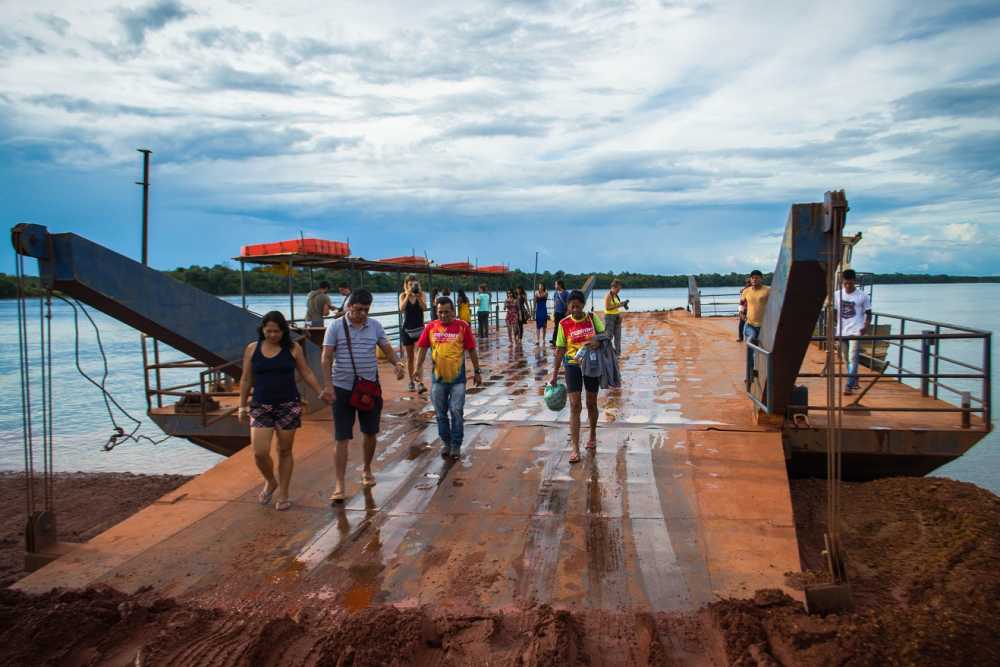
A ferry carried us across the Xingu River. (Photo by Rafael Forsetto)
We finally arrived at the river at about 4 PM. As the ferry floated over to carry our bus across, I noticed boats docking on the other side of the shore. Over 600 indigenous leaders from 47 different tribes had traveled for many hours to be here for the event. You can’t ignore a summons from the legendary chief. As a member of the Fulni-ô tribe told me: “when Raoni calls, it’s important.”
This was my first time in an indigenous village and, of course, I was mesmerized. I wanted to see the sights, talk to the locals and learn about their culture. However, it soon became clear that this was no ordinary day at the village. Never before had this many indigenous leaders gathered in the same place. We were witnessing a historic moment in the fight for the Amazon.
The event started the next day. I made my way to the House of Men, a large structure of wood and hay specially constructed for the debates of the next four days. There, sitting cross-legged on a wicker chair (the seat of honor), was Raoni. A 90-year-old man who could easily be in his 60s. Even when sitting down, he was imposing. Sharp eyes, long white hair, perfect posture. War paint decorated his body. He sat smoking a tobacco pipe, waiting for the crowd to settle in and quiet down. Once everyone was there, he spoke.
“We’re not meeting here to plan a war or conflict,” the chief said. “We are here to defend our people, our cause, and our land”. Raoni spoke in his native language with a Portuguese interpreter at his side. I wished I could understand Mebengokre, because there’s always something that gets lost in translation. Even so, I was transfixed. This man has met with some of the most powerful people in the world, and there he was, a couple of feet away from me, speaking to us just as he spoke to them. It seemed as if it didn’t matter whether he was at the Élysée Palace or at a local school—his message remained the same.

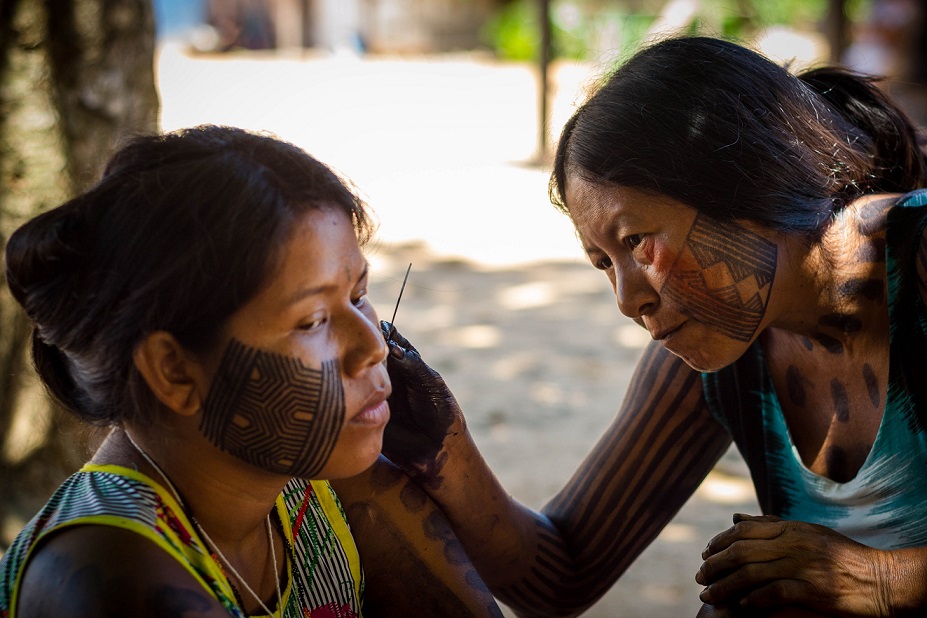
A Mebengokre mother paints the face of her daughter. (Photo by Rafael Forsetto)
The meeting lasted for four days overall, likening itself to official state negotiations. In democratic fashion, all participants who had something to say were free to step up and make their voices heard. The indigenous peoples exercised mutual respect throughout the meeting, guaranteeing that all groups had a chance to speak. But it was the women and youth who really captivated me.
Most of the indigenous tribes represented at this event have patriarchal structures, with a male chief leading the group. However, this didn’t deter the women present from sharing their own thoughts—not even slightly. Outspoken and unrelenting in their statements, they made it clear that their mission was the same as everyone else’s: to save the Amazon and its peoples from aggressive development policies. When these women spoke, people rushed over to the stage and huddled together to hear their passionate speeches on women’s roles in environmental protection. I’d be hard-pressed to name a more inspiring moment than the women’s roundtable, which featured indigenous women of all ages sharing their stories and demands for a better tomorrow.
Youth participation was also through the roof. Young people all over the world have been bringing new views to the climate movement, and Brazil’s indigenous youth are no different. Organized and highly motivated to make a difference, they demanded a seat at the table to make their voices heard. I was most impressed with their ability to communicate, not just verbally, but through digital and social media as well.
Many of them are part of indigenous news organizations or film collectives that seek to share and reinforce their cultures. What really drew my attention, however, was how they’re also already passing on their knowhow and teaching indigenous children and teens how to work media equipment and tell their own stories. You can check out some of these youth leaders’ work on Instagram at @midiaindiaoficial and @coletivobeture.

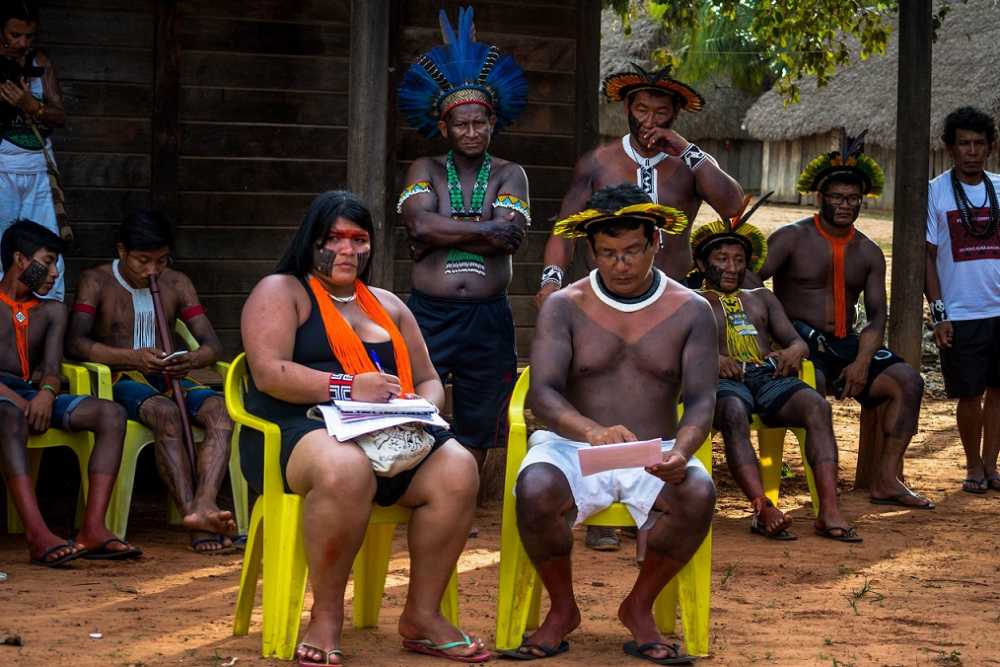
Tribal representatives read the Piraçu Manifesto aloud for the assembled crowd. (Photo by Rafael Forsetto)
As the debates went on, lawyers and volunteers compiled the indigenous demands in a four-page document dubbed the Piaraçu Manifesto. The Manifesto demanded respect, protection and the recognition of Chief Raoni as a spokesperson for the Brazilian indigenous. “We do not accept gold digging, mining, agribusiness and leasing of our lands, we do not accept loggers, illegal fishermen, hydroelectric plants and other projects […] that will impact us in a direct and irreversible way,” the document states.
The Piaraçu meeting is now over, but I am honored to have seen it all happen firsthand. I noticed that the indigenous peoples are some of the most engaged participants in the fight to end the climate emergency. By fighting for their home in the Amazon, they’re fighting for all of our homes. They are on the frontlines, suffering very real casualties, and it’s essential that we stand with them. Let’s incorporate the indigenous cause into our climate strikes and raise awareness about their plight. You can help by posting with #raoninobeldapaz2020 #raoninobel #savetheamazon. Chief Raoni’s fight is the same as all of ours—a fight for a better future.
Banner and thumbnail images courtesy of Rafael Forsetto.
Planning an elaborate event is always daunting, especially if you want it to be as climate-friendly as possible. To ensure your next big shindig, feast or festival is sustainable with a minimum of stress, check out this illustrated and easily navigable top-to-bottom how-to guide from TickPick.com.
Eager to replace your outdated, run-down appliances but unsure of how to dispose of them sustainably? Fear not! These handy illustrated instructions from Basement Guides will show you how to properly recycle your disused microwaves, TV sets, and more.
Author's Note: I'm Tyler from Green Teens Club. We're trying to make the world a little greener by spreading green resources online and through acts of service in our communities.
Kids aren’t often given enough credit. Although people are quick to point out the youngest generation’s faults, many of them deeply care about big issues such as equality and water conservation.
And if they don’t currently seem to care, their viewpoints can be shaped by what we do as the adult influences in their lives. Here are 25 ways to encourage them to save water.

25 Ways to Help Children Save Water
- Don’t underestimate them: They can handle hearing about scary topics such as water scarcity.
- Make it a game: See who can take the fastest shower.
- Show them other kids making a difference: Greta Thunberg might be a big inspiration to them.
- Have them reuse towels: Reusing towels in your household might seem like a small act. But cutting down on one load of laundry a week can save 30 to 40 gallons of water.
- Lead by example: Show them you care and they’ll likely follow suit.
- Turn off the faucet when brushing teeth: That can save gallons of water over the course of a week, and it’s one of the most painless ways to conserve.
- Ask them to notify you if they notice a way to improve: Open the lines of communication -- they might have some great ideas.
- Teach them baths use more water than showers: You both can save the baths for special occasions. Opt for showers most of the time instead.
- Report leaks and drips as soon as possible: That will allow you to repair them in a timely fashion. Your child may want to watch you repair the leak too, so they can learn a new skill.
- Have them be responsible for keeping a pitcher of water in the refrigerator at all times: That pitcher of water will always be cold, cutting down on the time you run the sink waiting for a cold glass of water.
- Teach them to scrape rather than rinse dishes: There is no need to rinse the dishes before placing them in the dishwasher.
- Teach them to recycle: Recycling saves a lot of water usage. Make it a high priority for your children.
- Buy them a reusable water bottle: Remind them that every time they carry this with them instead of using a disposable water bottle, they are saving water. Plastic production takes a lot of water.
- Ask them to be a good example for their younger sibling: Kids want to be someone to look up to. And if they know little eyes are watching them, they’ll double up on their efforts.
- Have them save energy too: Kids don’t always make the link between saving energy and water. Teach them to shut off the lights and television when they aren’t in use.
- Show them some YouTube videos about conservation: Kids are drawn to the screen and sometimes those lessons sink in better than the ones we try to teach them.
- Tell them they don’t always have to flush: It doesn’t hurt anything to not flush your toilet after a child pees in it. Teach them if it’s brown flush it down, if it’s yellow, let it mellow.
- Have them draw a picture about water conservation: It might be of sad animals looking for water, or of a dry planet. Once they draw the picture, hang it somewhere you’ll all see it. It will become a source of motivation.
- Take them to a lake: A place of beauty will often make children understand why they need to conserve water. Never underestimate the power of a pretty place. Remind them that saving water will protect that spot for future families to enjoy.

- Read a book: A book about the importance of water will help drive home why this issue is vital. A great pick is The Water Princess.
- Let your child skip some showers: Unless your child is hardcore into playing outdoors or playing sports and they are always sweating, they don’t need a daily bath. Every other day is just fine.
- Have a water cup designated for all-day use: Kids are notorious for taking one sip of water and then getting a new cup out next time they are thirsty. Have them use one cup all day for their water breaks.
- Train them to use old water for indoor plants: They can use water leftover from cups around the house to water plants instead of dumping them down the drain.
- Grow a vegetable garden: That cuts down on water usage for packaging and transporting vegetables to grocery stores. It’s a fun way to conserve water and teach children.
- Try to lower the water meter usage: This is a tangible way to show your efforts are paying off. Let your children see how much water you’ve saved month to month. Use those monetary savings to do a fun family activity together as a reward.
Don’t Forget: A Little Adds Up
Remember to teach your child that no amount of water saved is insignificant. It can all add up to big savings over time. Together, your family can make a huge difference.
About the Author

Sylvia Jones is a freelance writer and mother of two from Indiana, USA. Sylvia is passionate about water conservation, the environment, and lowering her carbon footprint.
Preview thumbnail courtesy of tookapic (Pixabay). Banner image courtesy of Katja Just (Pixabay). Body images courtesy of, respectively, Alina Kuptsova and jplenio (Pixabay).
One of the steepest challenges climate advocates face while working to raise awareness of the climate crisis and spur tangible on-the-ground action is the simple task of communication. How can we effectively translate the outputs of the scientific community for the public in a way that is faithful to the findings but also viscerally compelling and easy to internalize? This question is at the heart of Maxwell Boykoff’s new book, titled Creative (Climate) Communications: Productive Pathways for Science, Policy and Society.
The Director of the Center for Science and Technology Policy Research at the University of Colorado Boulder’s Cooperative Institute for Research in Environmental Sciences, Boykoff approaches climate communication with an open mind but a scholarly eye, substantiating each of his conclusions with numerous real-world case studies. Boykoff says he wrote Creative (Climate) Communications to “help us see through the clutter of disparate research and practice in these areas and provide some helpful guidance for ongoing work to effectively move forward with climate action.”
A persistent theme in the book is the idea that “making [climate change] real” for those not yet directly impacted by the climate crisis demands creative—even artistic—modes of engagement. “Creative communications entail work to stir feelings and conjure emotional ways of knowing about climate change,” Boykoff writes. This is the approach we at Connect4Climate take ourselves, convening people and raising awareness through film, music, fashion and more. Boykoff stresses the importance of communicating in ways beyond raw data and academic explication—in order to truly sway climate contrarians, he says, advocates must connect with them on a personal, emotional level.

‘British Persuasion’ created & performed by Joey Filmanowicz, Kyle Fowler & Jules Murtha. From the April 2019 'Stand Up for Climate Change' live comedy show at CU Boulder. Credit: Lianna Nixon
Boykoff himself is no stranger to work in novel climate communication. He co-founded at the University of Colorado a multidisciplinary project called Inside the Greenhouse, “designed to facilitate and support creative storytelling about issues surrounding climate change through video, theatre, dance and writing to help connect wider and new audiences to climate change in resonant and meaningful ways.” He details in the book some of the many creative approaches his students have come up with under this initiative.
From cover to cover, Creative (Climate) Communications offers a humane and holistic look at the climate crisis. Its open-mindedness and embrace of a case-by-case “silver buckshot” approach to successful climate communication is both admirable and essential in our contentious and misinformation-rich modern world. This is invaluable reading material for anyone passionate about expressing effectively the dangers our planet faces, and it is now available for purchase online.

Inside the Greenhouse Co-Directors with photographer James Balog: Phaedra Pezzullo (far left), Rebecca Safran (middle left), James Balog (middle), Beth Osnes (middle right), Max Boykoff (far right). Credit: Patrick Chandler
Banner/thumbnail image courtesy of Fabio Marciano, Pixabay.