|
"Creative Climate Communications": a Maxwell Boykoff Book
One of the steepest challenges climate advocates face while working to raise awareness of the climate crisis and spur tangible on-the-ground action is the simple task of communication. How can we effectively translate the outputs of the scientific community for the public in a way that is faithful to the findings but also viscerally compelling and easy to internalize? This question is at the heart of Maxwell Boykoff’s new book, titled Creative (Climate) Communications: Productive Pathways for Science, Policy and Society.
The Director of the Center for Science and Technology Policy Research at the University of Colorado Boulder’s Cooperative Institute for Research in Environmental Sciences, Boykoff approaches climate communication with an open mind but a scholarly eye, substantiating each of his conclusions with numerous real-world case studies. Boykoff says he wrote Creative (Climate) Communications to “help us see through the clutter of disparate research and practice in these areas and provide some helpful guidance for ongoing work to effectively move forward with climate action.”
A persistent theme in the book is the idea that “making [climate change] real” for those not yet directly impacted by the climate crisis demands creative—even artistic—modes of engagement. “Creative communications entail work to stir feelings and conjure emotional ways of knowing about climate change,” Boykoff writes. This is the approach we at Connect4Climate take ourselves, convening people and raising awareness through film, music, fashion and more. Boykoff stresses the importance of communicating in ways beyond raw data and academic explication—in order to truly sway climate contrarians, he says, advocates must connect with them on a personal, emotional level.
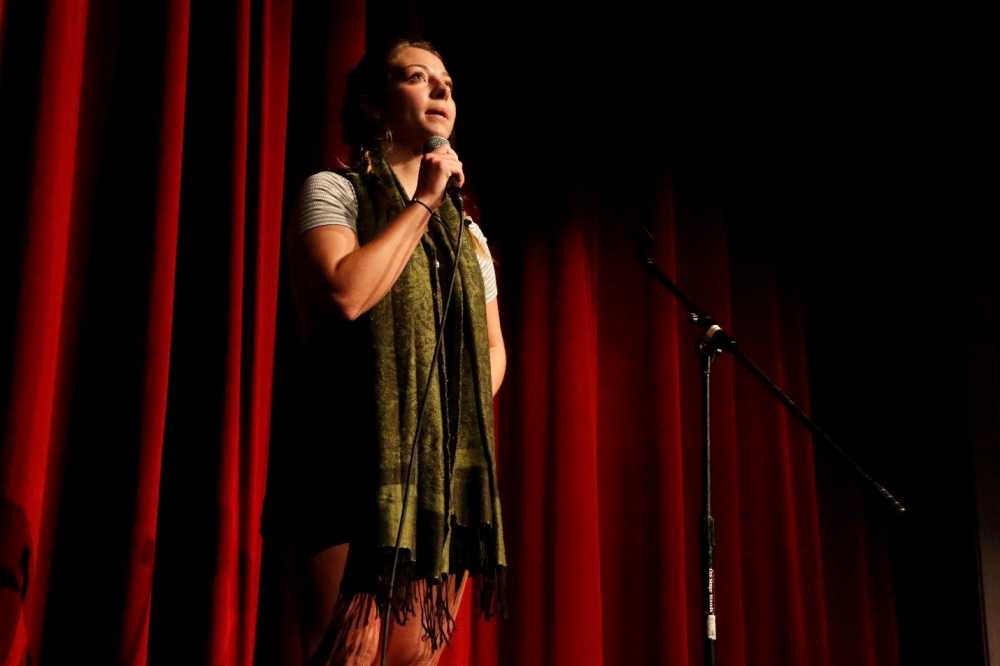
‘British Persuasion’ created & performed by Joey Filmanowicz, Kyle Fowler & Jules Murtha. From the April 2019 'Stand Up for Climate Change' live comedy show at CU Boulder. Credit: Lianna Nixon
Boykoff himself is no stranger to work in novel climate communication. He co-founded at the University of Colorado a multidisciplinary project called Inside the Greenhouse, “designed to facilitate and support creative storytelling about issues surrounding climate change through video, theatre, dance and writing to help connect wider and new audiences to climate change in resonant and meaningful ways.” He details in the book some of the many creative approaches his students have come up with under this initiative.
From cover to cover, Creative (Climate) Communications offers a humane and holistic look at the climate crisis. Its open-mindedness and embrace of a case-by-case “silver buckshot” approach to successful climate communication is both admirable and essential in our contentious and misinformation-rich modern world. This is invaluable reading material for anyone passionate about expressing effectively the dangers our planet faces, and it is now available for purchase online.
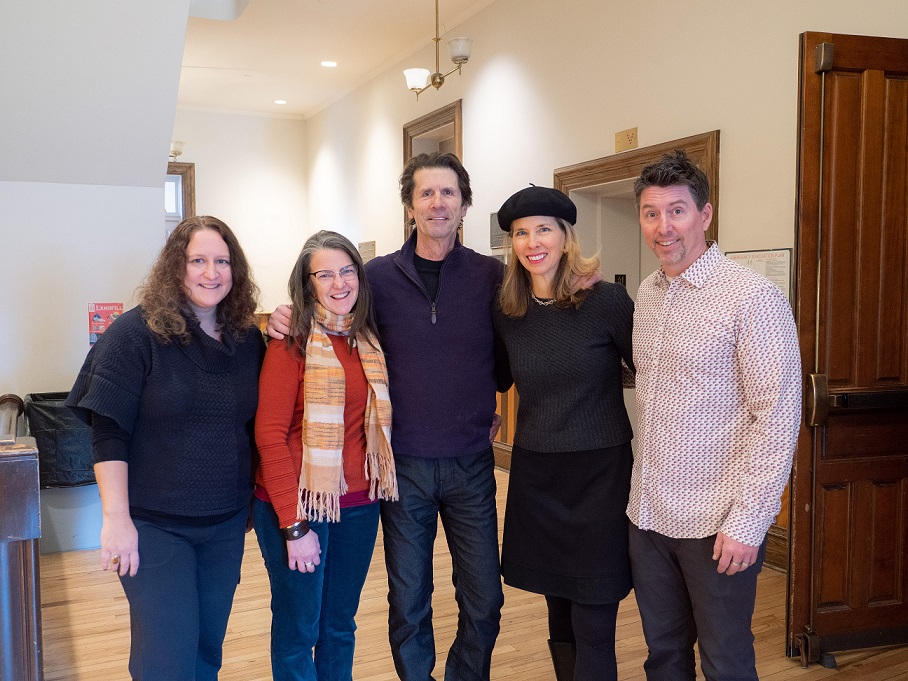
Inside the Greenhouse Co-Directors with photographer James Balog: Phaedra Pezzullo (far left), Rebecca Safran (middle left), James Balog (middle), Beth Osnes (middle right), Max Boykoff (far right). Credit: Patrick Chandler
Banner/thumbnail image courtesy of Fabio Marciano, Pixabay.
We take our cues about what’s important from what we hear our family, friends, colleagues and neighbours talk about.
|
Revitalizing Ethiopia's Forests
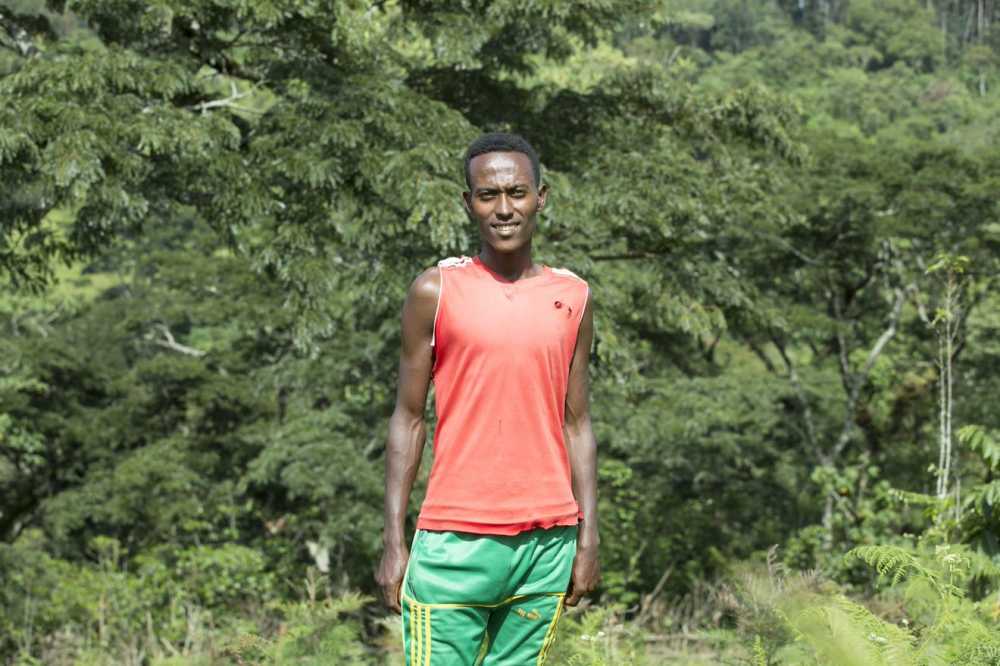
Nesredin Abdurrahman is an 18-year-old Ethiopian student who works half days as a sentinel on a reforestation site in Bufata Tiyara, Gore woreda, Oromia. He and his friend take turns watching the site to ensure that no human interference or animal grazing endangers the plants that the community are growing on their land. Thanks to technical and logistical support from the Oromia Forested Landscape Program (OFLP), more than 17,000 tree seedlings have been planted to date in two sites divided by an old airport field on the outskirts of the Gore woreda. Gore is one of 49 “deforestation hotspot” woredas in Oromia Regional State, where the BioCF Initiative for Sustainable Forest Landscape (ISFL) program is working to combat deforestation.
The program, which started in May 2017, aims to reduce greenhouse gas emissions and improve sustainable forest management in the region. The program draws on an $18 million grant to finance on-the-ground investments and is allotting Emission Reductions Payments at a rate of $5 / ton for verified emissions reductions up to 10 million tons ($50 million) through 2029. OFLP aims to bring a total of 120,000 hectares of forest area under formal forest management and reforest 9,000 hectares by 2022. After two years of implementation, investments on the ground have yielded promising results in terms of reforestation area and Participatory Forest Management (PFM): about 9.8 million seedlings have been planted over nearly 3,400 hectares in the last two rainy seasons and about 22,770 hectares of forest area have been brought under the umbrella of forest management.
The afforestation/reforestation (A/R) activities carried out under OFLP in the Gore woreda are particularly critical because the area is situated in one of the last two relatively intact high montane forests remaining in the country— the impacts of deforestation here are likely to stretch far beyond the borders of the woreda. Absent strong action in this region, Ethiopia’s aspiration to build a green climate-resilient economy by 2030 and fulfill its Nationally Determined Contribution under the Paris Agreement (as well as other global climate commitments) could be put at risk. The Gore woreda is located in Southwest Ethiopia, home to arabica coffee as well as headwaters for the second major tributary of the Nile. It influences rainfall distribution across many areas of the country and is of vital importance to the overall ecosystem.
The forests of Illu Abba Bora in particular trap considerable reserves of carbon and are a critical source of atmospheric moisture for climate stabilization in the drought-prone Northern Highlands. Furthermore, these forests are instrumental in supporting everyday livelihoods and allowing communities to achieve climate resilience. Marginalized groups and women in particular rely heavily on natural forests for their livelihoods. In the most densely forested regions, between one third and one half of annual household income stems from forest resources.
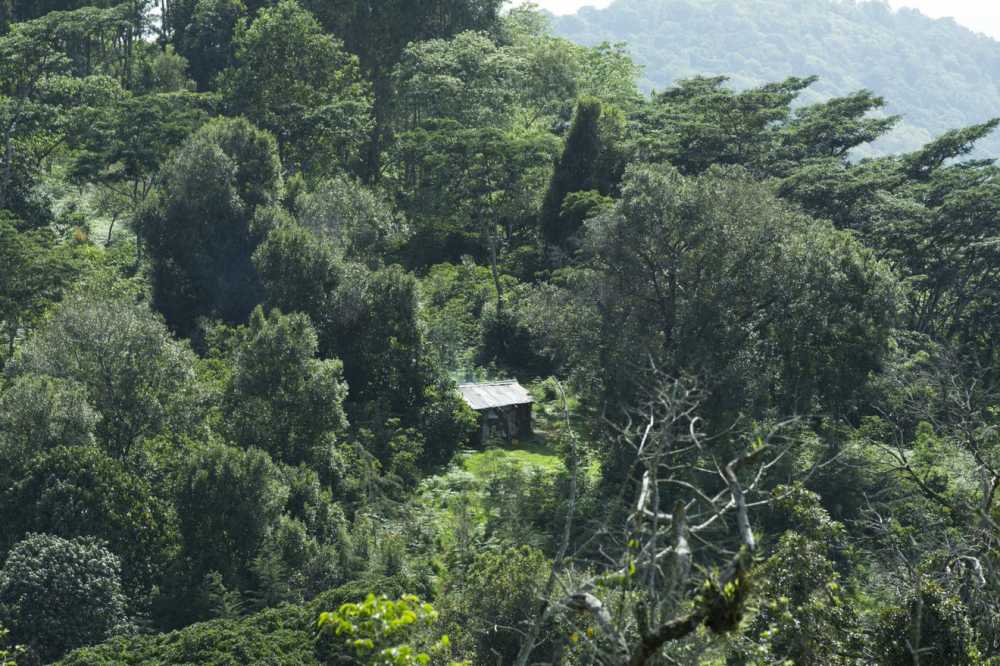
The Bufata Tiyara A/R sites are fenced to avoid animal and human interference, and the local community has established bylaws that clearly outline the fees to be paid by the owners of trespassing animals. In addition to the guards, members of the community regularly look after the seedlings until the plants are fully grown. At one of the sites, women community members have proven particularly precise in planting the seedlings and effective at taking care of them. According to Mr. Desalegn, chairperson of the community group of Bufata Tiyara-2, their commitment is exemplary: he has said they are as dedicated to nurturing the seedlings as they are to providing for their own children. For this reason, the seedlings in this site are developing fast and looking very healthy. Thanks to the A/R efforts in the region, the remains of the old trees are regenerating themselves, promising a revitalization of the natural forest and a return of all the various indigenous trees that once defined the landscape.
OFLP is supporting similar A/R activities in other hotspot woredas in Oromia, contributing to Ethiopia's ambitious national “green legacy” initiative. By the end of the rainy season this year, the government of Ethiopia had planted over 3.5 billion trees, an effort which required every citizen to sow 40 seedlings. As part of this initiative, officially launched by the Ethiopian Prime Minister on May 26, 2019, 350 million trees were successfully planted on July 29 alone. The initiative aims to increase substantially Ethiopia’s forest coverage, which according to the UN declined from 30 percent to 15.5 percent between the late 19th century and early 21st.
A leader on climate action, forests, and sustainable land management, Ethiopia set a precedent with this program. The benefits of OFLP go beyond emission reductions to include poverty reduction and resilient livelihoods, biodiversity conservation, promotion of household energy options (affecting mostly women) and water provisioning services important for the current and future energy profile of Ethiopia. This innovative approach has been already used as a model for similar programs in Colombia, Zambia, Mozambique and the DRC and has the potential to help build green legacies in countries around the world as we collectively move towards a sustainable future.
Photos by Binyam Teshome on behalf of the BioCarbon Fund Initiative for Sustainable Forest Landscapes.
|
Renewable Energy Solutions to the Water-Energy-Climate Nexus
The water sector is energy-hungry, with energy consumption by the sector equivalent to all the energy used by Australia. In 2014, around 4% of global electricity consumption was used to extract, distribute, and treat water and wastewater as well as 50 million tons of oil equivalent of thermal energy.
By 2040, the amount of energy used in the water sector is likely to double due to trends including increased desalination, large-scale water transfers, and increasing demand for wastewater treatment, as well as higher levels of treatment.
The energy used to supply water and clean used water is responsible for around 3–8% of global greenhouse gas emissions. With global demand for water projected to increase by 55% by 2050, a business-as-usual scenario will see emissions increasing by 50% in the same timeframe.
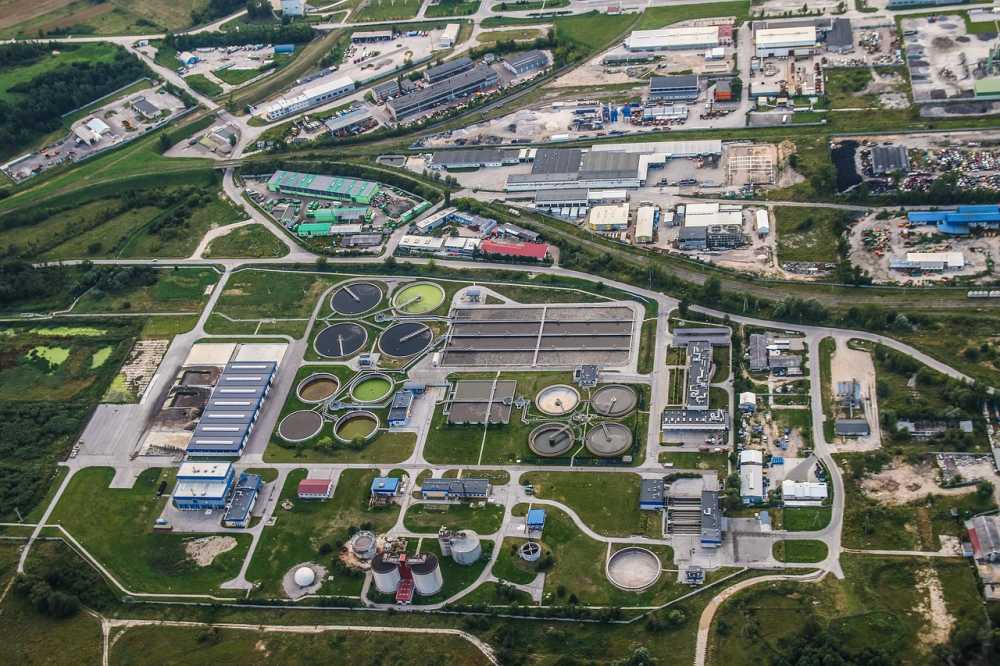
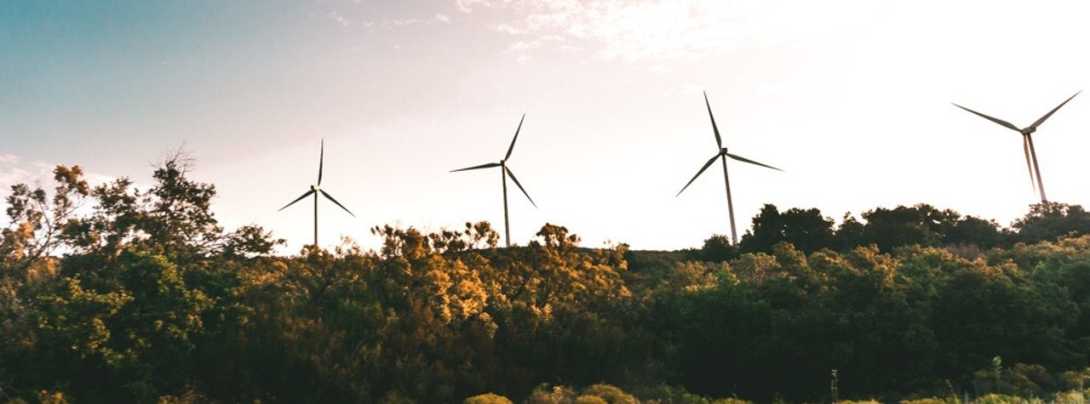
Image by Michal Jarmoluk from Pixabay
Decoupling Emissions from GDP Growth
As part of the San Diego’s Climate Action Plan, which calls for clean and renewable energy to be generated via a combination of on-site and large-scale renewables, San Diego’s Public Utilities Department has a forward-thinking renewable energy program that generates more renewable energy from water and wastewater than any other San Diego Gas & Electric customer. In addition to reducing water-energy-climate nexus challenges, the program has contributed towards the city’s 21% reduction in greenhouse gas emissions compared to the 2010 baseline (at the same time GDP growth has increased by 35%).
Utilizing Methane
One of the by-products of the wastewater treatment process at Point Loma Wastewater Treatment Plant is methane gas. The gas is used to fuel two continuously running generators that can each produce up to 2,235 kilowatts of electricity. A diesel-powered generator can also burn methane and produce an additional 1,220 kilowatts as a peaking generator. By utilizing the methane gas, it means the site is energy self-sufficient, with excess power generated sold back to the grid.
At the Metropolitan Biosolids Center, which produces dewatered biosolids that are around 30% solids and 70% water, methane produced by the digesters and from the adjacent Miramar Landfill is converted to electricity, which is used to run the facility. Thermal energy produced by the generators is used to heat the plant, as well as for air conditioning of the center.
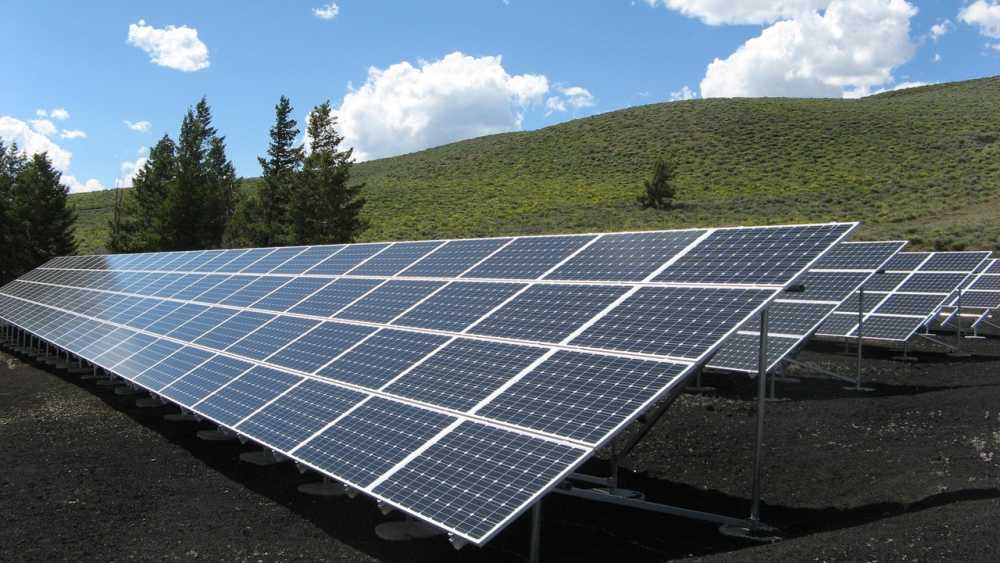
Image from Pixabay
The Sun’s Power
At three Public Utilities Facilities, solar photovoltaic systems have been installed:
- Alvarado Wastewater Treatment Plant has installed a 1.1-megawatt system, producing 1.4 million kilowatt-hours annually
- Metropolitan Operations Center III has installed a 30 kilowatt (AC) rooftop solar system that produces 45,000 kilowatt-hours annually
- Otay Water Treatment Plant has an 804 kilowatt (AC) system that produces 1.5 million kilowatt-hours annually
The Takeaway
Water utilities have multiple renewable energy options available to reduce water-energy-climate nexus pressures.
About the Author
Robert is the author of Urban Water Security (Wiley), The Green Economy and the Water-Energy-Food Nexus (Palgrave Macmillan), Blue and Green Cities: The Role of Blue-Green Infrastructure in Managing Urban Water Resources (Palgrave Macmillan), Natural Resource Management and the Circular Economy (Palgrave Macmillan), and Climate Resilient Water Resources Management (Palgrave Macmillan).
He is the editor of the Climate Resilient Societies book series with Palgrave Macmillan. Robert is a contributing author for the World Bank's Water Blog, Asian Development Bank's Blog, United Nations Industrial Development Organization's Making It Magazine, and Green Growth Knowledge Platform. He has published widely on water security, water resources management, and related issues, and has conducted field research around the world, including Antarctica. He is Founder of Mitidaption, Mark and Focus, and Our Future Water.
|
Breaking Down Barriers to Communicating Climate Science
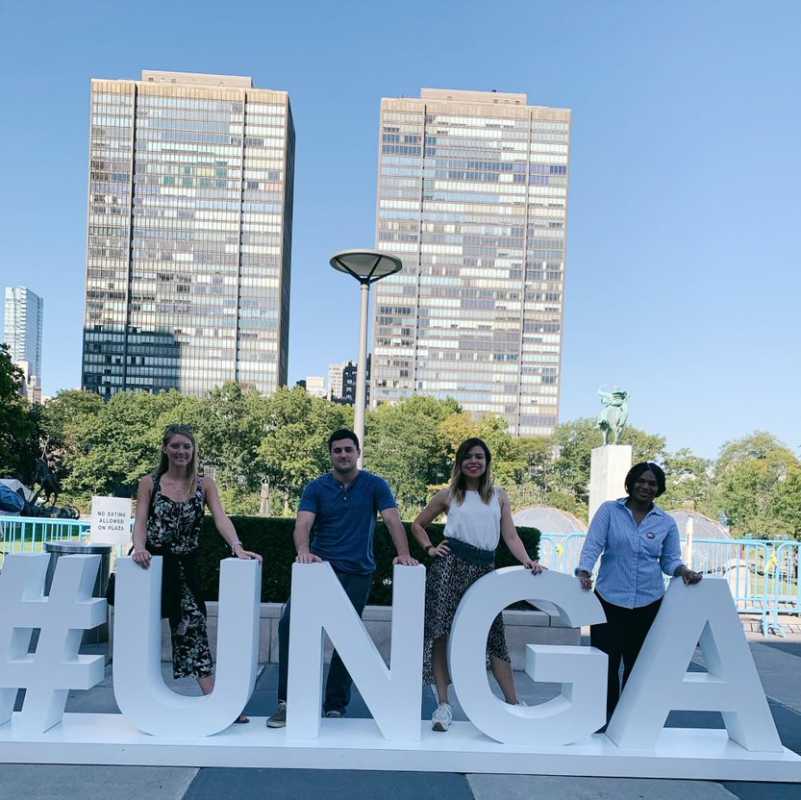
As scientists, effective communication is one of the most difficult challenges we face when discussing climate change, global warming, and other complex issues. This is particularly pressing when communicating to those who lack a scientific background or who are unfamiliar with the relevant terminology and scientific methods. During Connect4Climate’s #YouthTakeover at the United Nations (UN) Climate Summit, attendees deconstructed these barriers to tackling the critical issue of climate change. Participants from diverse scientific and non-scientific backgrounds, age groups, and geographic locations discussed their perceptions of climate change and the need for action in a way that everyone could understand.
These environmentally conscious changemakers included artists, government officials, filmmakers, fashion industry models, researchers, media specialists, high school and college students, business owners, musicians, journalists, and more. Each group of activists shared their unique perspectives in a digestible format on social media while also preserving the rigor of climate science. These groups of people, who are not typically proficient in quantitative science themselves, molded the principle of climate change into a universal language, and subsequently mobilized their followers into action toward climate change solutions. As a result, people everywhere could remotely access and understand topics such as fast fashion, climate finance, and pollution.
These climate activists publicized key facts about human-induced impacts on the environment that pertain to their followers’ fields of interests, expressed the urgency to act on climate change, and articulated how to transition to more environmentally conscious practices to abate these human-caused damages. Models from the fashion industry informed their social media followers about science in a way that captured the attention of like-minded individuals. For example, the models explained that many clothing designers do not consider the environment during the manufacturing process, and that the amount of energy and water required to produce those clothes results in adverse unintended consequences for the natural environment. Changemakers of all backgrounds contributed to and echoed this sentiment: musicians performed songs about caring for the environment; artists created masterpieces on the dangers we are currently facing and predicted to face; and CEOs of well-known businesses explained how carbon pricing can positively impact their industries and increase competitiveness. Moreover, youth encouraged other youth to engage in the growing climate movement.
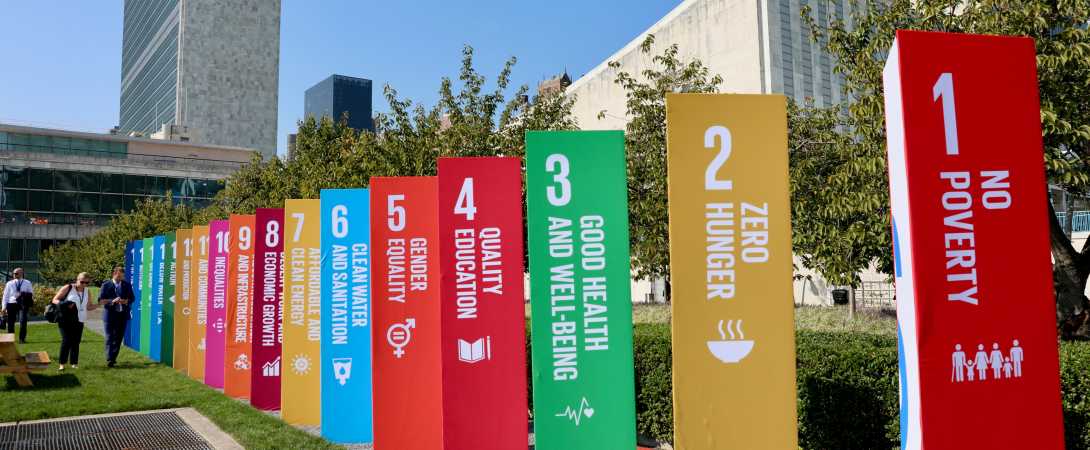
The most effective component of the weekend event was the collaboration among all of these people, as global citizens, to work towards solving the problems of climate change and to push for concerted action towards achieving the 17 UN Sustainable Development Goals. When people from a variety of backgrounds join together to work on a specific issue, stronger, more diverse and more achievable solutions emerge than when everyone stays confined to their own discipline. This could be observed at the Youth Policy Jam on Unlocking Climate Finance, where attendees of the Youth Climate Summit were divided into groups of ten to discuss how to procure more funding for youth programs combating climate change. Participants ranging from high school students to established World Bank and government officials provided their input, collaborating to produce a wealth of ideas that the young organizers of the Policy Jam, Youth Climate Lab, presented later that week during the UN General Assembly.
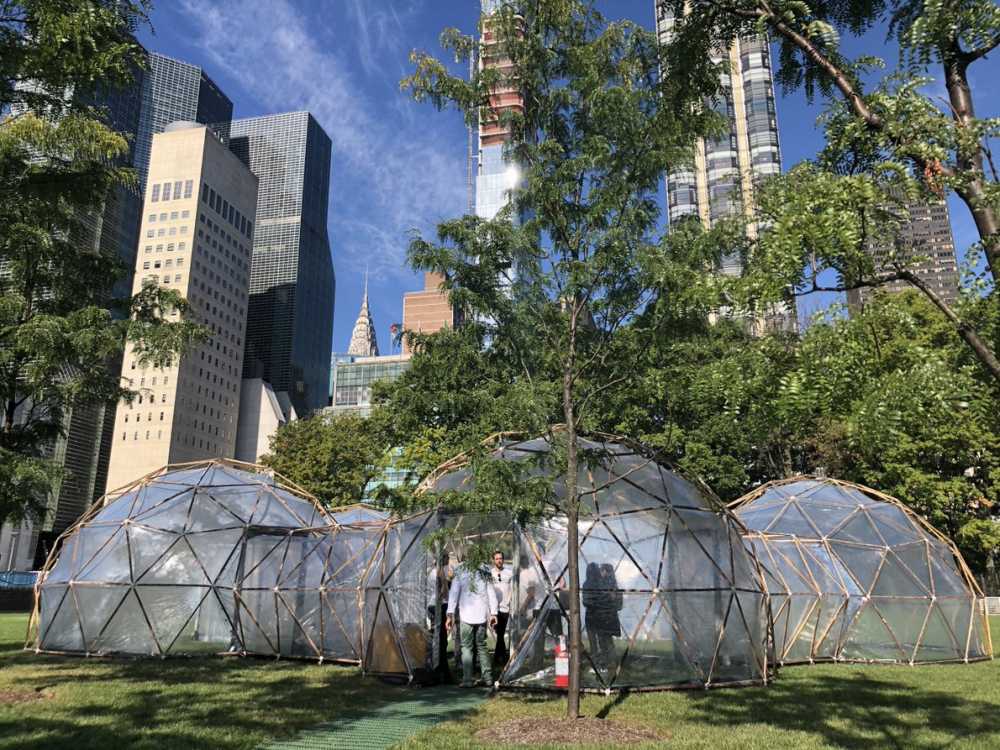
Another segment of the UN event featured Pollution Pods, an installation created by the artist Michael Pinsky and other urban planners, researchers, and activists. The pods simulated air quality from five different cities around the world: London, New Delhi, Beijing, São Paulo, and Oslo. These simulations included temporal changes in the concentrations of various pollutants from fossil-fuel-burning emissions, namely carbon dioxide, sulfur dioxide, ozone, nitrous oxide, and particulate matter. In some regions, such as New Delhi and Beijing, the pods were very hot, smelly, and hazy. Experiencing the air quality conditions in other cities worldwide was truly eye-opening. It is one thing to learn about pollution in school and universities but another to experience first-hand how these pollutants impact the natural environment and our own bodies. The collaborative effort behind the creation of these pods was remarkable, which made me hopeful that people who come from non-science backgrounds can grasp the weight of human-induced impacts on the environment and that the science community can communicate complex processes in simple and understandable terms to a general audience.
Connecting and working with people from non-technical backgrounds on the issue of global climate change is of utmost importance in our time. Although effective science communication is challenging, and some of its barriers persist, it gave me immense hope to see that creativity and partnerships can get the word out to many individuals who otherwise might disengage from science discussions because of the daunting jargon and nuances. Connect4Climate’s #YouthTakeover proved that effective dialogue is possible and that the steps we have already taken toward breaking down these communication barriers will catalyze climate action for our generation and those yet to come.
Banner image courtesy of Kaia Rose, Connect4Climate. Other images courtesy of the Connect4Climate #YouthTakeover team.
|
Greta Thunberg and #FridaysForFuture Leaders Honored by Amnesty International
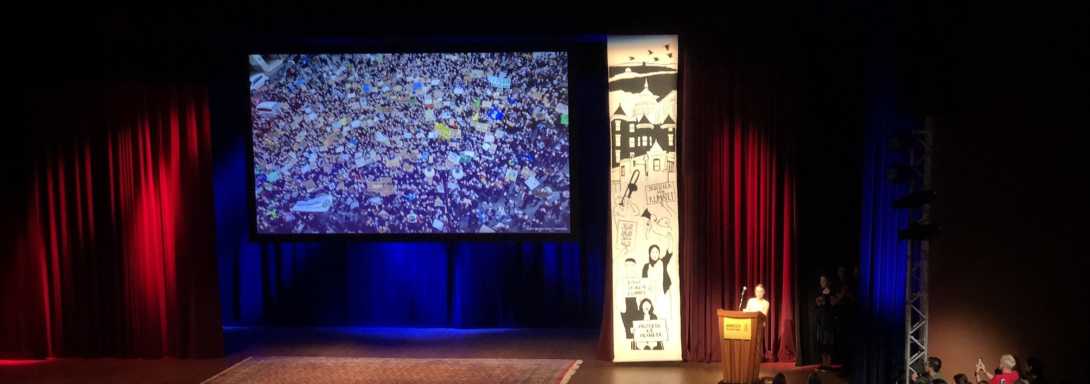
The human rights nonprofit Amnesty International is well known for its support of humanitarian causes around the globe; its ambitious goals include ensuring the rights of refugees and abolishing the practice of torture. In today’s world, climate change, too, has become a human rights issue, with more and more displaced each year by rising sea levels and increasingly intense natural disasters—a situation with the potential to grow exponentially worse absent swift and decisive action in line with the Paris Agreement of 2015. As Amnesty International’s Secretary-General Kumi Naidoo said on Monday at George Washington University, “The right to a liveable planet is essentially Article Zero of our basic human rights as a people.”
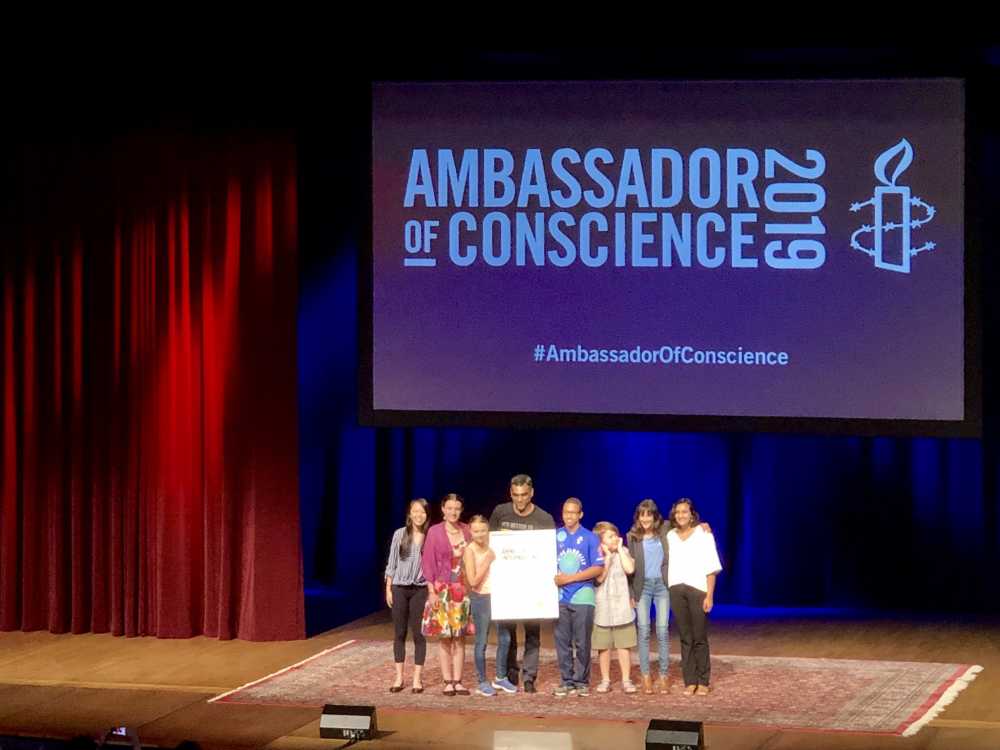
In recognition of the ongoing climate crisis and the amazing work youth activists around the world have been doing to raise awareness of it and spur concrete action, Amnesty chose to confer this year’s prestigious Ambassador of Conscience Award on School Strike for Climate founder Greta Thunberg and the regional leaders of the international #FridaysForFuture movement that her efforts in Sweden galvanized.
“All around the world, Amnesty is gathering to lift up these inspiring young climate activists who are ringing the alarm bell,” Amnesty USA Executive Director Margaret Huang stated at the awards ceremony Monday evening.
Two other young advocates of climate action, Takota Iron Eyes (16) and Ramona Sarsgaard (12), made it abundantly clear in their speeches why Thunberg and the #FridaysForFuture team were deserving of Amnesty’s highest honor. “At 16, I am worried about what it would look like if I want to have kids,” Iron Eyes candidly told the audience, her frustration at the lack of action on the part of older generations apparent. Sarsgaard echoed this sentiment, saying that “A child should not have to have this responsibility. But in order to make change, we cannot pretend that everything is okay.”
Thunberg has always maintained that it should not be the job of children to fix problems created and subsequently neglected by their parents. Her activism and that of the overarching #FridaysForFuture campaign is grounded in the use of public demonstrations to illustrate the gravity of the situation on the world stage and bring about transformative policy changes in government and industry.
“Right now, I think an awakening is taking place,” Thunberg asserted in her acceptance speech. “Activism works. So what I’m telling you now to do is act. See you on the streets.”
X-Ray Fashion Comes to Copenhagen
Timezone:
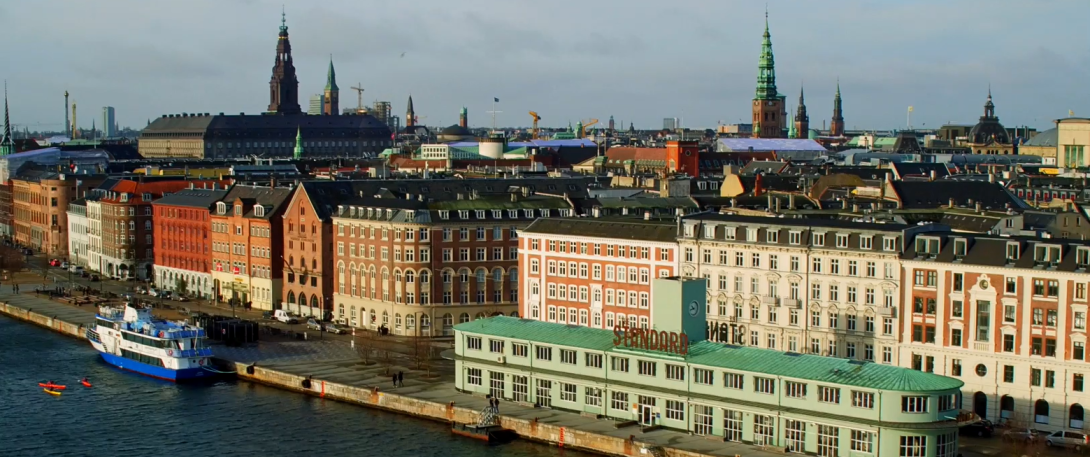
Copenhagen Fashion Week is now in full swing, showing off the latest in sartorial style for an audience of visitors from all over the globe. What better venue for a special screening of X-Ray Fashion, the Fashion4Climate virtual reality project developed by MANND, produced by C4C and Vulcan with the support of Alcantara, and directed by fashion photographer Francesco Carrozzini?
Youth Tackle the Fashion Industry at the UN’s Forum on Sustainable Development
Timezone:
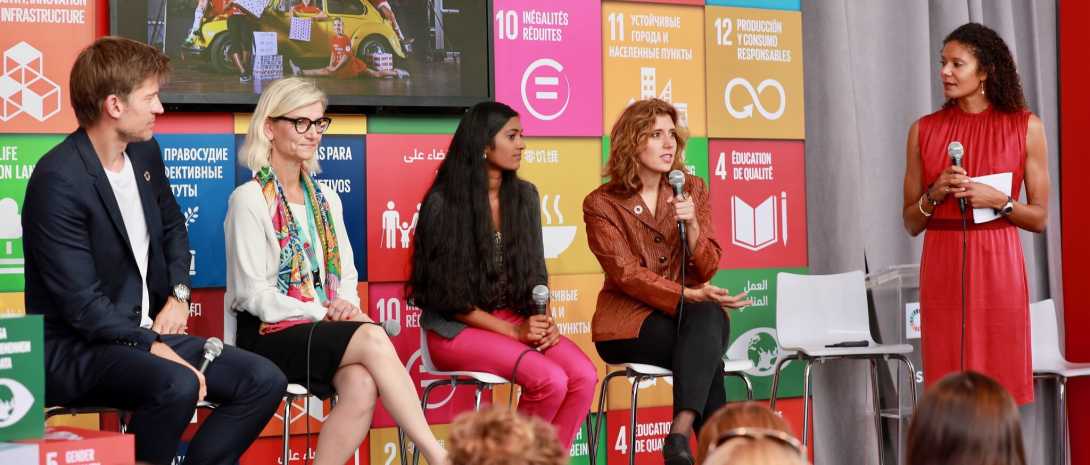
The United Nations’ High-Level Political Forum on Sustainable Development (HLPF for short), which aims to assess global progress on the Sustainable Development Goals and lay out new strategies in response, got underway in New York City this Tuesday and will continue through July 18. The concerns of young people are especially high on the agenda.