
The central idea of artificial intelligence, or AI—designing software capable of informed and impactful decision-making—has captured the publi

The central idea of artificial intelligence, or AI—designing software capable of informed and impactful decision-making—has captured the publi
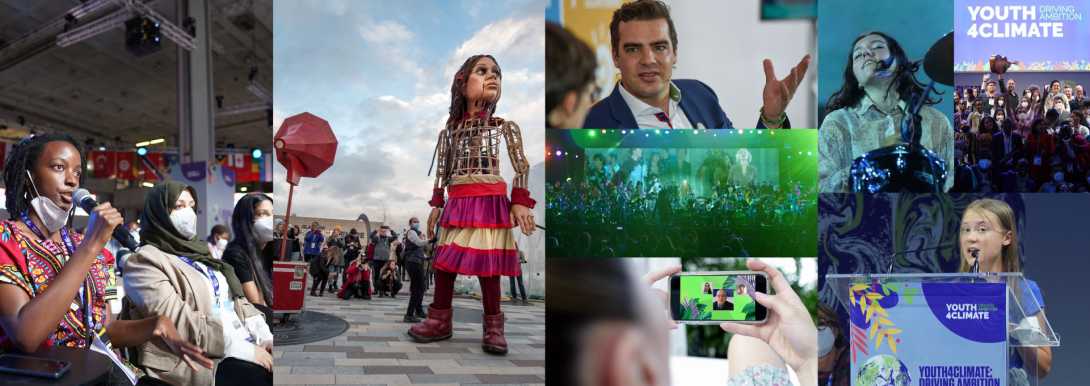
Rising to the challenge of the new virtual paradigm created by the COVID-19 pandemic, Connect4Climate and our partners worked hard in 2021 to
The product of a close yearlong collaboration between C4C and Italy’s Ministry for Ecological Transition (MITE), the #Youth4Climate Live Series of interactive and intergenerational virtual discussions paved the way to the Youth4Climate: Driving Ambition summit in Milan with deep dives into the event’s guiding climate action topics. Guided by expert moderation from C4C Youth Ambassadors Salina Abraham and Ahmed Badr, youth leaders and experienced climate policymakers exchanged ideas in hour-long episodes peppered with polls and Q&A segments that encouraged dynamic audience participation.
The final two episodes in the series, on Driving Adaptation & Resilience (aired Jan. 22) and Driving Local Action (aired Feb. 26), were the perfect kick-off to 2021, setting the stage for engagements to follow around the landmark youth summit, the Pre-COP preparatory climate conference, and COP26, the biggest event of the climate calendar.
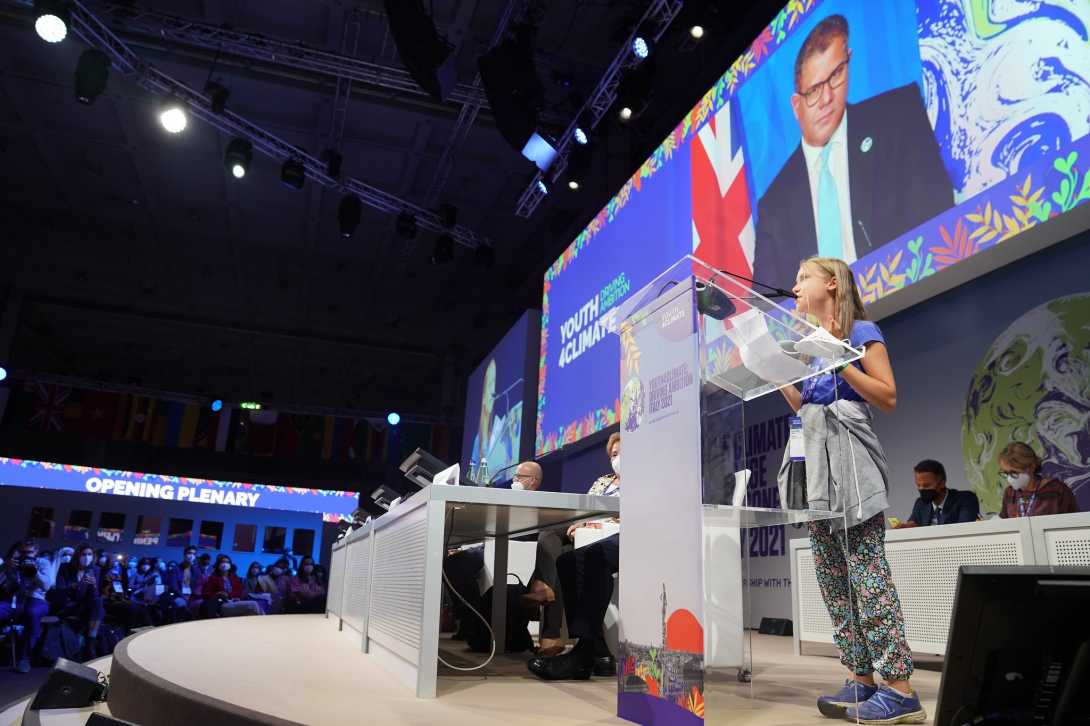
As a key partner of the Italian Government and the Ministry for Ecological Transition, Connect4Climate was proud to support Youth4Climate: Driving Ambition with contributions to its content, advocacy campaigns, and overall engagement strategy. Opening with impassioned remarks from Vanessa Nakate and Greta Thunberg, the summit brought nearly 400 international youth delegates—two each from almost all of the 197 countries party to the United Nations Framework Convention on Climate Change (UNFCCC)—to Milan, Italy for three days of intensive deliberations that resulted in the Youth4Climate Manifesto.
In the opening session of Pre-COP26, the central points of this youth declaration were presented to leaders including Italian Prime Minister Mario Draghi, Special Presidential Envoy for Climate John Kerry and COP26 President Alok Sharma. The demands of the Youth4Climate Manifesto then made their way to Glasgow, feeding into the COP deliberations there and setting a tone of much-needed urgency and ambition.
You can review the demands of the Youth4Climate Manifesto in our accessible overview article here. We look forward to continuing to support and grow Youth4Climate in the years to come, as Italian Minister of Ecological Transition Roberto Cingolani confirmed at COP26 that his country is committed to making Youth4Climate an annual initiative.
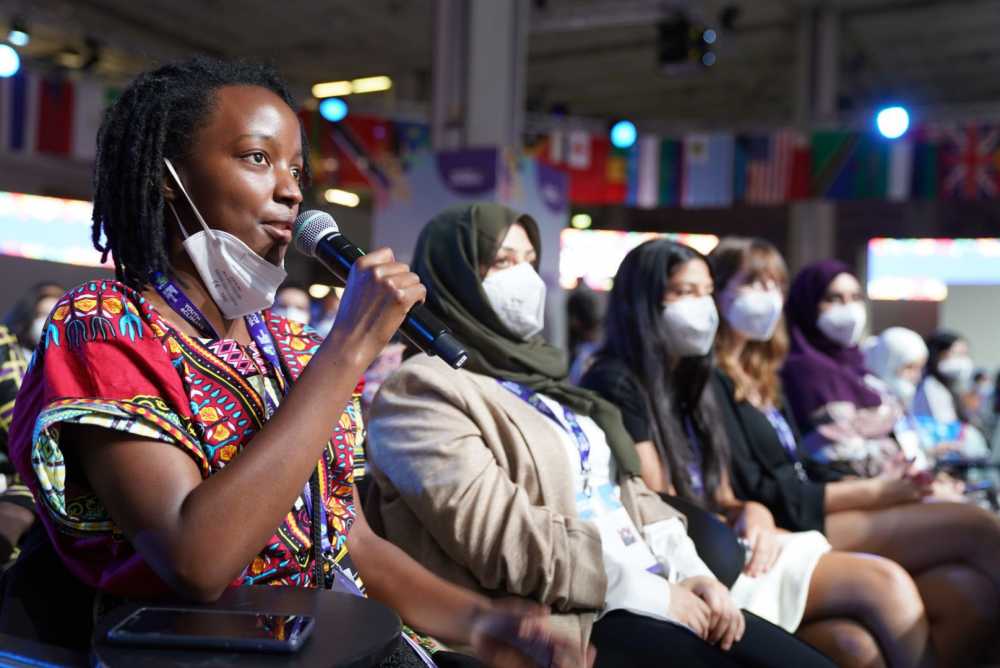
Photo by Leigh Vogel, Connect4Climate.
This year’s landmark gathering in Milan, which gave youth leaders center stage in a way few other climate conferences of its scale had before, was bolstered by #All4Climate, an umbrella initiative empowering representatives from civil society, academic institutions, and the private sector to join the climate conversation across over 500 hand-picked events held throughout Italy in the run-up to and alongside the summit.
As part of #All4Climate, C4C developed the #WorldIsWatching campaign to draw the world’s collective gaze to COP26 and remind leaders that both people and planet demand urgent action. This interactive advocacy campaign put #EyesOnCOP26 everywhere, inviting members of the public to join the movement through a dedicated AR filter while getting the word out across Milan with over 900 digital billboards and 600 minutes’ worth of primetime spots on Italian TV.
The culmination of the slate of #All4Climate events surrounding Youth4Climate: Driving Ambition was a #Music4Climate concert for the ages at Milan’s massive Ippodromo Snai San Siro Summer Arena, a rocking event organized by C4C and MITE that generated tremendous climate-positive energy and that served as a powerful bridge between the conclusion of the youth summit and the start of Pre-COP26.
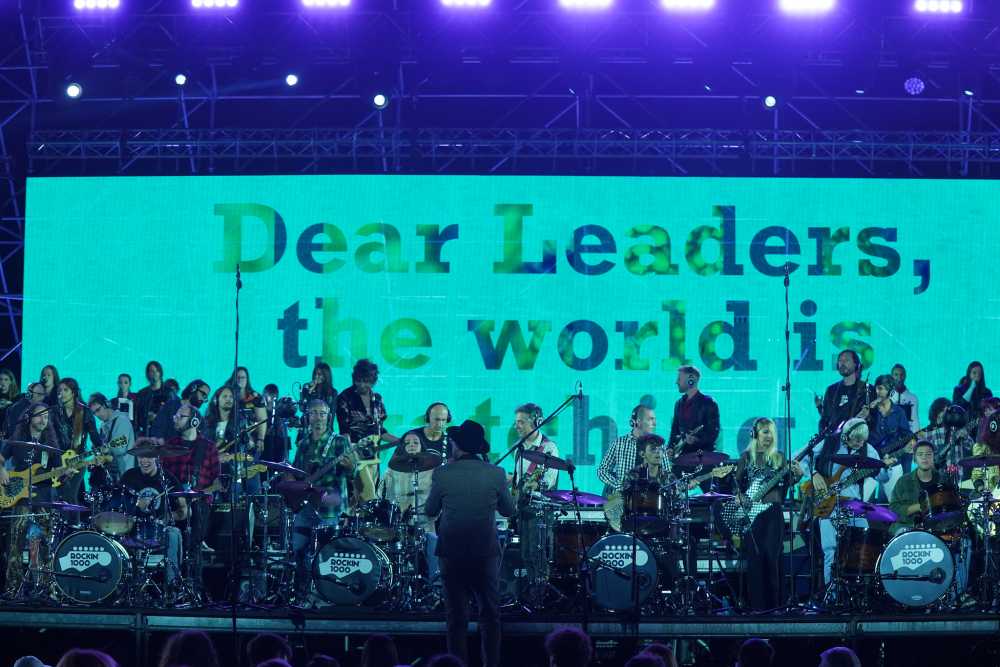
Photo by Leigh Vogel, Connect4Climate.
The September 30 show, streamed worldwide on A-Live TV, brought a diverse group of 100 performers together under the banner of Rockin’1000, the largest rock band on Earth. Seasoned musicians such as Daniele Silvestri and Martina Attili rocked out alongside special guests including European Space Agency astronaut Luca Parmitano, playing songs with inspiring messages of perseverance in the face of adversity and relentless hope for a better future.
Stay tuned in 2022 for new #Music4Climate announcements!
For this year’s long-anticipated COP26 climate conference, C4C worked to bring young people’s voices from Milan to Glasgow through a special partnership with the Walk With Amal project, which raises global awareness of refugee issues with a larger-than-life puppet of a young Syrian migrant named Little Amal.
Little Amal traveled from the border of Syria and Turkey to appear at COP26, where she shed light on climate change’s role in exacerbating the refugee crisis. For her November 9 walk along Millennium Bridge (just outside the SEC Centre where the COP was held), Little Amal carried with her a soundscape of Youth4Climate voices, gathered and curated for the occasion by C4C. The centerpiece of this engagement was a brand-new poem from longtime C4C friend and collaborator Ahmed Badr, a stirring call for solidarity and understanding across boundaries titled “Representation” Poem.
Don’t miss the official video performance of Ahmed’s poem on our YouTube channel, and be sure to check out our handy COP26 breakdown article on how commitments at the COP squared with the demands of the Youth4Climate Manifesto.
We crowned 2021 with an announcement especially close to our hearts: the launch of the Max Thabiso Edkins Climate Ambassador Program, a vital opportunity for up-and-coming young climate leaders around the world to both broaden their knowledge of international climate solutions and implement their own climate action initiatives on the ground in their communities.
Named in honor of our dear friend and colleague Max Thabiso Edkins, a true climate champion renowned far and wide for his irresistible enthusiasm for making the world a better place as well as his signature bow ties, this Program is the product of an exciting new partnership between C4C and the Global Youth Climate Network (GYCN), an initiative of the Y2Y community of young professionals at the World Bank Group.
We are accepting submissions through December 31, so if you know any young people out there making a difference who would want to follow in Max’s footsteps by being Climate Ambassadors, tell them to apply now
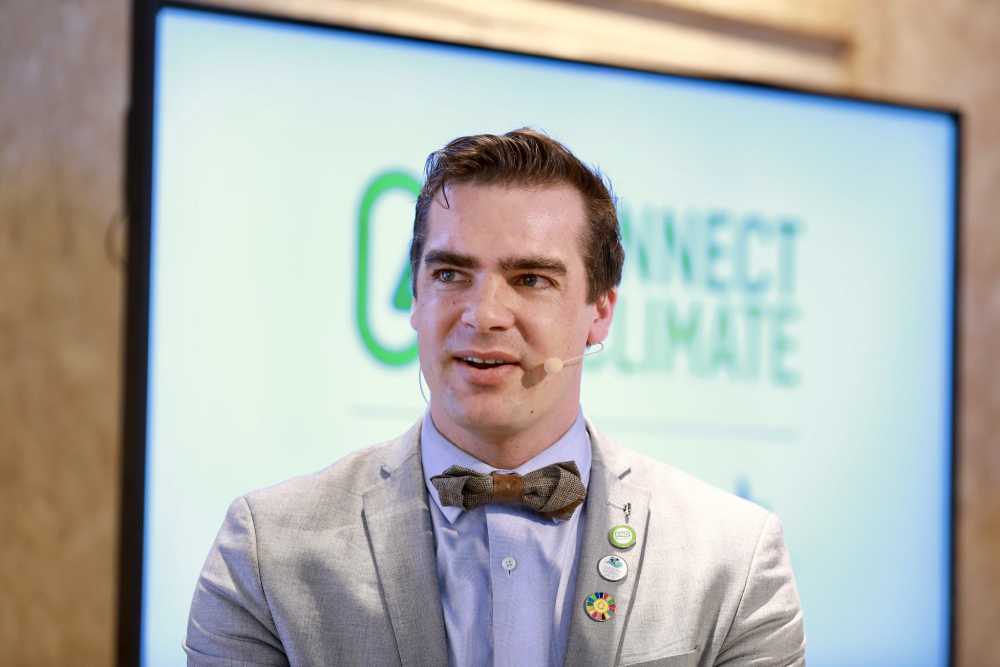
Photo by Kaia Rose, Connect4Climate.
UPDATE: The 2022 Max Thabiso Edkins Climate Ambassador cohort has been selected; submissions are now closed. Many thanks to all the amazing youth leaders who took the time to apply!
Applicants must be between the ages of 18 and 35, have strong conversational English language skills, and have reliable access to the internet. Beyond these foundational requirements, applicants will be evaluated on each of the following criteria:
Past and current experience as a youth leader in communities at the local, regional, national, or global level. Demonstrated ability to organize community activities is an advantage.
Passion for climate solutions and sustainable development, and motivation to take action and empower others. We are looking for self-starters willing to take charge.
Scale and strength of the applicant’s network and active presence on social media.
The potential impact of the applicant’s proposed contributions to their communities and networks.
The evaluation and selection process will also take into account various other factors—such as diversity in age, gender, and geography—to ensure the set of chosen Ambassadors closely reflects the global community.
As a participant in the Max Thabiso Edkins Climate Ambassador Program, you will be expected to Learn, Act, Network and Engage.
Learn: learn from World Bank Group experts and knowledge partners on the most pressing climate change issues across various sectors and gain solid leadership skills to inspire and empower others in your communities.
Act: commit to achieve at least three climate actions in your communities.
Network: connect with like-minded youth across the globe to learn, exchange ideas, develop joint initiatives and projects, and amplify your impact.
Engage: join an active and connected Global Alumni Community of Climate Ambassadors upon successful completion of the Program.
This ambassadorship is an awesome opportunity that comes with real responsibilities. In order to receive certificates of completion and be invited to join the Climate Ambassadors’ Alumni Community, participants in the Program must:
Commit ~3 hours per week to act in their role between February and July 2022.
Attend the opening orientation and closing sessions (at the beginning and at the end of the Program), weekly online learning sessions (at least four of six) and climate communications and leadership training offered by Connect4Climate.*
Complete at least three climate-related actions in their communities and provide documentation thereof (photos, videos etc.) to GYCN.
Participate in a dedicated Telegram channel where the GYCN team will share programmatic updates and opportunities from its partner network.
Join networking sessions and actively participate in GYCN social media campaigns.
*Before applying for the Program, please make sure your calendar allows you to attend one-hour sessions every Thursday in March and April and commit to participation in the climate communications and leadership training.
Your standout climate actions will be featured directly on GYCN’s social media platforms, and all alumni of the Max Thabiso Edkins Climate Ambassador Program will be offered full access to invaluable expert and peer networks as well as ongoing GYCN and C4C educational events. Plus, there is always the possibility of future support for your work on the ground and invitations to co-host climate discussions yourself!
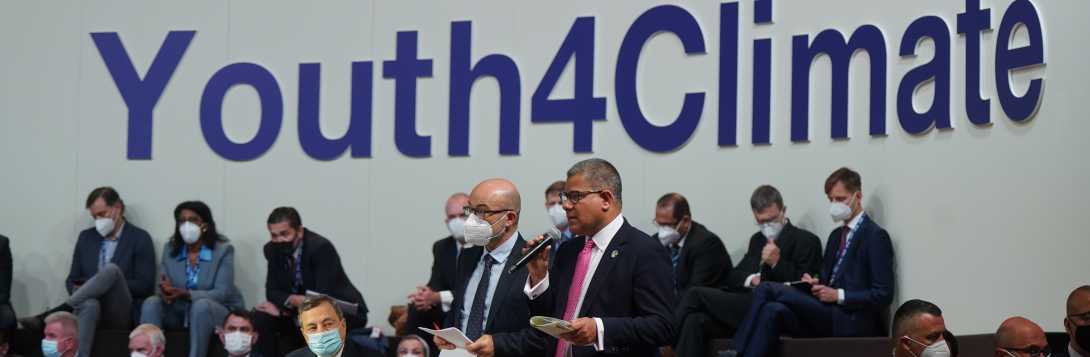
At the Youth4Climate: Driving Ambition summit in Milan, hundreds of young delegates from all over the world worked together to draft a seminal
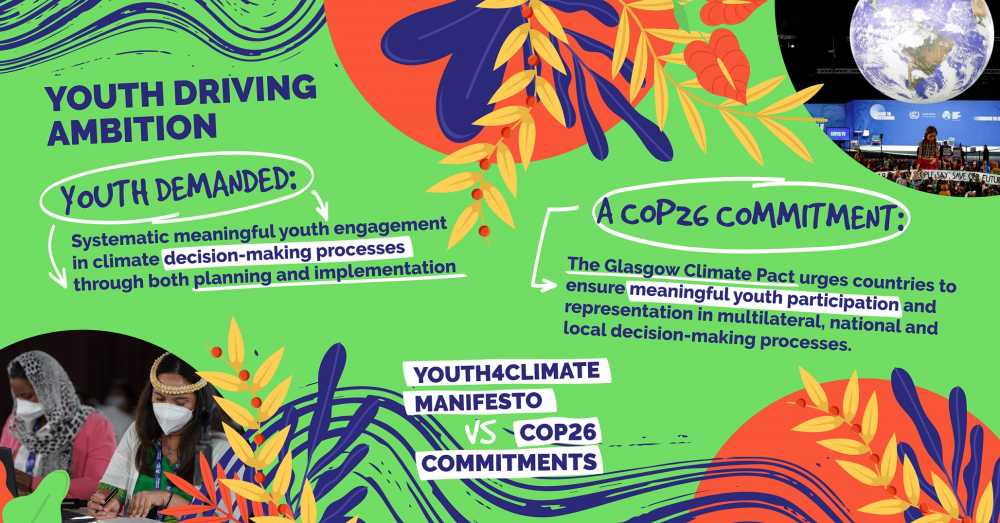
On the central theme of Youth Driving Ambition, the writers of the Youth4Climate Manifesto called on policymakers to open new avenues to young people and empower them to participate in the process of developing and implementing climate action. In response, the Glasgow Climate Pact included a call “to ensure meaningful youth participation and representation in multilateral, national and local decision-making processes.” Additionally, Italian Minister for Ecological Transition Roberto Cingolani announced at the COP that the Youth4Climate summit will henceforth be an annual event, giving young people a direct pipeline to the latest climate negotiations.
In particular, the Manifesto called for renewed commitment to elevating, respecting and acting on the voices of indigenous people, women, and the most vulnerable. At COP26, the Improved Marrakech Partnership for Enhancing Ambition incorporated this message into its charter along with a five-year plan emphasizing accountability to stakeholders. A number of countries, including Bolivia, Canada, Ecuador, the US, and the UK, made fresh commitments to Gender Action, investing in women’s leadership and initiating a policy of conducting gender breakdowns in all statistical climate analyses moving forward.
Within the Sustainable Recovery theme, the Youth4Climate Manifesto urged all countries to rapidly transition towards renewable energy to reach net zero emissions by 2030. The percentage of the world covered by net zero targets now stands at 90%, up from 30% two years ago, but most of these plans do not meet the ambitious timeline called for in the Manifesto. To help push for increased ambition, The Glasgow Climate Pact sped up the timeline for countries to submit stronger Nationally Determined Contributions (NDCs), requesting that world leaders “revisit and strengthen” their 2030 targets by COP27 next year.
The Manifesto stressed the role of innovation and technological development in driving the needed changes, a message which 35 world leaders at COP26 took to heart in their accession to the new Glasgow Breakthrough Agenda, which aims to accelerate the development and deployment of clean technologies around the world this decade—all while driving down costs. The Breakthrough Agenda’s primary objectives are making renewable energy structures attractive alternatives in the most population-heavy regions of the world by 2030 and empowering developing countries to take advantage of clean energy.
In line with the Manifesto’s call for collaboration with the private sector on green energy, the Glasgow Financial Alliance has committed over $130 trillion (USD) in private capital to reshaping the global economy. Spanning 45 countries, these commitments will go a long way toward making net zero a reality.
One point youth leaders were very clear on in their text is the need to abandon entirely the exploration and extraction of fossil fuels. Although COP26 did not deliver the ambition asked for by young people on this front, their calls for action did spur some progress in Glasgow. Denmark and Costa Rica launched the Beyond Oil & Gas Alliance with countries such as France, Sweden, and Ireland, who all committed to a managed phase-out of oil and gas production within their borders. The UK assembled a coalition of 190 countries committed to the rapid upscaling of green power and the abolishment of coal by the 2030s for major economies and the 2040s for the rest of the world. The Glasgow Climate Pact also marked the first time that a COP decision text has directly referenced the need to move away from coal reliance and fossil fuel subsidies.
In the push toward a sustainable future, the Manifesto was resolute that developed nations must assist developing nations in their implementation of the energy transition. On this front, COP26 saw some big announcements, including the launch of a World Bank trust fund that will mobilize $200 million over the next decade to support the decarbonization of road transport in emerging and developing economies. The UK government’s Urban Climate Action program (UCAP) was also a standout, pledging $27.5 million in funding to support cities across Africa, Asia and Latin America as they pursue net zero.
Accounting for “loss and damage” was key to the youth leaders’ conception of Sustainable Recovery, and COP took some needed steps in this regard. Section VI of the Glasgow Climate Pact empowered the Santiago Network to ramp up its ongoing efforts to address loss and damage worldwide while bolstering resilience to future climate impacts. While COP26 may not have delivered the level of progress hoped for by Youth4Climate delegates, loss and damage became a central topic in the negotiations. In the Pact, countries agreed to start a dialogue in anticipation of COP27, which was viewed by the Alliance of Small Island States as “a key step towards the creation of a loss and damage finance facility.”
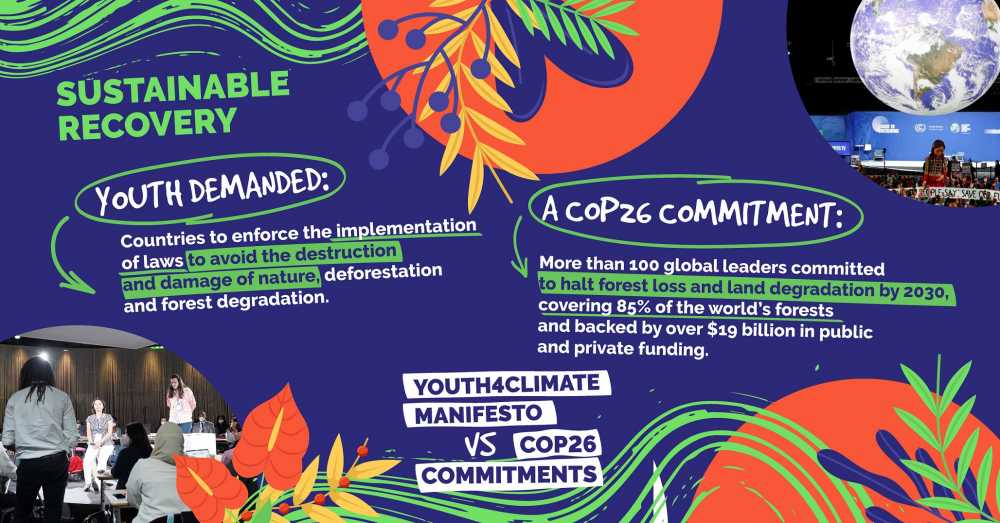
The cultivation of nature-based farming practices and climate-smart agriculture is a major priority of the Youth4Climate Manifesto—no surprise, given the extent and impact of our food systems. Responding to this call to action, 45 nations and 95 high-profile companies at COP26 pledged to redouble action and investment toward safeguarding nature and transitioning agriculture to a sustainable model in the years to come. Further, more than 100 countries pledged to halt and reverse deforestation and land degradation by 2030 with the help of $19 billion in allocated public and private funds.
The vision articulated in the Youth4Climate Manifesto extended beyond governments, stressing the need to engage non-state actors in the building of a green future as well. One key means of facilitating this sort of engagement, wrote the youth delegates, is “promoting and simplifying the processes for equitable global technology transfer,” both among research institutions and between those institutions and private industry. At COP26, the UK-led Breakthrough Agenda, which enlisted 42 nations, aligned itself with this aim, pledging to ramp up the development and rollout of innovative green tech worldwide. And in a dedicated “clean technology development drive,” 35 world leaders committed to increasing their countries’ ambition on both producing green tech and making it more affordable for the average consumer this decade.
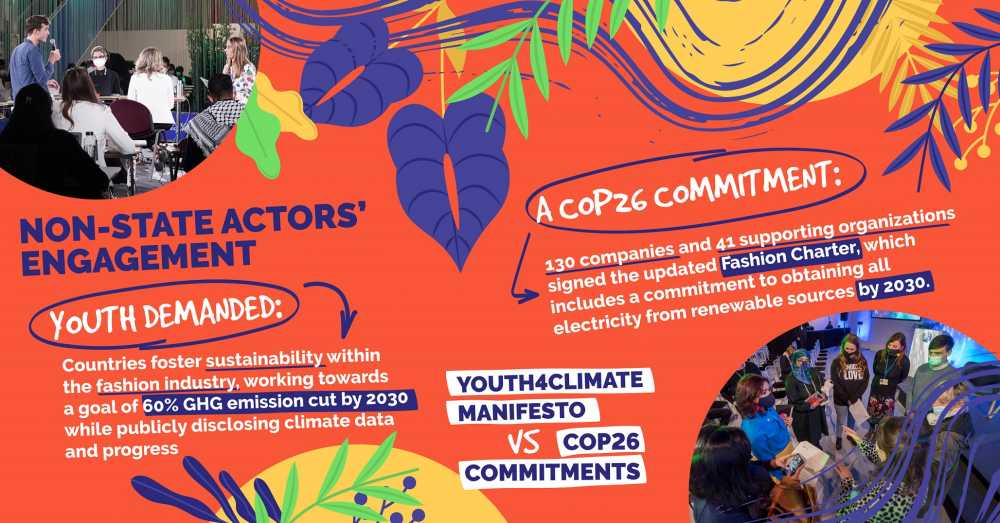
It’s no secret that the wasteful “fast fashion” industry is long overdue for a pivot to sustainable practices, and the drafters of the Manifesto demanded the fleshing-out of “guidelines to elaborate … ethical, sustainable, and climate-friendly” approaches to clothing production. Rolled out at COP26, the updated UNFCCC Fashion Industry Charter for Climate Action, to which 130 companies and 41 supporting organizations are signatories, lays out a plan to source all of the industry’s electricity sustainably by 2030, abandoning coal power for good. It also offers guidelines on the responsible sourcing of raw materials.
A vital and overarching goal of the Manifesto was the cultivation of a climate-conscious society worldwide. Recognizing the deepening impacts of the climate crisis, the document called for the proliferation of knowledge of “the interconnected implications for the environment and nature as a whole,” with special emphasis on addressing biodiversity and embracing nature-based solutions. At COP26, 95 leading UK companies, including Burberry and ITV, committed to a “Nature Positive” approach moving forward, pledging to make sustainability an integral part of their brand identity.
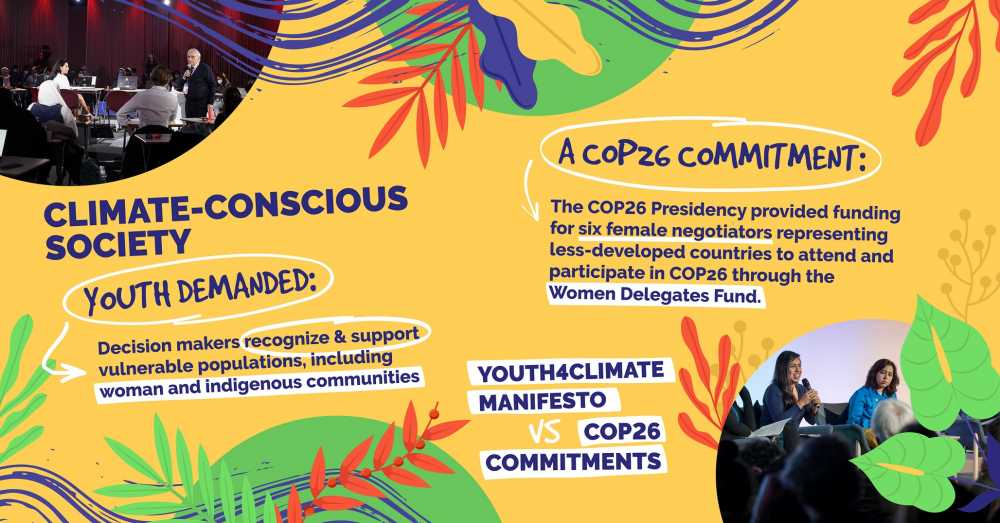
A key component of the push toward broader climate-consciousness outlined in the Manifesto was the empowerment of underrepresented people everywhere to safely share their lived experiences of the climate crisis. To encourage diversity within party delegations, the COP26 Presidency funded the attendance of six female negotiators from underdeveloped countries, and the “Advancing Gender Equality in Climate Action” event on Gender Day at the COP saw numerous countries come forward with fresh pledges to support women and girls in sharing their climate stories. Bolivia, for instance, issued a commitment focused on getting indigenous and Afro-Bolivian women into climate leadership positions, while Belgium committed $58 million to a 5-year Sahel Climate Program focused on the needs of women and girls. Norway also laid out a new initiative to raise the impact of women and girls at both the national and international levels of climate policymaking.
Carrying forward all the amazing momentum from the Youth4Climate: Driving Ambition
The Conference of Youth (COY) is an entirely youth-led conference organised by YOUNGO, the official youth constituency of the UNFCCC. For sixteen years, the outcomes of COY have played a vital role in shaping UNFCCC priorities. This year, COY16 will take place from Oct. 28-31 at the University of Strathclyde in Glasgow and will be attended by nearly 500 young people and high-level representatives.
The four days of activity will consist of three ceremonies (Opening, Closing, and Gala), six plenaries, and countless sessions and talks on disparate avenues for climate action. Guests can also expect a Green Jobs Fair on Thursday and a climate education summit on Saturday. Last but not least, the COY will feature a dedicated space for the creation of climate-conscious art and an art gallery where such works will be exhibited.
The youth delegates attending the COY will be invited to an exclusive screening of "The Salt in Our Waters," a film from director Rezwan Shahriar Sumit whose narrative centers on climate impacts on fishing communities along the Bangladeshi coast.
The Global Youth Statement is a policy document compiled entirely by youth. Developed over a series of consultative processes with young climate champions from across the world, this statement represents the collective demands and expectations of the youth attending COP26. The document will be finalized at COY16 and travel from there to COP26. It will be translated into all five other UN languages as well, showcasing the inclusivity of the statement.
YOUNGO is hosting a small exhibition space in the Green Zone to showcase the work of young climate leaders around the world.
The World Bank Group will take part in key discussions over the course of the COP and will put on focused events on topics such as green finance, climate-smart agriculture, and energy transition. These events will be live-streamed, so even if you're not attending the COP, you can tune in! Sign up for email reminders and add these events to your calendar now.
"The Climate Crisis Film Festival showcases stunning, diverse, and eye-opening cinema, providing a systemic perspective behind the raw human stories of climate change." Wherever you are in the world, you can tune in for this amazing two-week event: Sign up for the online experience at no cost today! An awards ceremony on the ground in Glasgow on Nov. 12 will signal the wind-down of the festival.
Hosted by the Food and Agriculture Organization of the United Nations (FAO), this dynamic event will put climate, agriculture, and gender experts in conversation with youth representatives from both policy-level and grassroots backgrounds. From female agriculture experts in training to become UNFCCC negotiators to international youth activists, contributors will share their lived experiences of building resilience towards climate change while working to heal the planet. Interactive elements include a virtual icebreaker using Mentimeter polls and a panelist Q&A.
This event will look back on the YOUNGO initiatives that paved the way to COP26, showcasing meaningful youth engagements and illustrating how to avoid tokenism.
Hosted by the World Wide Fund for Nature (WWF), the Coordinator of Indigenous Organizations of the Amazon Basin (COICA), and Law, Environment and Natural Resources (DAR), this event will highlight the vital role of indigenous peoples and their territories in the development and implementation of government climate commitments towards a green, fair, and resilient recovery from COVID 19. Speakers from COICA will be joined for this special dialogue by indigenous and institutional representatives.
Join Day 3 of the ferry-bound Extreme Hangout program for a special screening of Slater-Jewell Kemker's "Youth Unstoppable," an inspiring documentary on the work young people are doing all over the world to drive climate action and a clarion call to world leaders to heed youth's advice and make decisive policy commitments. Tickets available here.
Join Student Energy for the launch of the inaugural Global Youth Energy Outlook report. Youth are calling for leaders in all sectors to move beyond tokenism and engage with youth through equitable and meaningful partnerships. How can decision-makers work with youth to accelerate climate action and the sustainable energy transition? The Global Youth Energy Outlook presents insights from 30,000+ youth from around the world on what young people envision for their energy future and how they want to work with decision-makers to get there. The GYEO Launch will feature an intergenerational and global lineup of speakers who will outline how the GYEO can be effectively mobilized at the grassroots level, within government institutions, and in the energy sector. Learn more about Student Energy and the Global Youth Energy Outlook here.
In a special event titled "Unifying for Change: The global youth voice at COP26," YOUNGO will present the Global Youth Statement, a document reflecting the cumulative output of the Local, Regional, Virtual and Global Conferences of Youth. This Statement will showcase the positions of global youth on climate action and direct key demands at the policy leaders attending COP26. The event will conclude with a handover of the document from young people to decision-makers.
Led by YOUNGO, "Intergenerational Inquiry: Youth Stepping Up Climate Action" will bring together climate leaders from four generations, inviting them to share their experiences with one another and arrive at insights into how climate action has evolved over time. At the core of the event will be a spirit of mutual learning and a shared commitment to upscaling climate action.
One Young World, the global forum for young leaders, in collaboration with the Future Generations Commission for Wales, is hosting an immersive youth-focused panel on the road to net zero. Join in for a dynamic discussion between expert speakers and young leaders on the future of sustainable development and the essential role young people will play in attaining a net-zero future.
This joint event will convene education ministers, climate ministers, and young people for a discussion of the importance of education in creating climate-positive futures. Ministers will report out on the state of exisiting commitments to climate education and address the work that remains to be done. The UK Department for Education will host this event in partnership with Italy, UNESCO, Youth4Climate and Mock COP. Catch the livestream here!
Italian Minister of Ecological Transition Roberto Cingolani and COP26 President Designate Alok Sharma will facilitate a discussion on the outcomes of the Youth4Climate: Driving Ambition summit in Milan. Youth representatives and ministers will come together to assess and act on the demands articulated in the Youth4Climate Manifesto.
The New York Times Climate Hub will host a screening of Slater Jewell-Kemker's powerful film "Youth Unstoppable," which charts the rise of the youth climate movement, young champions' actions around the world, and their demands of world leaders. Director Slater Jewell-Kemker herself, a longtime friend and partner of C4C, will be Skyping in after the screening for an exclusive Q&A session.
One Young World, the global forum for young leaders, in collaboration with the British Museum and the Republic of Palau, is hosting an immersive panel discussion on the symbiotic relationship between people and nature, highlighting the importance of amplifying and learning from the voices and work of Indigenous communities when it comes to the safeguarding of our natural world. Featuring speakers hailing from both Arctic and Pacific Island communities, this panel will serve to highlight key learnings in adaptation and resilience from these two unique regions.
Join Hogan Lovells & the Great Green Wall Frontline team on a music-driven cinematic journey along Africa's Great Green Wall. The screening of Jared P. Scott's powerful climate documentary will be followed by a live-streamed panel discussion on how you can get involved in this ambitious movement of growth and renewal, featuring Malian musician and climate activist Inna Modja.
Members of the general public are invited to reserve tickets to this COP26 IMAX screening of Rezwan Shahriar Sumit's "The Salt in Our Waters."
Little Amal, a larger-than-life Syrian refugee girl, will stand at the centre of power at the Blue Zone Gender Day Plenary with delegates from every country represented at COP. She will meet members of the Green New Deal Alliance and tour the Blue Zone to connect with other delegates.
At 13:00, Amal will walk from the Blue Zone across the iconic ‘Squiggly Bridge’ to the banks of the Green Zone with young activists including Luisa Neubauer, KC Shreya, Elizabeth Wathuti and Farzana Faruk as well as actress and activist Katja Reimann. She'll be accompanied by a Soundscape of young leaders' voices collected by Connect4Climate at the Youth4Climate: Drving Ambition summit in Milan.
Then, at 14:00, Good Chance, the producers of the Little Amal project, will discuss migrant justice and climate justice in a special session featuring guests from 350.org, Choose Love, Mishcon de Reya LLP, the Democracy and Culture Foundation, and One Young World's Global Climate Inquiry as well as Youth4Climate leader Elizabeth Wathuti and acclaimed author Onjali Rauf.
In an event put on by Good Chance in partnership with the National Theatre of Scotland, Citizens Theatre, and Perth Theatre, Little Amal will walk the banks of the River Clyde alongside over 160 schoolchildren bearing banners with their demands and dreams for a sustainable future. The children will then combine their work to form a collective banner filling a wall at Anderston Quay and will plant seed pods together in a moment of collective and connected action, with each seed representing a young person affected by the climate crisis.
At 13:30, Little Amal will journey through the historic community of Govan accompanied by a ten-metre-high sea goddess puppet called STORM, created by Vision Mechanics from recycled and natural materials.
Finally, Amal will weave through the centre of Glasgow alongside a diverse group of 150 performers, with sound design by Matthew Herbert, movement direction by Nat McCleary and Robby Graham, and costume design by Sabrina Henry.
As the finale of the New York Times Climate Hub, Amal will stand in the centre of Es Devlin’s "Conference of the Trees" installation holding a burnt tree signifying the burning forests she traversed in Turkey and Greece. Young climate activists from around the world will join her at her side.
UPDATE: The #Youth4Climate Manifesto is now officially complete.
The first theme the young delegates tackled in their working groups was one very close to home for them: Youth Driving Ambition. Their challenge was to find ways to increase youth participation at the local, national and global scales, and they tackled it with a three-pronged approach.
The delegates’ opening request to world leaders was that they work to ensure Meaningful Participation by youth in future climate negotiations, giving young representatives from around the world the chance to voice their lived experiences and ideas and make a real impact on international climate policy.
[video:https://www.youtube.com/watch?v=m-oXvzixTiw]
Next was a request for Capacity Building support: the provision of financial, administrative, and logistical resources to empower young people at the local level with the means to effectively express themselves on climate issues.
The crucial third component to the delegates’ Youth Driving Ambition proposal was Funding: they urgently requested the allocation of public and private monies to support youth participation in decision-making on climate.
Theme 2 on the young delegates’ docket was Sustainable Recovery: How can we build back from COVID-19 in a way that is sustainable and respectful of our planet’s needs?
At the heart of the team’s proposal here was a bold 2030 target for the global energy transition. Recognizing that the 2050 targets we have seen so far would be inadequate to keep global warming within 1.5 degrees, the delegates made a compelling case for 2030, calling for collaborative research and tech development coupled with a steady rollout of well-paying green jobs to keep economies moving.
Acknowledging that we are already seeing severe climate impacts in vulnerable parts of the world, the young people also called for support in tailoring the implementation of adaptation and resilience measures to marginalized communities in these regions. Equity means working hardest for those most in need.
[video:https://www.youtube.com/watch?v=PRCS8WrXGgE]
The delegates also demanded that world leaders respect the rights of indigenous communities as well as their deep heritage and expertise, and called for ramped-up development of nature-based solutions in consultation with these groups.
The team went on to call for a “transparent and accountable climate finance system with robust regulation of carbon emissions,” noting the need to support renewable energy with substantial investment and drive development in that direction.
Finally, the youth homed in on the recovering global tourism sector, with a special focus on smaller countries whose economies hinge on tourist activity. The delegates called for the inclusion of youth, women, indigenous peoples and other marginalized groups in a concerted multilateral effort to support these nations in their recoveries while ensuring the brand of tourism they rebuild is sustainable and compatible with a green future.
Pivoting to Non-State Actors’ Engagement, the youth delegation asked world leaders to improve infrastructure and access to financial mechanisms in developing countries to facilitate the engagement of entrepreneurs, artists, farmers and athletes from underrepresented communities in the push toward sustainability.
The delegates also requested that private-sector companies be held accountable for their carbon emissions via the implementation of a robust reporting-and-assessment system rewarding committed strides toward net zero emissions while penalizing those who take little or no action.
[video:https://www.youtube.com/watch?v=iHfCJybzw9k]
Doubling down on their demand for the eradication of the fossil fuel industry by 2030, the youth made a compelling case for a decentralized global transition respecting the needs of minority communities in every region of the world while steadily advancing every such region along the road to net zero.
In anticipation of pushback from the fossil fuel industry, the delegates exhorted world leaders, private sector businesspeople and creatives to reject any sponsorships or cash infusions from fossil fuel companies and instead commit themselves fully to going green.
The final topic up for discussion was Climate-Conscious Society: How can we improve awareness of the climate crisis and give citizens of the world the tools they need to take action?
First off, the delegates stressed that world leaders must continue to create spaces for young people at the highest levels of policy-making and “support the creation of multi-stakeholder platforms and mechanisms for sharing climate information and solutions.”
This segued into a discussion of the vital role of education in driving climate engagement, with the youth delegation urgently requesting targeted financial support for the creation and implementation of climate-conscious curricula around the world. They stressed the need for case-by-case approaches that are respectful and representative of indigenous communities and other marginalized groups and called for the creation of more internships, exchanges and other opportunities in conjunction with empowering lessons in the classroom.
[video:https://www.youtube.com/watch?v=_V8cPZyGrFY]
To mobilize members of the general public, the assembled youth leaders suggested the development of a sweeping outreach initiative using “arts, sports, entertainment, community leaders, influencers, and social media” to develop tailored messaging to most effectively ramp up climate engagement in specific regions around the world.
Rounding out the delegates’ presentation was a section on the role of media in shaping the climate narrative. Acknowledging news outlets’ outsized ability to sway public opinion on climate, the youth leaders called for a new international training regimen for journalists focused on harnessing modern platforms to communicate the severity of climate science to a wide audience in a way that’s both accessible and actionable.
Such a program would also serve to prepare journalists for the misinformation around climate they are apt to encounter on the job and equip them to call out greenwashing and inequity where they arise.

Nearly 400 young climate champions from all over the world are about to flock to Milan for the three days of #Youth4Climate: #DrivingAmbition taking place ahead of Pre-COP26.

When young people have the chance to take over and communicate the urgency of climate change with their own voices, the results are always str
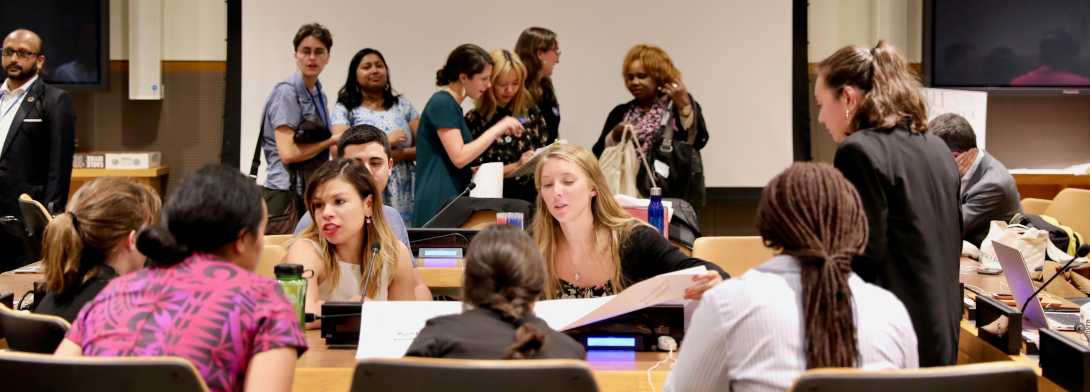
In our work at Youth Climate Lab (YCL) over the past year, we've heard a number of discussions take place around COVID-19 recovery and youth.
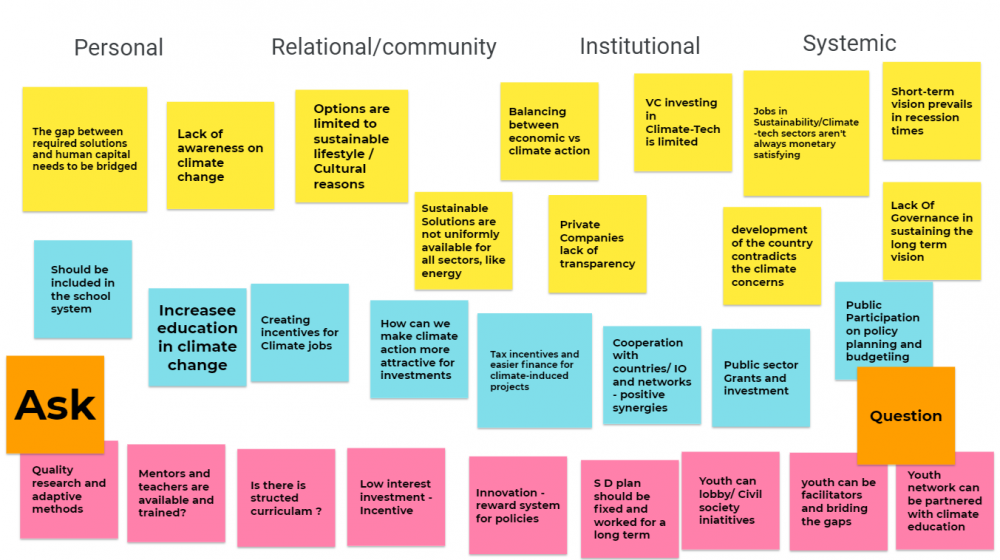
Both bottom-up and top-down approaches are needed to take action at the scale and scope that we need.
However, individualization limits the community organization and mobilization that is possible. The focus on personal responsibility and profit must shift towards centring wellbeing, designing systemic interventions, and implementing measures of accountability.
Youth must be actively included in decision-making processes to:
inform the whole of economy/government/institution strategies;
prevent the silo-ing of "youth" or "green" policies; and,
break down barriers to additional youth involvement.
Comprehensive climate education, including basic knowledge of climate change, awareness of the social and economic benefits of climate solutions, policy literacy, and opportunities to engage with climate work, policies, and investment are critical.
A shift in how individuals and institutions view and value youth, our lived experiences, and our contributions is foundational to achieving anything.
Barriers*
Lack of lobbying, climate-work, and networking experience limits youth engagement in community organizations and career development opportunities
Countries in an economic crisis, bureaucratic roadblocks, corruption, resource-dependent economies, and profit-focused governments can slow progress towards transformative change
Systemic bias within financial sector and a mismatch in the understanding of systems, needs, and how they relate to youth slows financial investments in green industries and limits jobs and skill-development opportunities for youth
Solutions
Lead by example for other members in your community
Provide individual coaching, apprenticeships, and capacity-building projects and workshops for youth, particularly for sector-specific skills
Re-train of institutional decision-makers to improve understanding of interconnected and systemic issues
Collaboration between youth networks, institutions, and governments to develop synergies (re: reskilling/upskilling) between climate action and sustainable solutions
*Barriers to investment in sustainable & green jobs for young people.
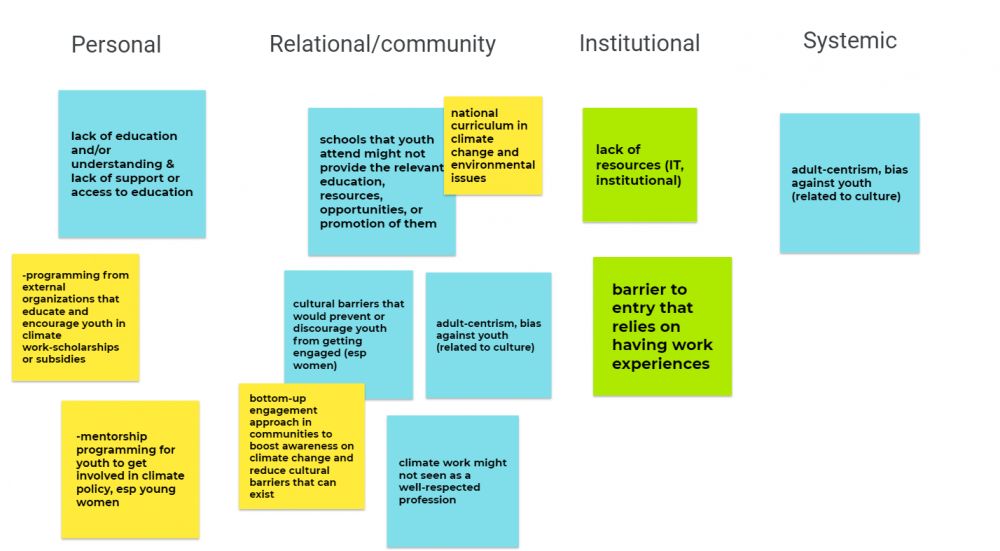
Barriers*
Entry in climate work often requires climate work experience, yet youth lack basic policy literacy
Lack of transparency and accessibility in policy-making processes makes these spaces difficult to infiltrate and access
Lack of trust in youth to make decisions, hold knowledge, and understand solutions
Solutions
Contextualize and address the individual needs of each community
Strengthen Indigenous, climate and polluter policies and divest from fossil fuels to increase the demand for and economic incentives towards skill-development, climate jobs, and educational reform
Increase public-private partnerships to create funding for more opportunities for youth to pitch ideas to the government
Policy literacy programs (e.g., student government) which give youth practice and confidence in policy-making
Place more youth in decision-making bodies and surround them with the support, knowledge, skills, and connections they need
*Barriers to investment in policy innovation & meaningful opportunities for youth to engage in policy.
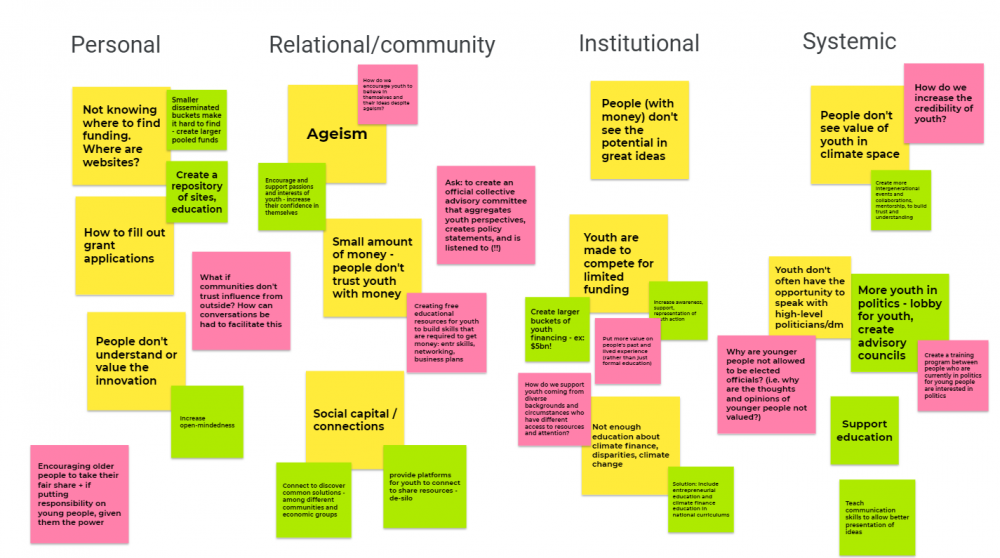
Barriers*
Inaccessibility of financing, networking, and entrepreneurship education
High interest rate loans and limited buckets of financing
Unnecessary and difficult financial application processes
Lack of social capital and connections
Perception that climate solutions don’t have quick returns on investment (climate finance requires patient capital)
Ageism and cultural perceptions about youth impede access to financial education and capital to innovate climate solutions
Solutions
International & multilateral institutions need more innovative and flexible mechanisms to lend money, as well as lowered taxation towards youth
Foster relationships & partnerships between financial and academic institutions to educate investors and the public on the benefits of green solutions to climate change
Create training & mentorship programs between politicians and young people to encourage young people to become elected officials
Increase awareness and education on the power of mobilizing youth in financial investment spaces
Offer free educational resources and mentorship programming for youth to build skills (e.g. job entry skills, networking tips, business plan support)
Shift public common sense to value lived experience as well as financial training
*Barriers to investment in youth-led climate solutions.
We wrapped our session by encouraging participants to ground themselves in their own realities. Many of us are feeling overwhelmed, outraged, and optimistic right now, but we are most effective as advocates when we bring our full selves to the table – and use these feelings to guide how we innovate and transform the world.
We're grateful to all of the Young Climate Innovators participants who attended our session, and to our team of YCL staff and external facilitators who guided us through the discussions outlined here – your enthusiasm and insights have made this whole process exciting! Thanks as well to Connect4Climate for partnering with us, and to the Innovate4Climate team for hosting us.
Youth Climate Lab is a youth-for-youth global organization focused on transformative climate action. We design, pilot and scale projects to enable young people to build the just, climate-resilient futures they deserve.
Brynna Kagawa-Visentin (YCL Youth Financing Specialist) is an intersectional climate justice educator, facilitator, and thought leader whose work focuses on advocating for healthy ecosystems and communities. Naia Lee (YCL Communications Coordinator) is a facilitator, designer, and organizer who uses her passions for creating empathy, sharing stories, and scaling local action to contextualize the need for climate justice.