IPCC Fifth Assessment Report Synthesis Report
|
Young Professionals in Local Development
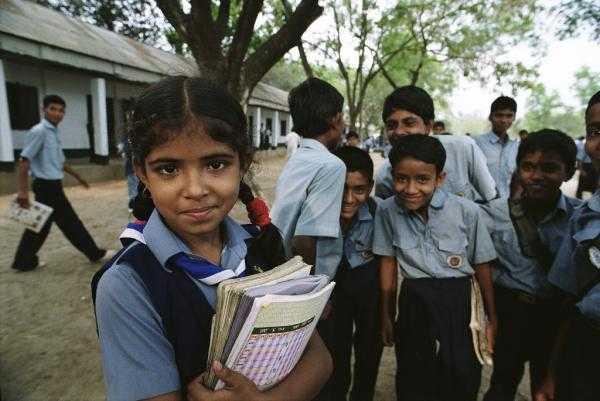
The Young Professionals in Local Development (YPLD) is a network of young professionals that set its mind to change the world. We started from a small idea of aggregating the local population towards building their community to a much bigger objective: that of creating a global network of young, but also experienced professionals that, by fostering communities` growth through innovation, can help solve some of the biggest challenges today: food security, climate change, poverty.
On February 18th 2012 we decided to “Raise the stake” and, with the support of our three strategic partners: YPARD, Connect4Climate and Groupe de Bruges, moved the discussions from the virtual environments directly into the hands of the people that are affected by decisions and decision-makers.
Invited at this conference were people from different environments from local business, local public authorities, NGOs` and iNGOs` and, among the speakers, members of European think tanks and the European Commission represented by Director Mihail Dumitru from Directorate General for Agriculture and Rural Development.
This diverse crowd stimulated a great debate from the beginning when the future of the agriculture in the local context was discussed. The views of YPLD are that agriculture should be a building block for the future, but with limiting its present impact on the environment. Presently, more than 30% of the food is waste because of its poor quality, frequent disregards of European standards, massive consumption of fast food and frozen products and others and also with 70% of all fresh drinking water being using for industrial agricultural systems.
By changing this, we give our people, our communities a better future. The options are introducing alternative food systems regulated through city or regional level food policies, metropolitan and/or periurban agriculture and others.
Following such a complex debate where the exchange of ideas was very fast pacing, switching from food security to climate change effects locally and from young people to more experienced professionals, it was just normal to talk about … social media and e-learning tools.
Starting with a video presentation of Connect4Climate and moving towards the E-learning course of Groupe de Bruges on the Common Agricultural Policy given by Bart Soldaat, we learned from all partners what is social networking and how can this be used by individuals and organizations alike to promote their initiatives. Marina Cherbonnier from YPARD, while discussing the involvement of young professionals in international agricultural research for development, has presented the new image of its organization, that of a multi-cultural community, where diversity is welcomed and where all and every opinion is taken into consideration and valued.
“Raising the stake” in all its projects, YPLD has grown to becoming a global networking, reaching three continents, over 30 countries and more than 10 fields of expertise among which: international cooperation, community-led local development, local economic development, urbanization, governance, food security, climate change.
Have you been attending this conference? Would you like to emphasize some aspects we have not discussed here, or you simply would like to add on? Please send your comments to office@ypld.org!
If you haven’t been attending the conference but you are interested in knowing more about the Young Professionals in Local Development or you would like to share about your own experience on that matter, your comments or questions are very welcome too!
Codrin is the President of YPLD and consults on agriculture and rural development for a number of organizations.
|
What You Need to Know About Fighting Climate Change
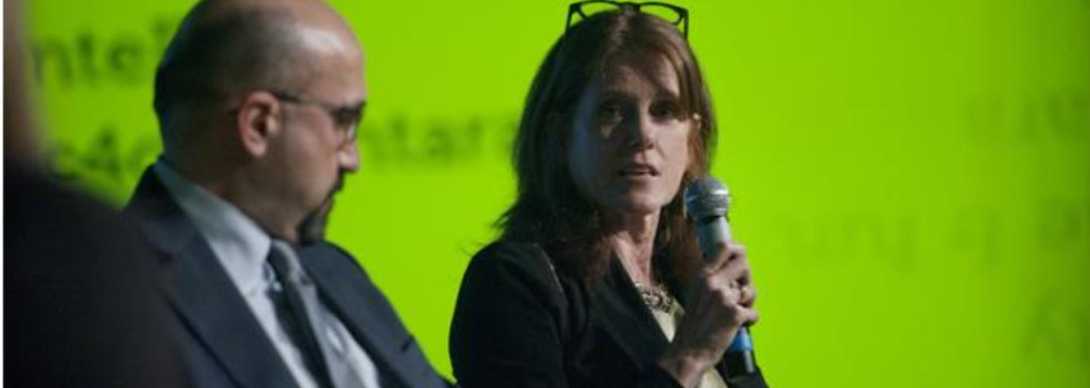
When Connect 4Climate asked me to speak at the Alcantara Dialogues during Milan Design Week, I jumped at the chance. After all, this was likely to be an audience made up of highly creative people, not the usual crowd of hard-core environmentalists and policy wonks that often participate in such discussions. Several years ago, my dear friend Dragan Klaic – a leading figure in the European theater and culture community who passed away in 2011 – gave me some very good advice. He said that the arguments of environmentalists would not be enough to generate the kind of public mandate needed to address climate change. It’s the culture community, he said – musicians, performers, artists – that will reach people at an emotional level, and help them ’feel’ what climate change is all about.
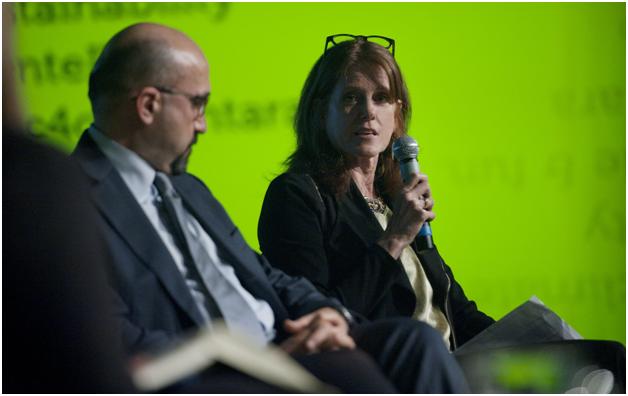
Kelly Rigg speaks at the CSR & Global Advocacy Panel Discussion for the Alcantara Dialogues: Connect4Climate--Re-think, Re-design, Re-new. Photo: Connect4Climate / Leigh Vogel.
So there I found myself, in the beautiful Alcantara exhibition space (surrounded by some of the most extraordinary exhibition spaces I’ve ever seen at a trade fair I might add). Drawing on the work of Tony Leiserowitz and his colleagues at Yale, I started with the basic, simple observation that there are really only five key things the public needs to understand about climate change: it’s happening; it’s going to be bad; humans are causing it; scientists are in agreement; and most importantly, we can do something about it. If we act urgently – there’s still hope.
Much of the discourse around climate change has focused on the first four propositions, primarily as a means of delaying action on the fifth. This is hardly surprising, because the kind of action we need to address the climate problem (phasing out fossil fuels) is a fundamental threat to some of the most powerful vested economic interests on the planet (the fossil fuel intensive industries).
But this is changing. The science of climate change is reconfirmed on an almost daily basis, as study after study examines the issue from every angle imaginable and comes to the same inescapable conclusions (propositions one, two and three above). So given all of the bad news about climate change, is it really true that there is still room for hope?
I say yes, because there’s plenty of good news too.
In 2012, for the fifth year running, more than 50% of all new capacity added to the electricity grid in the EU came from renewables. In the US, the majority of new electricity capacity in the US came from wind power. In China, wind surpassed nuclear power as the third-largest source of electricity (after coal and hydro).
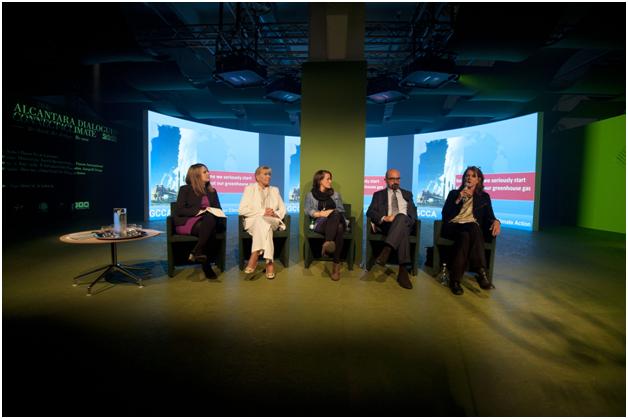
Zoe Fox, Betty Williams, Julie Allen, Silvio de Girolamo, and Kelly Rigg at the CSR & Global Advocacy Panel Discussion. Photo: Connect4Climate / Leigh Vogel.
According to the latest analysis of the Pew Charitable Trusts which publishes an annual report on who is winning the clean energy race, “In less than a decade, clean energy transitioned from novelty products to the mainstream of world energy markets? The sector emerged not so much in a linear fashion as episodic—in fits and starts associated with the worldwide economic downturn, continent-wide debt crises, national policy uncertainty, and intense industry competition. Through it all, however, the clean energy sector moved inexorably forward, with overall investment in 2012 five times greater than it was in 2004.”
Perhaps the most important indicator of all is the fact that renewables are getting cheaper, while fossil fuels are getting more expensive.
I would argue that we are at the beginning of an energy revolution. The $6 million question is whether we can beat the clock.
To do so, governments need to create incentives and send the right signals, for example by taxing carbon pollution and using the revenue to support climate resilience.
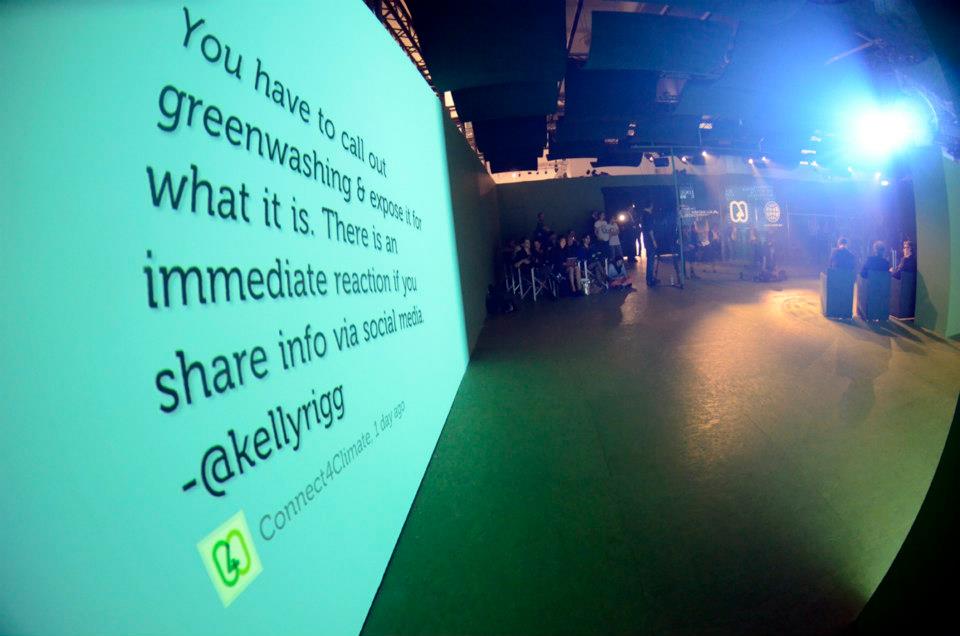
A tweet wall during the Alcantara Dialogues displays statements from panelists: "You have to call out greenwashing & expose it for what it is. There is an immediate reaction if you share info via social media. -Kelly Rigg." Photo: Connect4Climate / Max Thabiso Edkins.
But business doesn’t need to wait for governments. Most companies will say that in today's economic climate, if they were to invest what’s necessary to transform operations to cleaner technologies, they would take a big hit in their quarterly reports. So major industry players must either cooperate and move simultaneously, or work to change the accounting rules which value short-term profit over long-term sustainability.
And all of us need to hold our elected leaders accountable; politicians serve at the will of the people, not of the fossil fuel industry lobbyists. But we don’t need to wait for governments either. We should be asking where our university endowments and pension funds are being invested, and push for renewables over fossil fuels. We need to put our money where our mouths are, and stop buying wasteful products.
Visit www.tcktcktck.org to find out more about how you can get involved.
Follow Kelly Rigg on Twitter: @KellyRigg
|
What Kind of Climate Will the Youths Face in the Future?
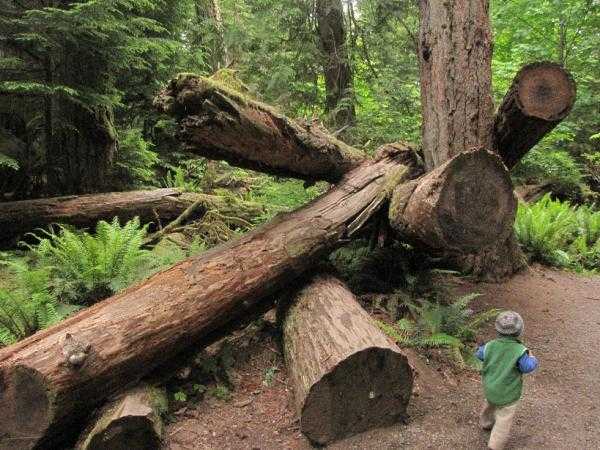
The call is on the youths. What's being done to limit the impact of human activities upon the earth? Is there going to be left a habitable place for posterity and generations to come? Will they have a better quality of life or do our activities threaten this idea?
Turn Down the Heat, a report by the World Bank examined some of these issues. It emphasized how human activities and the resultant global warming and climate change could impact adversely on nations. Beaming its spotlight on sub-Saharan Africa, South Asia, and South East Asia, the bank examined varying scenarios of what could become of these regions should world temperatures increase by 2 – 4 degrees. A synopsis; extreme flood, heat, and drought. These have enormous ripple effects such as population displacement and increased conflicts to name a few.
According to IEA, carbon emissions globally hit record highs in 2012, rising by 1.4 percent to 31.6 billion tons. In addition, developing countries are said to account for 60 percent of global emissions from energy as against 45 percent in the year 2000.
Is history going to repeat the same heated cycle? What is being done to stem the tide of a warming planet? There have been calls for an end to the use of fossil fuels, excessive deforestation, un-checked industrialization and much more.
The time has come for us to heed the call of knowledgeable diplomats and world leaders; United States President Barack Obama has called for reevaluations of current operating standards in order to safe guard the future from climate change.
The youths are a part of this conversation. As the leaders of tomorrow and the voters of today, they can catalyze positive action in their homes, schools and communities on habits that result in warming climates. Armed with appropriate facts on this issue, they can help make a world of difference. The World Bank President Jim Yong Kim stated that, "To deliver bold solutions on climate change, we need to listen to and engage broader and more diverse audiences. We need to hear the voices of young people."
The Connect4Climate global coalition, led by Lucia Grenna, threw its weight behind this idea, building global awareness and conversations on climate change. C4C took numerous steps to focus on encouraging youths to make their message heard. The youths have been a large part of coalition efforts, illuminating how climate change impacts their future in the recently concluded iChange competition.
In the United States, a poll conducted for the League of Conservation Voters revealed that young voters want there to be more action in slowing climate change. According to Tree Hugger.com, "young voters will not tolerate denying science or opposing action to slow climate change."
In addition, AllAfrica.com presents how the youths currently focus on grassroots action in a bid to help their communities adapt to climate change. They believe that there's an urgency to develop resilience measures and coping strategies since adaptation funds were not trickling down to those in desperate need.
What more needs to be said? Let these steps taken so far be transformed into leaps and bounds of progress, through positive and profound actions and policies that will reverse the heat.
The World Bank in its fight to end poverty attempts to balance varying activities that alleviate poverty with those that protect the environment. According to Reuters, the World Bank in is endeavoring to limit the financing of coal-fired power plants.
Other countries and cities around the world are snapping on to the efforts of limiting climate change. For instance, London has put together a city adaptation plan that includes surface water flood management, increasing vegetation about the city, and improving water and energy efficiency in homes. In Quito, Ecuador, official policies support mitigation and adaptation strategies that focus on five areas: ecosystems and biodiversity, drinking water supplies, public health, infrastructure and power production, and climate risk management.
New York City has developed a 19.5 billion dollar plan that will help the city adapt to climate change. A sort of reinforcement after the extensive damage wrought on the city by superstorm Sandy.
In Jamaica, collaboration by the University of West Indies, the Global Environment Facility, and United Nations Environment Program will see the construction of zero – energy buildings in the region in the next two to three years. These zero-energy / energy – plus buildings (ZEB / EB) work by combining energy-efficient designs with efficient sources of energy so that they produce their own energy, and then some.
Nigeria collaborates with ECOWAS member states to develop a West African Climate Change Adaptation Strategy (WACCAS), in addition to afforestation initiatives, the Green Wall Sahara Initiative, the construction of solar farms, and public awareness campaigns.
In Durban, South Africa climate adaptation strategies started as early as 2004 and have been rolling out in stages. The program began by assessing local impacts of climate change as presented by hotter temperatures, rainfall intensity and coastal erosion. Specific adaptation plans were developed with hopes of harnessing these effects.
Rwanda is planting trees, preserving forests, and reforming agricultural practices to make them more environmentally friendly.
The Massachusetts Institute of Technology estimates that 20 percent of cities around the globe have developed adaptation strategies. We all need to adopt activities that will help harness climate change and decrease escalating global temperatures.
A lot more needs to be done to decelerate the warming of the earth. The UN secretary general, Ban Ki Moon added his voice to the call on the youths' increased involvement.
As President Obama said in his recent remarks on climate change, when "our children and our children's children …look us in the eye and ask us, did we do all that we could when we had the chance to deal with this problem and leave them a cleaner, safer, more stable world?" Let us be able to respond, "Yes, we did!"
|
What is the Role of ICTs in Achieving the Goals Outlined in Rio Plus 20's Zero Draft Document
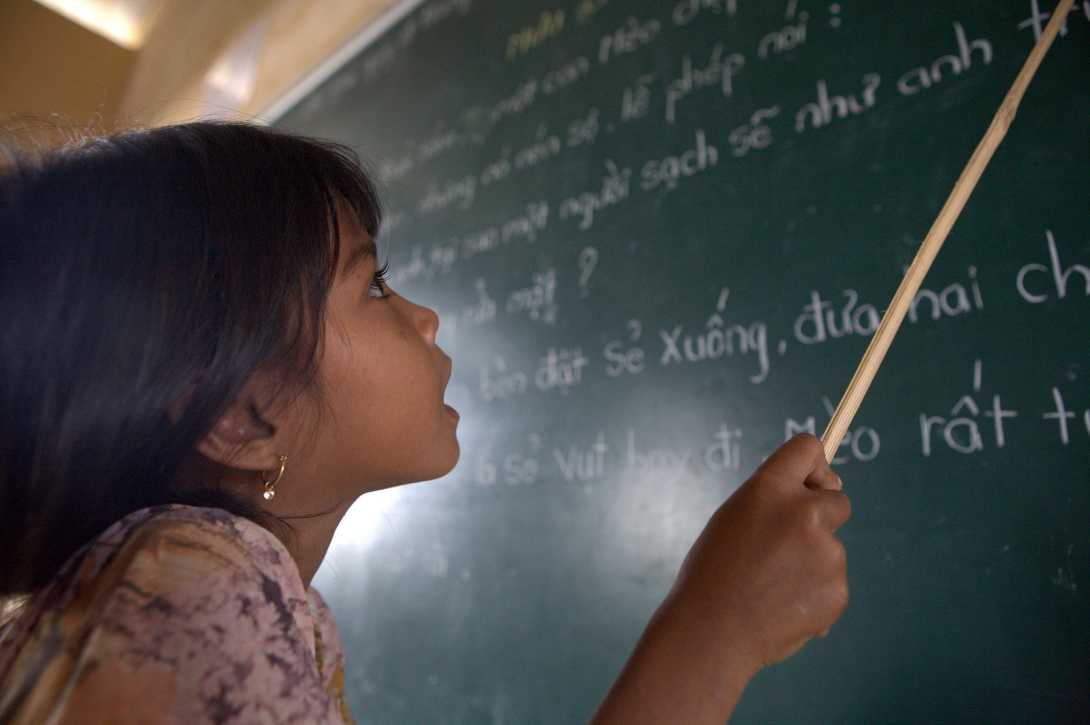
Twenty years ago, at the Rio Earth Summit, 178 governments committed to a series of legally non-binding principles that were designed to commit governments to balance development and environment in a way that would bring a more sustainable future. Principle 10, the first international declaration that recognizes the rights of people to hold governments accountable for their policies regarding the environment, was one key result of the summit. It provides a means for people to engage in the decisions made by political leaders and government agencies about environmental issues that affect livelihoods and long term wellbeing.
“Environmental issues are best handled with participation of all concerned citizens, at the relevant level. At the national level, each individual shall have appropriate access to information concerning the environment that is held by public authorities, including information on hazardous materials and activities in their communities, and the opportunity to participate in decision-making processes. States shall facilitate and encourage public awareness and participation by making information widely available. Effective access to judicial and administrative proceedings, including redress and remedy, shall be provided.”
- Principle 10 of the Rio Declaration
Since 2011, key stakeholders have been submitting ideas for the Zero Draft of the Rio+20 outcome document, to be discussed at the Rio+20 Conference in June 2012.
Like Principle 10, the Zero Draft recognizes the need for broad public participation in decision making, linked to a strengthened right to access information and to better civil society capacity to exercise that right. It notes that technology can make it easier for governments “to share information with the public and for the public to hold decision makers accountable” and that it is critical to work towards universal access to information and communications technologies. (Clauses 17 and 18). A recent analysis showed that participation, accountability, transparency, Principle 10/access to information and social inclusion/ equity are among the terms that share an ‘excellent’ level of interest among governments, UN agencies, civil society groups and other stakeholders.
Along with public participation, the Zero Draft also calls for “increased aid effectiveness, taking into account the Paris Declaration, the Accra Action Agenda and the Busan Partnership for Effective Development Cooperation in ensuring that aid is effective, accountable and responsive to the needs and priorities of developing countries.” Greater coherence at international and national levels is urged, including “effective oversight of resources to ensure that developing countries have steady and predictable access to adequate financing, including by the private sector, to promote sustainable development.’
ICTs can play a role in supporting Principle 10 and Zero Draft, and pushing for appropriate mechanisms for response and redress.
Mass media campaigns and communication for development (C4D) approaches have long been used to disseminate information and encourage environmental awareness and behavior change. New media has improved access to information and allows multi-channel communication rather than one-way broadcasts. Greater access to mobile phones and to new media channels mean that a broader population than ever before can be engaged in and/or participate proactively in defining and acting on Rio+20 and its outcomes.
In addition to information sharing and behavior change, ICTs have the potential to play a strong role in helping civil society organize and push for greater transparency, openness and accountability around Rio+20. As Chantal Line Carpintier suggests, “Rio+20 should also agree on an effective accountability process for all actors – governments, business and industry, local authorities, NGOs and other major groups and stakeholders. Accountability and ownership by all actors would favour implementation. There is growing support, for instance, for public reporting on sustainability performance. A registry of commitments is one of the tools that have been suggested to follow up on commitments made at Rio+20 and avoid previous lack of implementation.”
An effort similar to the open government partnership and the International Aid Transparency Initiative or integration of sustainable development goals and Rio+20 commitments into these two efforts could be something to consider, along with a mandate for corporations to also open their activities to public scrutiny.
On-line organizing combined with both online and offline actions (in places that have ready access to social media) can help the world prepare for Rio and also to push for its outcomes to be implemented.
Despite the great potential for ICTs in communication, change and accountability efforts, however; lack of access to ICTs and potentially low capacity to interpret data that might be presented on-line in such a registry is of concern in less accessible rural communities and among some marginalized groups.
Education levels, literacy, and other excluding factors such as poverty and gender discrimination can severely limit ICT and social media access for a large number of people. In addition, information produced in dominant cultures or languages can exclude or override those with less power. As Angelica Ospina notes in her post Knowledge Brokers, ICTs, and Climate Change: Hybrid Approaches to Reach the Vulnerable, “There are many misconceptions about what ‘reaching out’ implies, as in practice it requires much more than making climate change information and knowledge publicly available through Internet-based tools such as Web portals and online databases.”
Therefore, there needs to be, “a more holistic understanding of the information cycle, including the creation, acquisition, assimilation, management, dissemination and ultimately the USE of climate change information, particularly within vulnerable contexts. Beyond the provision of climate change information, it’s necessary to consider if/how the information is being integrated -or not- into decision-making processes at the local, regional or national levels,” she says.
The Children in a Changing Climate project uses a variety of participatory development and media tools for children and adolescents to explore and document climate change in their communities, and to share their findings and suggestions to adults and other decision makers.
There is also a need “to identify, adapt and adopt innovative approaches for the effective delivery and the local appropriation of climate change messages, and most importantly, for the translation of information and knowledge -both new and traditional- into climate change practice.” This will require strong efforts as well as resources to create an inclusive environment that fosters greater participation, as mandated by Principle 10, and local ownership of sustainable practices.
“Working with knowledge brokers, also called “human infomediaries” who can help bring people together, identify local needs and transfer information and knowledge more effectively is one such approach to improve information and communication flows,” Ospina advises. “Human infomediaries support an active process that involves exchanges between people, facilitating the development of climate change strategies, adoption of adaptation and mitigation practices, and processes of local change and innovation.”
(More here on ICTs and the role of knowledge brokers).
Building on Ospina’s observations on how to bring information to the “last mile,” meaningful ways to bring community knowledge and information into higher level discussions need to be found. Local communities have vast knowledge on resilience, climate patterns, local environments and local situations and histories that can be documented and shared using ICTs both to benefit themselves and to share at broader levels, improving South-South cooperation and innovation. Multi-media curricula such as the Children in a Changing Climate website bring together young people’s voices and opinions around climate change and environment.
Post Rio+20, digital tools are one of many information and communication mechanisms that local communities and their citizens can use to confirm, validate, contest and dispute information related to compliance with commitments being put forward by those responsible for upholding them. Participatory media approaches can be effective in bringing community members as well as duty bearers at local, district, national and global levels into discussions about climate change and sustainable development.
Why are you killing me? Girls in Kenya use poetry to engage adults in discussion on climate change.
In summary, ICTs can play a strong role in education, participation and accountability processes if their integration is well thought through, appropriate to the context, and taking into consideration good participatory practices. Hybrid approaches that use a variety of online and offline tools can be effective for reaching populations and decisions-makers at different levels of responsibility, for ensuring that ICTs are not widening existing information and participation gaps and for upholding the goals set forth in Principle 10. Children and youth can and should play an instrumental role in bringing about awareness and accountability, especially since they will be the ones who reap the long-term results of the agreements sown at Rio+20.
The Notes on ICTs, Climate Change and Development blog provides a wide range of research, commentary, and research on these areas.
|
Understanding Our Relationship with Forests
It might seem tautological to say that the story of man and forest is as old as, well, man and forest. But considering that we spend so much time and energy cutting down trees and generally disregarding their importance to our survival, it seems like we have forgotten that our existence is largely sustained by forests.
From the World Bank’s Forests and Forestry Page
Forests contain twice as much carbon as exists in the Earth’s atmosphere, and absorb about 15 percent of the planet’s greenhouse gas emissions. Meanwhile, destruction of forests through deforestation and forest degradation now contribute about 18% of the planet's greenhouse gases, a principal cause of climate change.
Based on the comments on our Facebook wall, many of you understand the importance of protecting forests as an effective method of protecting the environment. Your comments remind us that this is a conversation that needs to be shared around the world.
As individuals we might not be able to sit at the negotiating table in Durban or Rio+20, but planting trees or educating our neighbors on the importance of forests, is well within our capability. Forests provide mankind a very rich existence. For some communities that have been living in harmony with forests, this is common knowledge. Asimenyekyala Nthakomwa noted this on our Facebook wall:
“communities harvest lots of non timber forest products... fruits, mushrooms, firewood, thatching grass, edible insects and a lot more therefore their protection ensures continued benefits to the communities, let me mention that the communities (especially those who dwell closer to the forests) should be involved in the protection of these forests so that they should feel that they own them and its for their benefit otherwise illegal harvesting cases will be the order of the day and they will be used unsustainably!”
Many of you made valid observations today about forests and their role in fighting climate change. You commented that forests are important to you because they house animals, provide oxygen, sequester carbon, prevent desertification, provide shade and beauty, protect biodiversity and water resources, balance micro-climates, and are part of our heritage and legacy.
A few weeks ago, forests featured heavily during our week of African Voices on Climate Change (AVCC). AVCC was our invitation to African and Diaspora bloggers to contribute their stories on climate change. Over the next few weeks we’ll feature those voices as part of our weekly discussions. One of those contributors, Professor Wolfgang H. Thome, from Rwanda wrote about Nyungwe National Forest Park in Rwanda and how the country is looking at sustainable methods of including forests as part of the national attraction. This is a great example of positive use of forests. We don’t necessarily need to destroy forests in order to create tourist attractions, forests ARE the attraction:
The establishment of the Nyungwe Forest National Park a few years ago widened Rwanda’s tourism attractions and the success of this park – including its unique treetop walk – has fueled rumours that another forest national park may be in the making to provide more choices of itineraries and fulfill the country’s tourism vision to attract quality tourists who are staying longer and spend more money, making the ‘industry’ succeed in the long run for generations to come.
Given all your input into the discussion on forests, one could conclude that nearly all of the 80,000 fans on our Facebook page joined because they understand the causes of climate change and are passionate about finding solutions. 80,000 of you understanding how critical a role forests play in the fight against climate change might not seem like much against a population of 7 billion. But 80,000 is a lot when you are started at zero. There’s a lot to say and to understand about our relationship with nature. Our journey to being more knowledgeable might perhaps answer critical questions about our dysfunctional relationship with our environment. Like for example, what allows us to ignore the destructive nature of our behaviors, in full light of evidence?
From UNEP:
Forests cover one third of the earth's land mass, performing vital functions around the world. In fact, 1.6 billion people depend on forests for their livelihoods. They play a key role in our battle against climate change. Forests feed our rivers and are essential to supplying the water for nearly 50% of our largest cities, including New York, Jakarta and Caracas. They help to regulate the often devastating impact of storms and floods.Forests are the most biologically-diverse ecosystems on land, home to more than half of the terrestrial species of animals, plants and insects. Forests also provide shelter, jobs and security for forest-dependent populations.
Yet despite all of these priceless ecological, economic, social and health benefits, we are destroying the very forests we need to survive. Global deforestation continues at an alarming rate -- 13 million hectares of forest are destroyed annually, equal to the size of Portugal.
One thing is clear, we are all responsible. But at the same time, we are fully capable of being the solution. So please continue to share your stories about the ways forests benefit you. If you don’t think forests impact your everyday life, please make it a point to join the discussion and hear the stories of others. Somewhere along the way, we hope you will come to understand that others’ stories about forests are reflections of all humankind’s interactions with forests. We are all connected, and we all rely on forests. Next week, we’ll look at how one person’s story of a forest is relevant to all of us.
|
Uganda's Solomon W. Jagwe Uses Film to Teach Conservation
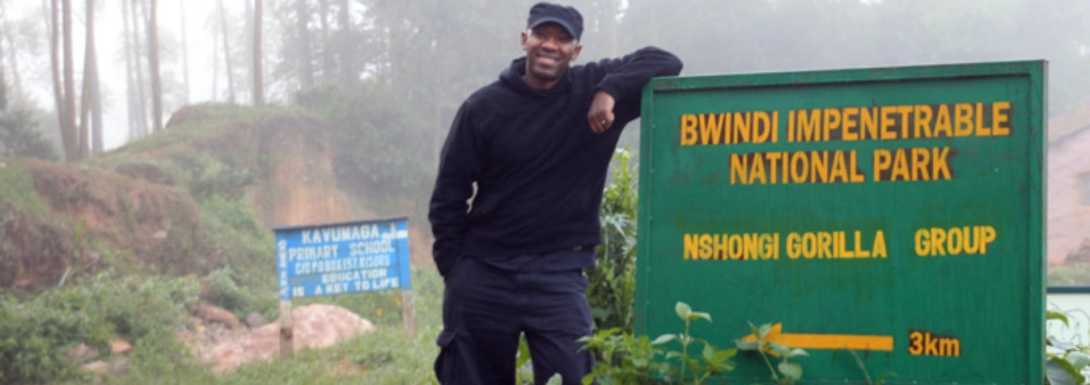
Solomon W. Jagwe is a Ugandan animator with over 15 years experience in the digital arts. He has spent the last couple of years working on an animated film that tells the story of a Mountain Gorilla on a quest to survive. With production of the film still in progress, C4C caught up with Mr. Jagwe over Skype to gain a little more information on his very personal project of using film to engage youth in Uganda and on the continent about the importance of conservation.
[video:https://youtu.be/hY3DkqGWHX8]
Why did you choose to use film as a medium to get your message across?
I chose to use film to deliver the story of Galiwango, because when I was growing up as a kid back in Uganda, the only way that I heard folk tales about wildlife, was through kerosene lamp-lit evenings in the village, with my grandmother. When my grandmother passed away, I realized that, those stories of Wango (leopard), Wakayima (Hare), and Waguludene (Elephant) had most certainly gone to the grave with her, except for what I had in my memory. I figured that the surest way to save that rich heritage of oral tradition, was to carry on the torch and use a medium that was rapidly being accessed all over the world through the web and in movie theaters.
And considering the fact that we the youth are the future consumers and leaders of tomorrow, I had to find a method that would appeal to that demographic. That's why I chose the 3D animated approach. I have been working in this industry since 1998. I have worked for the US defense industry for over 12 years as an animator, and 3D artist, created content for video games, military simulations, cinematics and scenario based training.
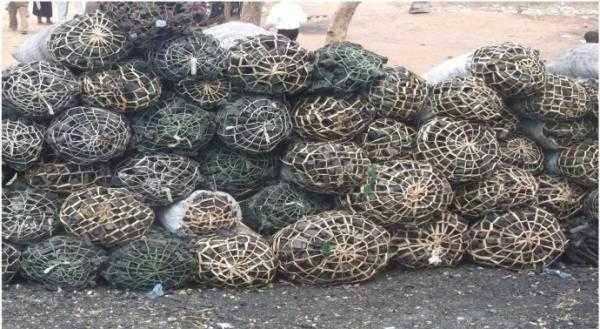
Having worked within military circles for that length of time, I developed a soft spot for men and women who lay down their lives to protect and preserve freedom. That experience shaped the way I look at Park Rangers. I see them as the front-line, unsung heroes in the global effort to protect endangered wildlife and the conservation of the habitats they live in. In the Galiwango film, I show the tremendous responsibility the rangers have in fending off Illegal charcoal traders and poachers. There is a war being waged against the forests in Africa (and in South America) where the forests in the Congo Basin and Amazon Basin are threatened by logging and deforestation that is feeding the illegal charcoal trade, especially in the Congo.
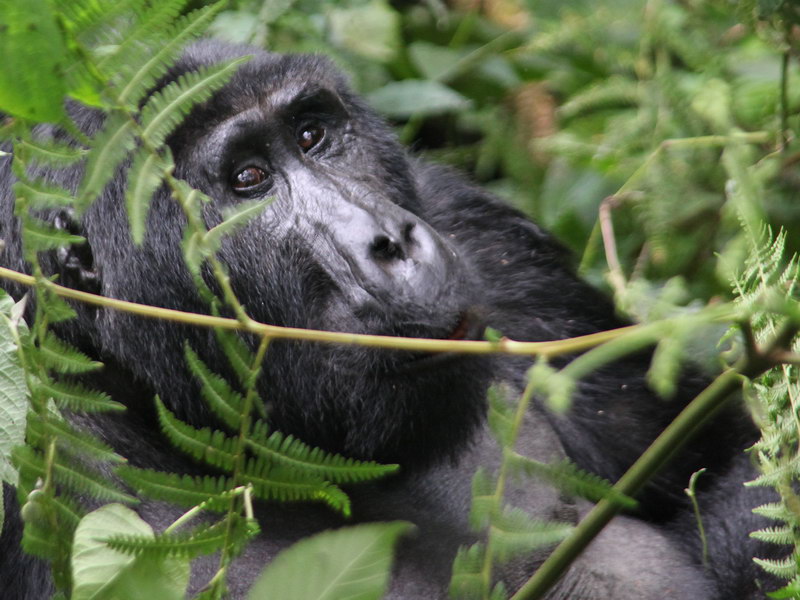
Without the forest cover, the endangered wildlife is stripped bare of its protective habitat and source of food and accommodation. This also opens up the habitats to squatters as communities build closer and closer to the habitat shared by the mountain gorillas and other endangered wildlife. [ Some photos of my mountain gorilla tracking trip to Bwindi to see the Nshongi mountain gorilla group, and to gather reference material for the Galiwango Film ]
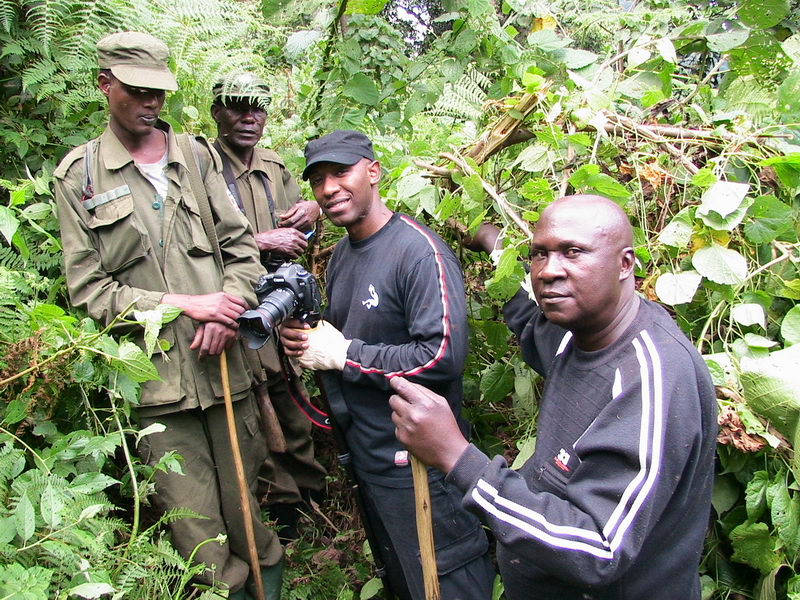
After the tracking, I sat down with 4 rangers and interviewed them about their experience of protecting the Bwindi forest and the mountain gorillas, plus all the other endangered wildlife. It was an eye opening experience. I met a ranger called Sgt Major. Benjamin Bayenda, an old man who has been serving as a ranger for 24 years. His dedication to the conservation effort inspired me greatly. I promised him that I would share his story and do my best to let the world know about the challenges and triumphs of the rangers.
Statistics show that 78% of Uganda's population is 30 years and below, and 51% are 15 and below, which means that future Rangers are going to have to come from that demographic. Rangers like Sgt. Major Benjamin are going to have to retire at some point, and its going to be us the youth to carry on that noble torch. So the way I see it, is that the sooner we educate the youth to develop an endearment to the plight of the endangered wildlife and future of our environment, the better prepared they will be when that calling takes root in their hearts. I have made it a personal crusade to educate the youth for as long as I have breath.
You have decided to make this a very personal project, it is very unusual given your background to switch to environmental education? What drives you?
My drive to this effort didn't start yesterday, I have been a wildlife advocate since I was a kid. The subject matter is drawn from my longstanding fascination with nature and wild life as a whole. I have always loved studying wild animals, birds and fish. I remember how I used to skip lunch, while in boarding school, and spend that time reading Encarta encyclopedias filled with beautiful images of creatures from all over the world.
Mountain gorillas captured my imagination not only because of their immense size and grace but also by the alarming rate at which they were disappearing from the face of the planet. It was quite sobering and rather saddening to think that these awesome creatures might not be around for future generations to appreciate.
Like my late grandmother, I wanted to tell stories about the struggles and triumphs of these endangered great apes, and shed a light on the struggles and triumphs of the men and women working had to protect them. I tell the story from a captured gorilla’s point of view. I weave into the tale a human element of redemption, interaction with technology, war and humor.
Do you think Uganda's youth and Africa's youth in general are capable of rising to the occasion and putting the environment and the causes of climate change as central issues critical to their future?
I am an ardent optimistic and believer, that there are others like me out there. Young women and men who have a heart for the conservation and preservation of our environment. Through social media, I have been able to reach out and share this message, and I see the numbers rising on the Mountain Gorilla conservationCause Group and the Galiwango Film Facebook page I created with a combined total of 7,218 members/fans. That's why I can answer yes, I do believe the youth are capable of rising to the occasion.
Ever since I shared the Galiwango film project with the public, I have received a number of inquiries from youth in Uganda and Congo on how they can get involved and how they contribute to groups like the Batwa tribe, a forest people that were displaced from Bwindi, a habitat they shared with the mountain gorillas. I am also reaching out to other young leaders like Rica Rwigambwa, who is the head of the tourism and wildlife in Rwanda. She is a young lady who is dedicated to the evironmental protection effort and the conservation of endangered wildlife.
How will you measure impact of the film when it is done? What's next for you after the film?
The impact of the film will be measured in the number of schools I will be able to visit, and the number of workshops I will do as a continued effort to spread the word. My goal is to take it to as many schools as possible to sow that same seed that was sown in my life. Investment in education is a priceless effort and the impact is often made manifest when those children grow up.
Tangible impact will be in the continued contribution to a Ranger Fund, which can already be seen by the donations people are making through the Galiwango Cause Group I set up and the Comic Book based on the film that I wrote and illustrated. That money goes to providing a rehabilitation center for gorillas rescued from poachers, through the Dr. Dian Fossey Gorilla Fund. They also fund ranger patrols that help disable traps in the forests, fend off poachers and illegal charcoal producers. I donate $5 dollars from every comic book purchased to the conservation effort.
I also believe that there will be an increase in contribution of youth to the effort to help disadvantaged forest people like the Batwa, and raising awareness to the cultural heritage projects like the Batwa Experience Trailin Bwindi, where the natives share the value of protecting a Forest habitat they shared with the mountain gorillas.
To learn more about the film visit the website. http://www.galiwango.com/
|
Urban Carbon Cap-and-Trade Pioneer Supports the Call to Put a Price on Carbon
The IPCC’s Fifth Assessment Report firmly centered on the reality of human-driven climate change. If we don’t take immediate and tangible steps to reduce the consequences of these actions, we will face an environmental crisis that will have a major impact on mankind’s existence. Here in Tokyo, we are extremely concerned about this danger, as it poses a huge threat to our goal of becoming a sustainable and environmentally-friendly city.
In the year 2030, it is estimated that the number of people living in urban areas will exceed 60 percent of the world’s population, and measures at the city level are now crucial. The effects of climate change are already becoming apparent in a range of forms, and Tokyo is no exception. Tokyo has undertaken several measures to mitigate these effects, including launching the world’s first urban cap-and-trade program. In addition, Tokyo is implementing a number of pioneering initiatives, such as measures to counteract storm surges and floods, as well as major earthquakes, and advancing urban planning to realize a more resilient city.
The IPCC’s Fifth Assessment Report firmly centered on the reality of human-driven climate change. If we don’t take immediate and tangible steps to reduce the consequences of these actions, we will face an environmental crisis that will have a major impact on mankind’s existence. Here in Tokyo, we are extremely concerned about this danger, as it poses a huge threat to our goal of becoming a sustainable and environmentally-friendly city.
In the year 2030, it is estimated that the number of people living in urban areas will exceed 60 percent of the world’s population, and measures at the city level are now crucial. The effects of climate change are already becoming apparent in a range of forms, and Tokyo is no exception. Tokyo has undertaken several measures to mitigate these effects, including launching the world’s first urban cap-and-trade program. In addition, Tokyo is implementing a number of pioneering initiatives, such as measures to counteract storm surges and floods, as well as major earthquakes, and advancing urban planning to realize a more resilient city.
At the same time, Tokyo is working with cities all over the world and engaging in a variety of international activities. In this way, Tokyo’s achievements have been introduced to the world, and we are proud to have gained high recognition in reports issued by the World Bank. Of these initiatives, Tokyo’s cap-and-trade program has received especially high praise internationally. In the program’s first year, FY2010, a 13 percent reduction in total CO2 emissions from base-year figures was achieved.
Further reductions were achieved in FY2011 and FY2012, with a 22 percent reduction from base-year figures recorded for both periods. Achievements to date have far surpassed the mandatory 6 or 8 percent reduction rate, producing a significant effect. Tokyo Cap-and-Trade has introduced retrofitting projects backed by vast amounts of investment for energy-saving technologies. Practical examples of which include the installation of LED lights, more efficient heating equipment, and improved day-to-day operational efforts.
[video:https://vimeo.com/95527812]
We believe Tokyo’s success is highly reliant on a positive response from various stakeholders, including building owners, developers, tenants and related businesses following our initiatives. A lot of credit needs to go to the facilities under Tokyo Cap-and-Trade, including facility owners and related businesses that responded very positively to the program, resulting in its continued success.
As the 2020 Tokyo Olympic and Paralympic Games approach, Tokyo will continue to promote effective energy conservation and CO2 reduction measures in order to resolve climate change related issues and further strengthen energy policies, including greatly expanding the use of renewable energy, with a view to the global environment.
The World Bank’s “Putting a Price on Carbon” statement is very meaningful, as it will become a driving force behind the promotion of effective measures for climate change mitigation. If all of the world’s cities and nations cooperate to implement a variety of well-thought-out programs, promotion of measures for climate change issues will lead to a reduction in CO2 emissions, and even help avoid an eventual global environmental crisis.
As the Governor of Tokyo, a major city advancing innovative climate change mitigation measures, I endorse the World Bank’s “Putting a Price on Carbon” statement and express my full support. Firmly believing that this World Bank initiative will contribute to the sustainable development of the earth’s environment, Tokyo will call for other cities, nations, and companies that share in the same objectives to come together by endorsing this statement.
|
Todays Youth Tomorrows Big Data
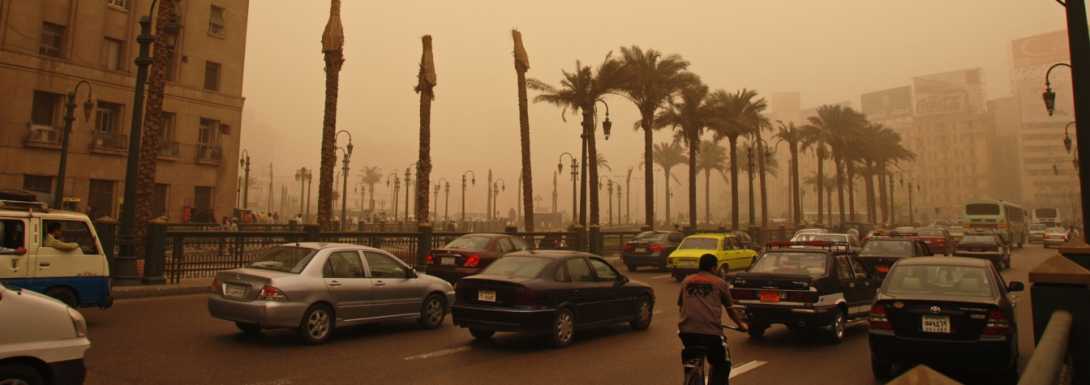
Today’s youth have been dealt a deadly hand when it comes to the environment and our aging Mother Earth. They must live in a world where the generations before them have polluted the ground they walk on, the oceans that surround them and the air they breath. While some still deny the reality of global warming, climate change is inevitable due to the tremendous increases in carbon dioxide emissions into our atmosphere.
The burning of fossil fuels and greenhouse gas emissions (GHGs) have grown more rapidly between 2000 and 2010 then they have in previous decades. The time to act is long overdue and many are calling for a global consortium to address this growing, toxic concern.
|
Thinking About the "Future we want" From a Local Perspective
[video:https://vimeo.com/7970557]
Spend a little bit of time browsing through the UN's newly launched website for Rio+20, and you begin to see what the future of development looks like. Not only that, you get a glimpse of how important creating a common platform that the world can use to imagine the future of humanity is. Global problems like climate change can be hard to communicate on such a vast scale. Distilling the science in a way that relates to both the learned academic and the casual browser is daunting to think about.
The entrance of telecommunication tools make the task of distilling and dissemination of information a much easier task to accomplish from a global perspective. By creating a common knowledge platform that is available to everyone, local communities are able to absorb, synthesize and localize the knowledge for themselves. Further more, they are able to upstream their local knowledge to a global audience. This experiential exchange of ideas is critical to solving global problems like climate change. True, not everything that works locally can be applied globally. Not all solutions easily bridge the "glocal" dilemma - meaning, local tacit knowledge doesn't always scale or replicate well.
But this is not neccessarily a problem. The key is not in replicating what the solution was for a local community, but rather, how that community approached a particular problem. Process is a central ingredient in successfully upstreaming and sharing of ideas. For example, look at some of the local efficient cook stove solutions that were submitted to our photo/video competition. Alphonse Karenzi's clean cook stove was engineered using locally made materials. His solution reduces the amount of firewood used by up to 85%. While this solution is innovatively applied, the process of getting to that solution is more important. By approaching the problem from a "what can I do here locally to contribute a solution to climate change?" he was able to utilize what was locally available to him. This approach is very much the same way someone in the city, who has access to energy, might use to conserve energy instead of wasting. Two different scenarios, unified by the desire to contribute to a global problem.
The spirit of collective doing is sometimes more effective than whatever solution you are using to solve a particular problem. This is why the UN's Future We Want platform of idea sharing is important to our future. While all the solutions might be different, unique, and varying in their degree of effectiveness, it is that unification of everyone's efforts into one global movement. Sharing is caring, as it were. We all dream about our futures, with grand ideas and visions of a Utopia far different from our present realities. But in order for us to realize those dreams, each of us has to contribute to the whole. What can you do locally to bring the "Future You Want" closer to reality?