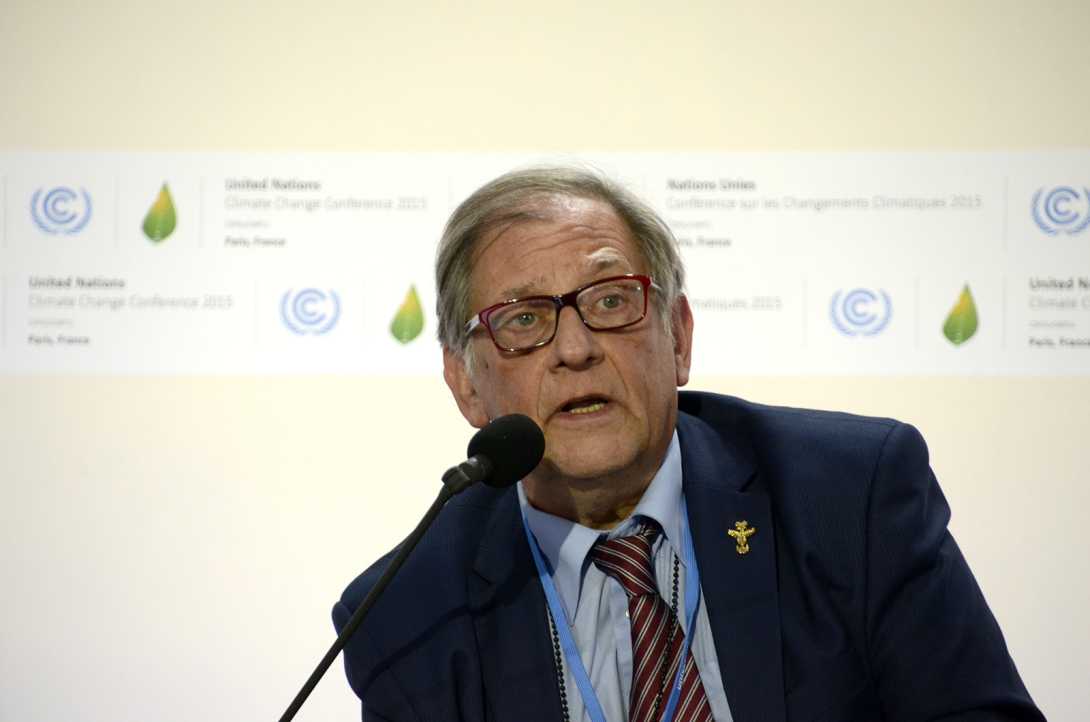
Film4Climate, an initiative of Connect4Climate, the climate change communications program supported by the Italian Ministry for Environment, Land and Sea, the German Federal Ministry for Development and the World Bank Group in collaboration with more than 300 global partners, announced at the Uni
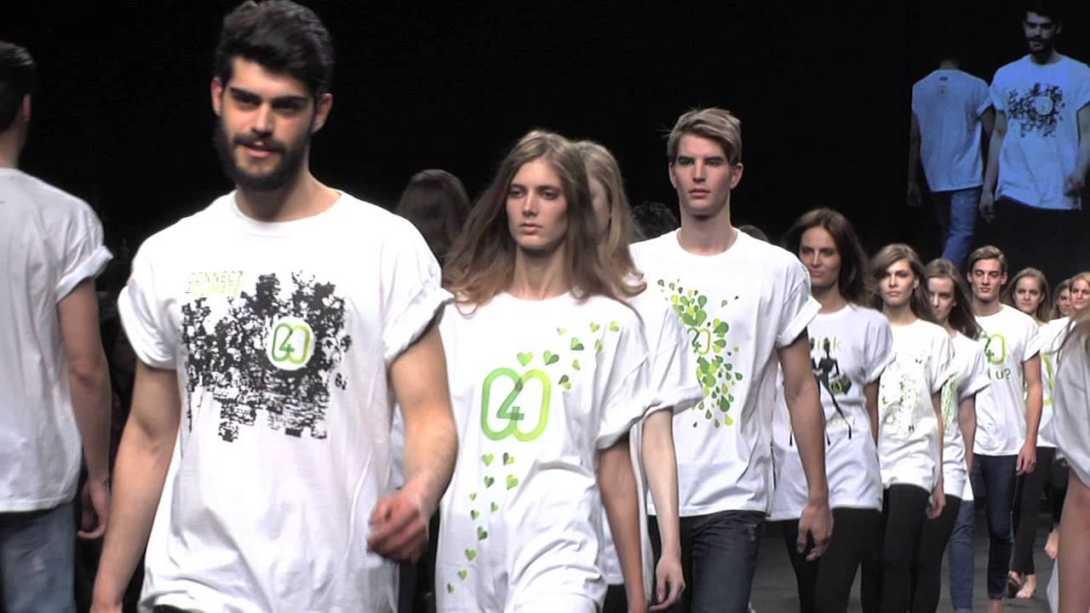
Promoting environmental sustainability is a defining element of Italian craftsmanship - even in the fashion industry.
While official policy-makers and intergovernmental bodies struggle to establish the agreements and frameworks that could, in a few bold strokes, free us from our carbon dependency, a revolution by 10,000 cuts is already taking effect in the private sector.
It is happening in the supply-chains of some of the world's largest corporations. Companies that in the past regarded sustainability and the green agenda as anti-business are beginning to embrace these concepts as a necessity for survival and an opportunity to build competitive advantage.
According to calculations by the CDP, the scope 1 and 2 emissions of G500 companies equates to roughly 10% of global emissions. For most companies, scope 3 emissions, including their supply-chains, are far bigger still. So maximising efficiencies across these supply-chains, re-engineering them as closed energy and resource loops, would make a huge difference. Fortunately, this is already happening, not by implementing a few big, silver bullet reforms, but by making thousands of small changes.
Adapted social media technology is enabling what we at 2degrees call "fully-linked collaboration". This is where anybody in a company with a problem or challenge can quickly and easily find someone else from another company with relevant experience, or even the very solution that they need.
This new, super-connectivity allows best practices to be identified, shared and disseminated very rapidly. In food manufacturing, in Europe alone, it is estimated that €22.5bn could be savedin this way by implementing best practices in energy management across the supply chain. (See 'Joining Forces – the case for collaboration').
However, this is not easy. It requires large-scale sharing of experience, know-how and insights, often between competitors. It requires an online platform, facilitation and processes to enable fully-linked collaboration.
Here are eight non-technology lessons we have learnt from doing this with our clients (including Asda-Walmart, Bord Bia, GlaxoSmithKline, Kingfisher, Royal Bank of Scotland, Tesco) that we believe are critical to making fully-linked collaboration work within a supply chain. They are written from the perspective of the business customer at the top of the value chain.
1. Fully-linked collaboration programmes need to be built from the perspective of maximising value for your suppliers. Get that right, and communicate it effectively, and you will drive engagement by the suppliers. Focus primarily on your needs and you make it hard for yourself. Ever wondered why asking for data from suppliers is so difficult?
2. The most important stakeholders to get involved are the operational managers (those practical folks with responsibility for energy, factory sites, production lines, packaging, waste, etc.). These are generally the out-of-sight individuals with the responsibility, challenges and collective know-how to unlock the hidden savings and reduce impacts. Make your programmes solve their problems and unlock their wisdom.
3. To be really effective, programmes have to be focused on a common measurable objective that all suppliers can get behind. This is where you, the customer, must lead. As an example, in our work with Asda-Walmart's Sustain and Save Exchange, the focus is on making its food supply chain the best-invested, most resilient and sustainable one out there with a clear target of $1bn cost reduction.
4. Benchmarking peers and competitors, as a group, is a very powerful way to get skeptics engaged. Suppliers tend to pay attention and join in if you can show them they are less energy efficient than their direct competitors and promise to share the best practices they are missing.
5. To be in a position where companies are prepared to share their best practices with competitors you need to have commercial teams leading (not CSR), providing a compelling incentive for suppliers to share. The incentive could be a reward in the form of: better terms, longer contracts, more time spent on joint promotions, etc.
6. Only so much happens without active facilitation. This is best done by a third party (we would say that, but see below). You need someone who understands the suppliers as companies and individuals, is trusted and can constantly connect the dots, link people up and encourage participation.
7. Use collaborative purchasing to solve common problems within the supply-chain and take advantage of the potential scale to drive down the cost of solutions. This also creates an important focal point of action for all the knowledge-sharing. As an example, Tesco's Buying Club saves its suppliers on average 25% off the cost of installing LED lights retrofitted into distribution centers. (LED lights cut the cost of electricity and carbon for lighting about 60%.)
8. The big breakthroughs (like Tesco's Buying Club, above) won't happen openly in front of the customer. Suppliers are too nervous that any savings they might make will be stripped away in negotiation if their customers know about them.
This is a further reason why you need third-party, trusted facilitation, that can enable, what some call, blind collaboration where data is collected anonymously so that suppliers feel they can keep most, if not all, of the savings they make.
When all eight of these principles are applied, fully-linked collaboration takes place and something remarkable happens: Firstly, engagement and collaboration levels amongst suppliers soar, with often more than 70% of the key operational management participating, at least once a month. Secondly, suppliers make investments in energy, waste and water reduction initiatives that they would not otherwise make.
In fact, we now have evidence that for every $1 the customer invests in managing fully-linked collaboration programmes, suppliers can invest up to $20, and make savings of $40 (over five years).
If we do this on a large scale, we will soon be removing billions of dollars in costs and related impacts from our supply chains. These cost reductions, as well as the energy and resource efficiencies put in place, will go at least part of the way to make up for the lack of attention to environmental care-taking from our public policy-makers.
Article was originally posted on the Guardian
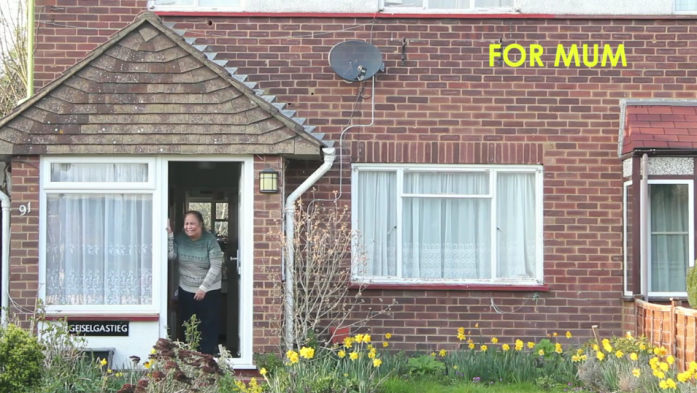
This Mother's Day, we celebrate the most important woman in our lives: Mom. This is the time we celebrate our own mothers and mothers around the world, and show our appreciation for their never-ending love. And it is a perfect time to hear their stories.
Climate change is a serious issue that will affect the youngest generation most. It’s happening now, and it affects every single thing on Earth. In April 2011, tornados devastated Raleigh, destroying homes, cars, and roads. Luckily, my house didn’t get hit. But if you drove a few blocks down the street, almost every house had a blue tarp over the roof. Then, a year and a half later, Hurricane Sandy swept along the East coast, wreaking havoc in countless coastal towns and cities, even more violent than the 2012 tornadoes.
Increasingly violent storms are just one side effect of climate change. They hurt people and affect tourism and the economy. A 2010 report by the North Carolina Coastal Resources Commission said that the sea level along the coast will likely rise by about one meter by the end of this century, threatening up to 2,000 square miles of land. That’s a lot of North Carolina.
I have been concerned about climate change ever since I read the kids’ version of Al Gore’s An Inconvenient Truth when I was in third grade. I am only 10 years old, but this issue is really important to me. It will change the world I and my children will grow up in.
I joined the iMatter Youth Council of Kids vs Global Warming to make a difference. We are committed to raising the voices of the youngest generation to stand up for our futures and for our planet. KvGW and the iMYC are part of a group of organizations that are meeting with the White House to ask President Obama to take leadership on climate change by hosting a Presidential Summit on Climate Change, with linked-in community satellite meetings to focus on solutions.
We are also working to get local leaders involved. I recently met with Mayor Nancy McFarlane in Raleigh, NC, to ask her to support the proposed Presidential Summit. During my meeting, I told Mayor McFarlane about what the Climate Summit would be, how iMYC and I were involved in it, and the two things I wanted her to do. I showed her the list of other governors, mayors, and civic and business leaders who had already signed a letter of support. She was impressed by the length of the list! She thought it was cool that youth are involved, and she immediately agreed to sign her own version of a letter supporting the Summit.
I am really happy that my Mayor cares about my future and this issue. I hope that more mayors join the list and that other kids like me will make their voices heard. The youth of this nation need our leaders to stand up for us and to take action to protect our future from climate change!
Connect4Climate is proud to report that the Peruvian INKAFEST Mountain Film Festival, held from August 28th - September 6th, highlighted Connect4Climate’s Action4Cl
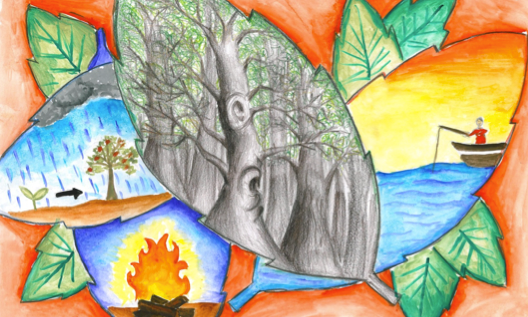
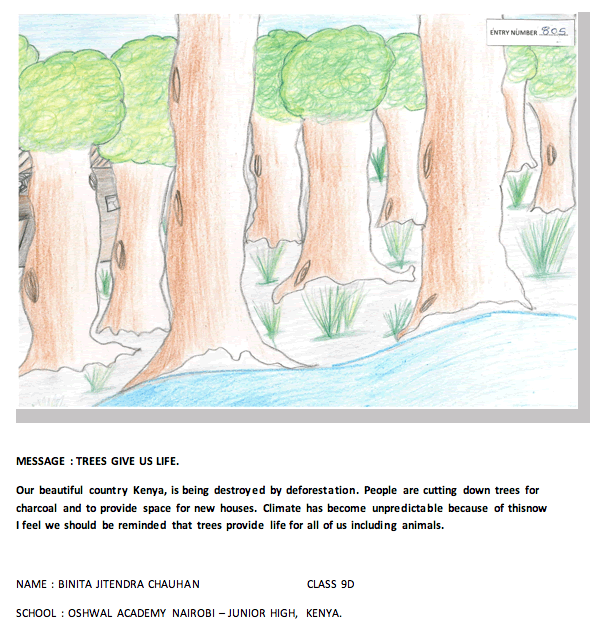
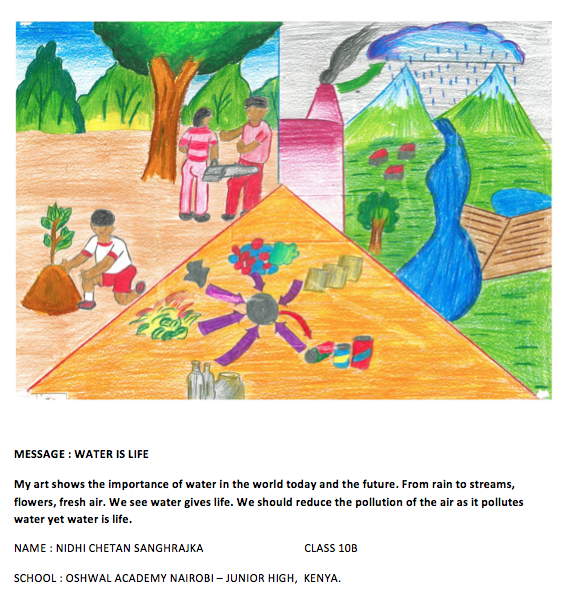
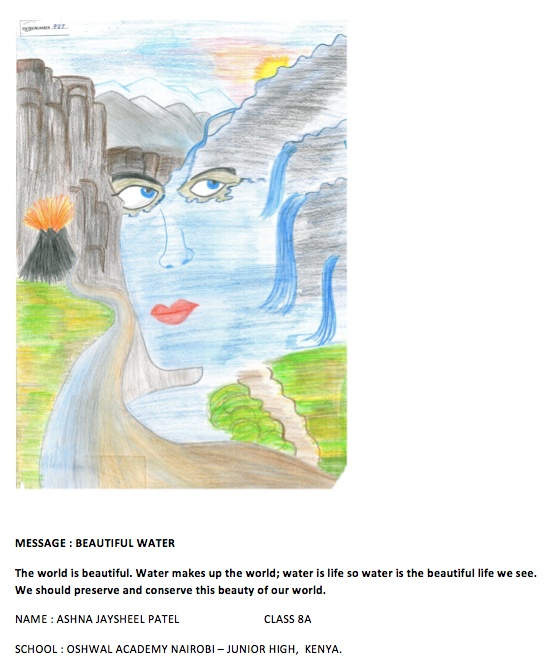
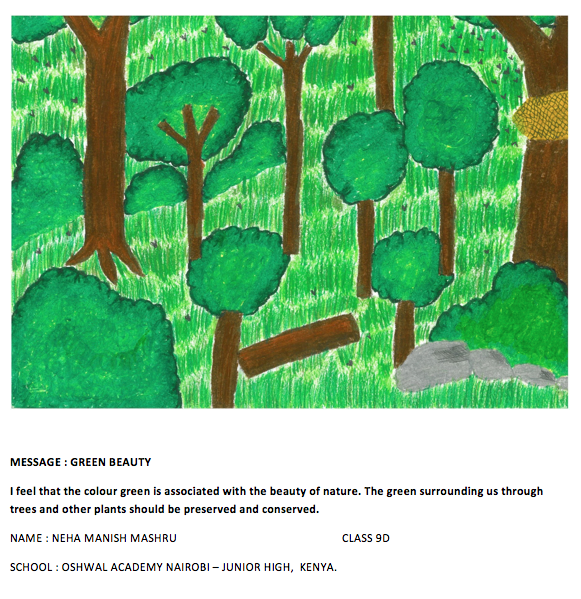
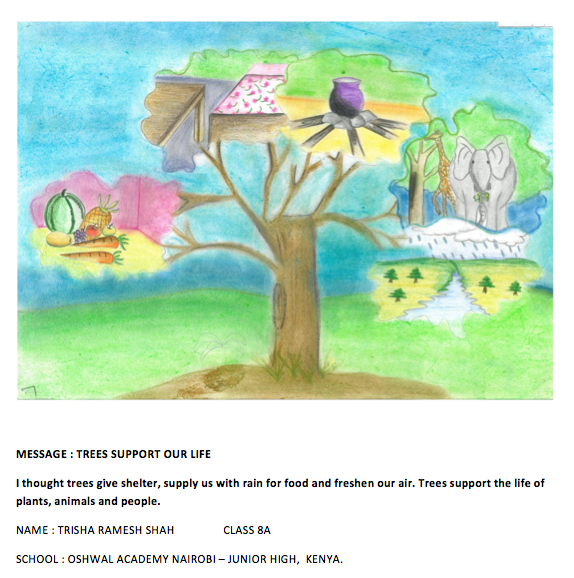
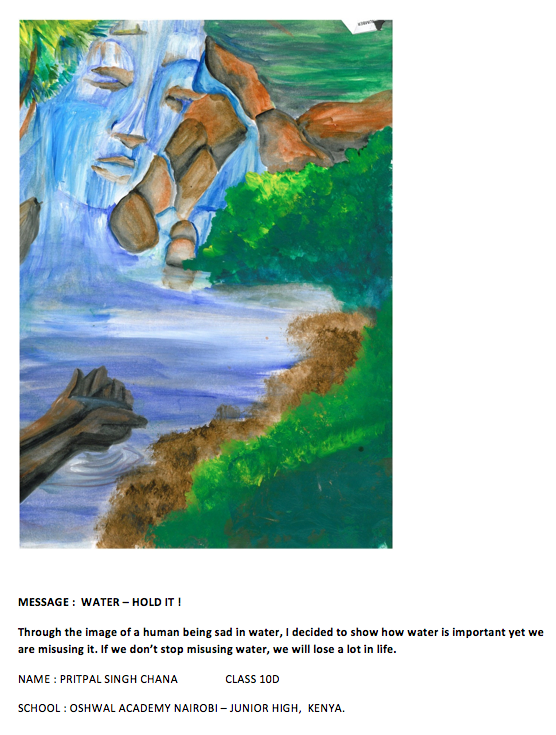
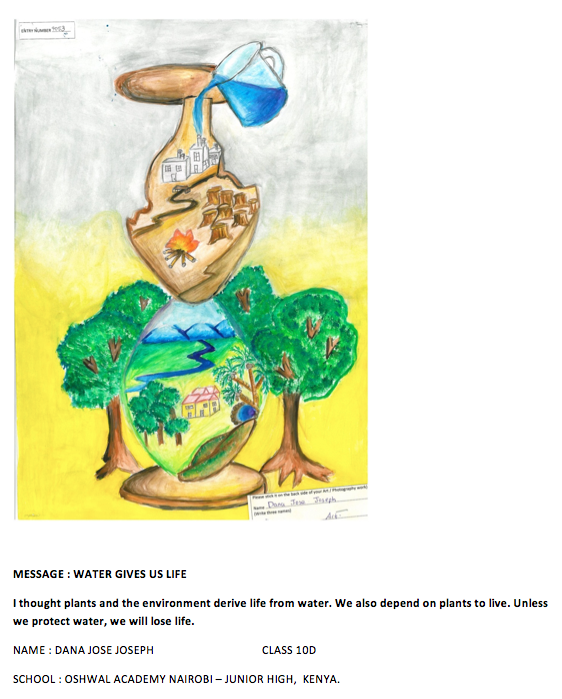
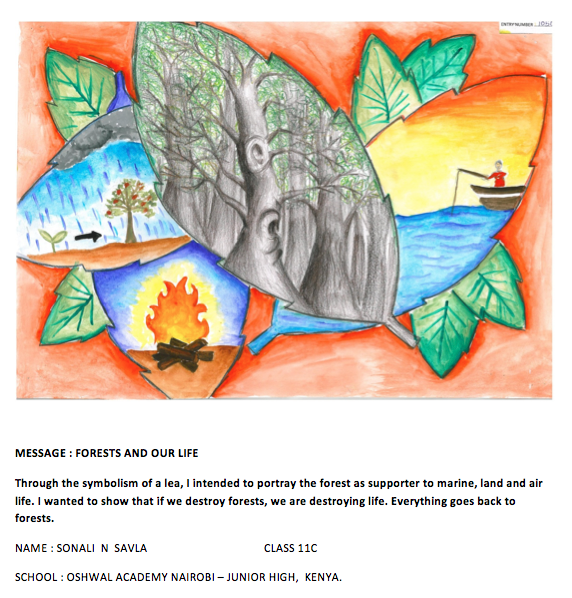
The artwork and captions reflect Oshwal Academy Junior High students' feelings about climate change in their region.


On May 19th, Connect4Climate will make a special presentation at the Cannes Film Festival‘s Doc Corner Brunch from 12 noon until 2.30pm to launch Action4ClimatePlus, their new competition to address climate change issues and solutions. The competition will also be sponsored by theEuropean Bank for Reconstruction and Development.
In the run-up to the United Nations Conference on Climate Change (COP 18) in Qatar this December 2012, the Voices4Climate Photo/Video/Music Video Competition invited young people, ages 13-35, from all over the world to submit photos, videos, and music videos that tell powerful climate change stor
<p>The photo, video, and music video entries must tell a climate change story related to one of these eight categories:<br />
1) Agriculture, 2) Energy, 3) Forests, 4) Gender, 5) Health, 6) Water, 7) Jobs and the Green Economy, 8) Cities.</p>
<p>See all the more than 1000 entries in <a href="http://apps.facebook.com/voicesforclimate">our Facebook App</a>.</p>
<p>Browse the music video enteries on <a href="http://www.youtube.com/playlist?list=PL9R0MYGYsvksQIavw0YdyRzKgF35ZOm6S… YouTube Playlist</a>.</p>
<p style="text-align: center;"><iframe allowfullscreen="" frameborder="0" height="450" src="https://www.youtube.com/embed/xbrlhzqVprc?rel=0&controls=0&show…; width="800"></iframe></p>
<p>The full list of winners has been <a href="https://staging.connect4climate.org/initiative/announcing-voices4climat… on our blog</a> - see the winning submissions and thank you messages in the presentation below and see some <a href="https://staging.connect4climate.org/initiative/announcing-voices4climat… of the winners with their prizes</a>.</p>
<p style="text-align: center;"><iframe frameborder="0" height="400" src="http://prezi.com/embed/0b8unbiapymx/?bgcolor=ffffff&lock_to_path=0&…; width="550"></iframe></p>
<p> </p>
<p>The competition began in August, 2012. The winners were celebrated at the World Bank <a href="https://staging.connect4climate.org/event/connect4climate-right-here-ri… Here Right Now event</a>, March 1, 2013 - see the full ceremony below.</p>
<p style="text-align: center;"><iframe allowfullscreen="" frameborder="0" height="450" src="https://www.youtube.com/embed/0t0mir-qyTE?rel=0&controls=0&show…; width="800"></iframe></p>
<p>Music video winners will have the opportunity to spend a day with MTV editors in New York or London and have their music videos featured on MTV’s ‘Voices’ platform.</p>
<p>Voices4Climate Photo/Video/Music Video Competition participants had to be between 13 to 35 years of age. Prizes for 1st, 2nd, and 3rd are awarded in each category, as well as a popular prize and a special prize.</p>
Public art projection featuring images of humanity and climate change to illuminate St. Peter’s Basilica on the opening of the Extraordinary Jubilee of Mercy on Dec. 8.
“Fiat Lux: Illuminating Our Common Home” developed in partnership with Paul G. Allen’s Vulcan Inc., the Li Ka Shing Foundation, Okeanos and Obscura Digital, under the auspices of the World Bank Group’s Connect4Climate, as Gift of Large Scale Architectural Projection to Pope Francis and call to protect our common home.