The IPCC has produced a video on its Fifth Assessment Report (AR5). The third part on the Working Group III contribution to AR5 is now available on http://www.mitigation2014.org
Source: IPCC 2014
The IPCC has produced a video on its Fifth Assessment Report (AR5). The third part on the Working Group III contribution to AR5 is now available on http://www.mitigation2014.org
Source: IPCC 2014
The Young Professionals in Local Development (YPLD) is a network of young professionals that set its mind to change the world. We started from a small idea of aggregating the local population towards building their community to a much bigger objective: that of creating a global network of young, but also experienced professionals that, by fostering communities` growth through innovation, can help solve some of the biggest challenges today: food security, climate change, poverty.
On February 18th 2012 we decided to “Raise the stake” and, with the support of our three strategic partners: YPARD, Connect4Climate and Groupe de Bruges, moved the discussions from the virtual environments directly into the hands of the people that are affected by decisions and decision-makers.
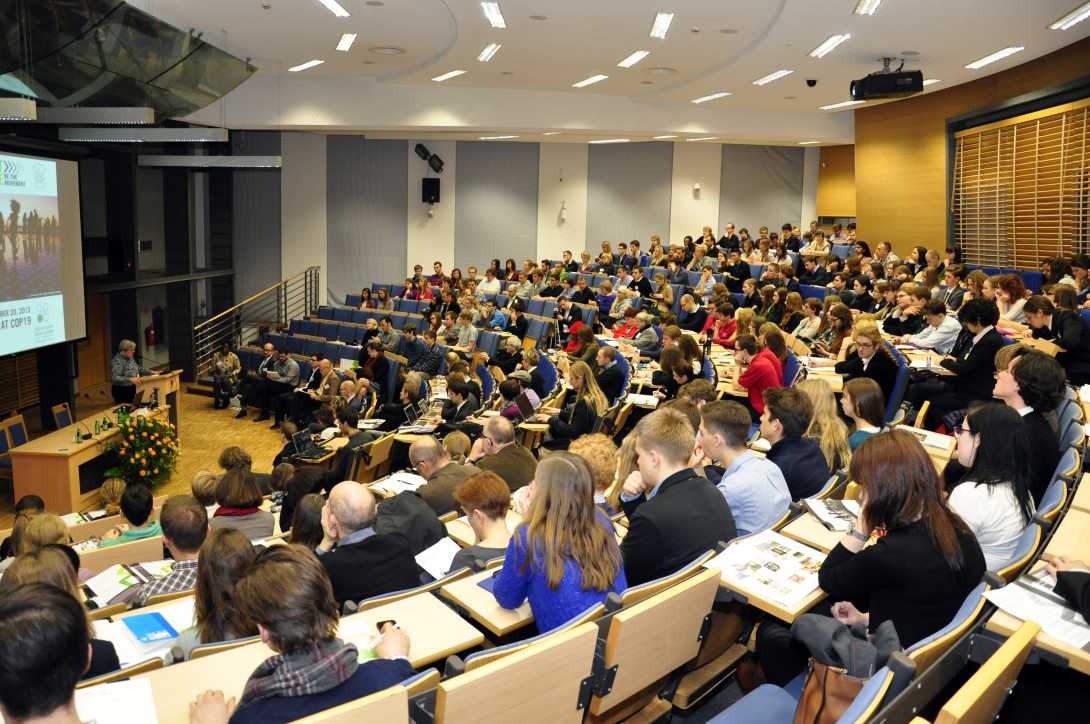
Invited at this conference were people from different environments from local business, local public authorities, NGOs` and iNGOs` and, among the speakers, members of European think tanks and the European Commission represented by Director Mihail Dumitru from Directorate General for Agriculture and Rural Development.
This diverse crowd stimulated a great debate from the beginning when the future of the agriculture in the local context was discussed. The views of YPLD are that agriculture should be a building block for the future, but with limiting its present impact on the environment. Presently, more than 30% of the food is waste because of its poor quality, frequent disregards of European standards, massive consumption of fast food and frozen products and others and also with 70% of all fresh drinking water being using for industrial agricultural systems.
By changing this, we give our people, our communities a better future. The options are introducing alternative food systems regulated through city or regional level food policies, metropolitan and/or periurban agriculture and others.
Following such a complex debate where the exchange of ideas was very fast pacing, switching from food security to climate change effects locally and from young people to more experienced professionals, it was just normal to talk about … social media and e-learning tools.
Starting with a video presentation of Connect4Climate and moving towards the E-learning course of Groupe de Bruges on the Common Agricultural Policy given by Bart Soldaat, we learned from all partners what is social networking and how can this be used by individuals and organizations alike to promote their initiatives. Marina Cherbonnier from YPARD, while discussing the involvement of young professionals in international agricultural research for development, has presented the new image of its organization, that of a multi-cultural community, where diversity is welcomed and where all and every opinion is taken into consideration and valued.
“Raising the stake” in all its projects, YPLD has grown to becoming a global networking, reaching three continents, over 30 countries and more than 10 fields of expertise among which: international cooperation, community-led local development, local economic development, urbanization, governance, food security, climate change.
Have you been attending this conference? Would you like to emphasize some aspects we have not discussed here, or you simply would like to add on? Please send your comments to office@ypld.org!
If you haven’t been attending the conference but you are interested in knowing more about the Young Professionals in Local Development or you would like to share about your own experience on that matter, your comments or questions are very welcome too!
Codrin is the President of YPLD and consults on agriculture and rural development for a number of organizations.
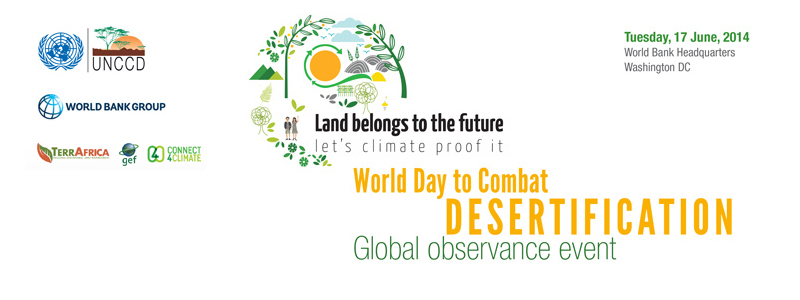
The 2014 World Day to Combat Desertification global observance event focused on the theme of ecosystem-based adaptation, with a rallying call “Land Belongs to the Future – Let’s Climate Proof It.” Approximately 400 representatives from government, intergovernmental and civil society organizations (CSOs) registered for the event, which took place on Tuesday, 17 June 2014, at World Bank headquarters in Washington, DC, US. The event was also webcast, and speakers responded to questions from a global audience. The United Nations Convention to Combat Desertification (UNCCD) organized the event, which was hosted by the World Bank in partnership with the Global Environment Facility (GEF), TerrAfrica and Connect4Climate.
On the twentieth anniversary of the adoption of the UNCCD, speakers at the global observance event considered the requirements for ecosystem-based adaptation to address issues related to desertification, land degradation and drought as well as shared successful cases of combating desertification in drylands. Keynote speakers discussed national efforts, and panelists presented research and lessons learned to address land degradation and foster adaptation and resilience. Two short films were screened, demonstrating additional projects and lessons learned. The Land for Life award winners were also announced. This briefing note summarizes the event’s proceedings.

Climate Week NYC continues in New York and Rachel Kyte, World Bank's Vice President of Sustainable Development, just posted a blog outlining the main themes surrounding all the action in the Big Apple. With so many high level dignitaries decending on one city to discuss the world's sustainable future, it is not hard to guess that there are complex array of themes to address:
Tuesday, hosted by Bloomberg L.P., I was in conversation with Commissioner Connie Hedegaard and Cristiana Figueres. The discussion covered the role of the UNFCCC past, present and future in what has happened and needs to happen to arrest climate change. From the need to change the narrative, accounting systems, risk appetites and ambition, to whether the convention is an umbrella for action, or should encourage actions outside its framework, to where will the funding come from for adaptation and resilience as climate change bears its teeth, it was a great conversation showing sensible hope.
Maximizing the agility of the private sector as key partners in the fight against climate change seemed to be an underlying theme of the conference. The marriage of policy, public funding and private sector "smart" investments could prove to be a game-changing climate strategy. We are also thrilled to see London-based Climate Group, a Connect4Climate partner, get a mention for their campaign efforts.
Unlocking private sector investment is key.
Smart companies, many of them in the room at Climate Week, are not waiting for an international agreement. We can see market leaders in almost all sectors storming ahead in the way in which they think about operating in a world where we need more mitigation action, but also increasingly thinking through the risks of adaptation to their business models in every sector of the economy
Going forward, it’s important that we find the best examples of regulation and legislation that really support risk taking and innovation in the private sector, celebrate it, and reward it, in real time, here and now, with access to long term affordable capital.
This is where I believe the ideas and alliances formed by the Climate Group’s Clean Revolution campaign can really help.
The whole blog post is worth a read. Check it out here on the World Bank Blog.
When Connect 4Climate asked me to speak at the Alcantara Dialogues during Milan Design Week, I jumped at the chance. After all, this was likely to be an audience made up of highly creative people, not the usual crowd of hard-core environmentalists and policy wonks that often participate in such discussions. Several years ago, my dear friend Dragan Klaic – a leading figure in the European theater and culture community who passed away in 2011 – gave me some very good advice. He said that the arguments of environmentalists would not be enough to generate the kind of public mandate needed to address climate change. It’s the culture community, he said – musicians, performers, artists – that will reach people at an emotional level, and help them ’feel’ what climate change is all about.

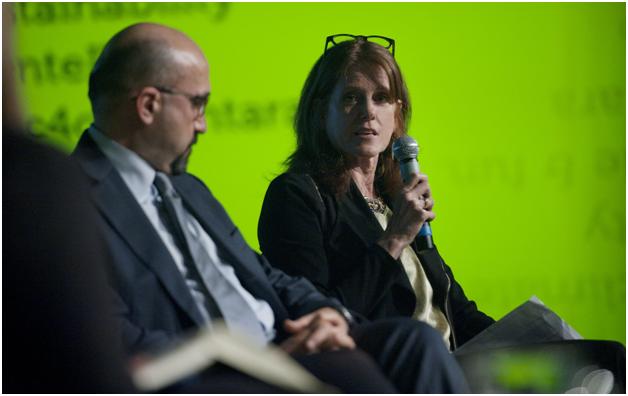
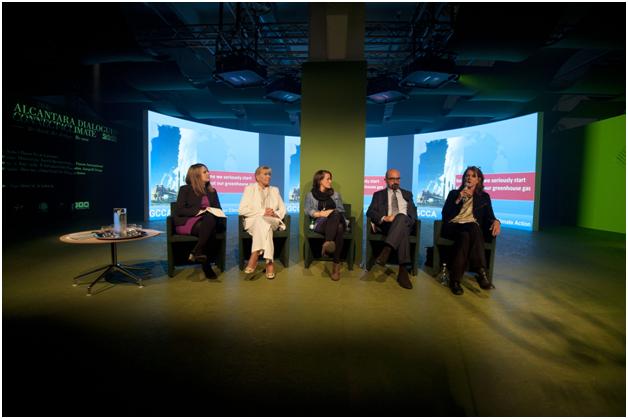
Kelly Rigg speaks at the CSR & Global Advocacy Panel Discussion for the Alcantara Dialogues: Connect4Climate--Re-think, Re-design, Re-new. Photo: Connect4Climate / Leigh Vogel.
So there I found myself, in the beautiful Alcantara exhibition space (surrounded by some of the most extraordinary exhibition spaces I’ve ever seen at a trade fair I might add). Drawing on the work of Tony Leiserowitz and his colleagues at Yale, I started with the basic, simple observation that there are really only five key things the public needs to understand about climate change: it’s happening; it’s going to be bad; humans are causing it; scientists are in agreement; and most importantly, we can do something about it. If we act urgently – there’s still hope.
Much of the discourse around climate change has focused on the first four propositions, primarily as a means of delaying action on the fifth. This is hardly surprising, because the kind of action we need to address the climate problem (phasing out fossil fuels) is a fundamental threat to some of the most powerful vested economic interests on the planet (the fossil fuel intensive industries).
But this is changing. The science of climate change is reconfirmed on an almost daily basis, as study after study examines the issue from every angle imaginable and comes to the same inescapable conclusions (propositions one, two and three above). So given all of the bad news about climate change, is it really true that there is still room for hope?
I say yes, because there’s plenty of good news too.
In 2012, for the fifth year running, more than 50% of all new capacity added to the electricity grid in the EU came from renewables. In the US, the majority of new electricity capacity in the US came from wind power. In China, wind surpassed nuclear power as the third-largest source of electricity (after coal and hydro).

Zoe Fox, Betty Williams, Julie Allen, Silvio de Girolamo, and Kelly Rigg at the CSR & Global Advocacy Panel Discussion. Photo: Connect4Climate / Leigh Vogel.
According to the latest analysis of the Pew Charitable Trusts which publishes an annual report on who is winning the clean energy race, “In less than a decade, clean energy transitioned from novelty products to the mainstream of world energy markets? The sector emerged not so much in a linear fashion as episodic—in fits and starts associated with the worldwide economic downturn, continent-wide debt crises, national policy uncertainty, and intense industry competition. Through it all, however, the clean energy sector moved inexorably forward, with overall investment in 2012 five times greater than it was in 2004.”
Perhaps the most important indicator of all is the fact that renewables are getting cheaper, while fossil fuels are getting more expensive.
I would argue that we are at the beginning of an energy revolution. The $6 million question is whether we can beat the clock.
To do so, governments need to create incentives and send the right signals, for example by taxing carbon pollution and using the revenue to support climate resilience.

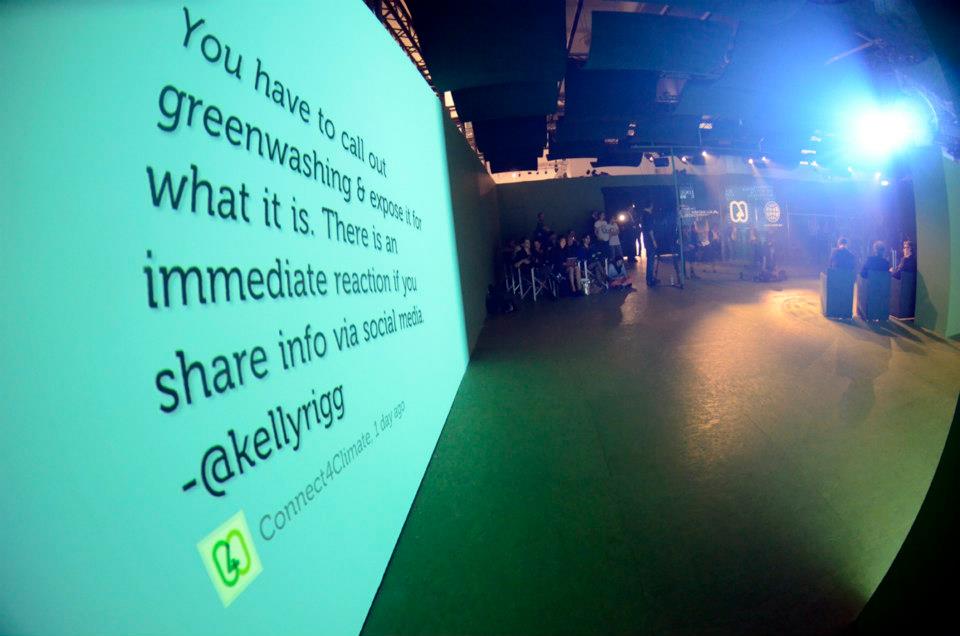
A tweet wall during the Alcantara Dialogues displays statements from panelists: "You have to call out greenwashing & expose it for what it is. There is an immediate reaction if you share info via social media. -Kelly Rigg." Photo: Connect4Climate / Max Thabiso Edkins.
But business doesn’t need to wait for governments. Most companies will say that in today's economic climate, if they were to invest what’s necessary to transform operations to cleaner technologies, they would take a big hit in their quarterly reports. So major industry players must either cooperate and move simultaneously, or work to change the accounting rules which value short-term profit over long-term sustainability.
And all of us need to hold our elected leaders accountable; politicians serve at the will of the people, not of the fossil fuel industry lobbyists. But we don’t need to wait for governments either. We should be asking where our university endowments and pension funds are being invested, and push for renewables over fossil fuels. We need to put our money where our mouths are, and stop buying wasteful products.
Visit www.tcktcktck.org to find out more about how you can get involved.
Follow Kelly Rigg on Twitter: @KellyRigg
The call is on the youths. What's being done to limit the impact of human activities upon the earth? Is there going to be left a habitable place for posterity and generations to come? Will they have a better quality of life or do our activities threaten this idea?
Turn Down the Heat, a report by the World Bank examined some of these issues. It emphasized how human activities and the resultant global warming and climate change could impact adversely on nations. Beaming its spotlight on sub-Saharan Africa, South Asia, and South East Asia, the bank examined varying scenarios of what could become of these regions should world temperatures increase by 2 – 4 degrees. A synopsis; extreme flood, heat, and drought. These have enormous ripple effects such as population displacement and increased conflicts to name a few.
According to IEA, carbon emissions globally hit record highs in 2012, rising by 1.4 percent to 31.6 billion tons. In addition, developing countries are said to account for 60 percent of global emissions from energy as against 45 percent in the year 2000.
Is history going to repeat the same heated cycle? What is being done to stem the tide of a warming planet? There have been calls for an end to the use of fossil fuels, excessive deforestation, un-checked industrialization and much more.
The time has come for us to heed the call of knowledgeable diplomats and world leaders; United States President Barack Obama has called for reevaluations of current operating standards in order to safe guard the future from climate change.
The youths are a part of this conversation. As the leaders of tomorrow and the voters of today, they can catalyze positive action in their homes, schools and communities on habits that result in warming climates. Armed with appropriate facts on this issue, they can help make a world of difference. The World Bank President Jim Yong Kim stated that, "To deliver bold solutions on climate change, we need to listen to and engage broader and more diverse audiences. We need to hear the voices of young people."
The Connect4Climate global coalition, led by Lucia Grenna, threw its weight behind this idea, building global awareness and conversations on climate change. C4C took numerous steps to focus on encouraging youths to make their message heard. The youths have been a large part of coalition efforts, illuminating how climate change impacts their future in the recently concluded iChange competition.
In the United States, a poll conducted for the League of Conservation Voters revealed that young voters want there to be more action in slowing climate change. According to Tree Hugger.com, "young voters will not tolerate denying science or opposing action to slow climate change."
In addition, AllAfrica.com presents how the youths currently focus on grassroots action in a bid to help their communities adapt to climate change. They believe that there's an urgency to develop resilience measures and coping strategies since adaptation funds were not trickling down to those in desperate need.
What more needs to be said? Let these steps taken so far be transformed into leaps and bounds of progress, through positive and profound actions and policies that will reverse the heat.
The World Bank in its fight to end poverty attempts to balance varying activities that alleviate poverty with those that protect the environment. According to Reuters, the World Bank in is endeavoring to limit the financing of coal-fired power plants.
Other countries and cities around the world are snapping on to the efforts of limiting climate change. For instance, London has put together a city adaptation plan that includes surface water flood management, increasing vegetation about the city, and improving water and energy efficiency in homes. In Quito, Ecuador, official policies support mitigation and adaptation strategies that focus on five areas: ecosystems and biodiversity, drinking water supplies, public health, infrastructure and power production, and climate risk management.
New York City has developed a 19.5 billion dollar plan that will help the city adapt to climate change. A sort of reinforcement after the extensive damage wrought on the city by superstorm Sandy.
In Jamaica, collaboration by the University of West Indies, the Global Environment Facility, and United Nations Environment Program will see the construction of zero – energy buildings in the region in the next two to three years. These zero-energy / energy – plus buildings (ZEB / EB) work by combining energy-efficient designs with efficient sources of energy so that they produce their own energy, and then some.
Nigeria collaborates with ECOWAS member states to develop a West African Climate Change Adaptation Strategy (WACCAS), in addition to afforestation initiatives, the Green Wall Sahara Initiative, the construction of solar farms, and public awareness campaigns.
In Durban, South Africa climate adaptation strategies started as early as 2004 and have been rolling out in stages. The program began by assessing local impacts of climate change as presented by hotter temperatures, rainfall intensity and coastal erosion. Specific adaptation plans were developed with hopes of harnessing these effects.
Rwanda is planting trees, preserving forests, and reforming agricultural practices to make them more environmentally friendly.
The Massachusetts Institute of Technology estimates that 20 percent of cities around the globe have developed adaptation strategies. We all need to adopt activities that will help harness climate change and decrease escalating global temperatures.
A lot more needs to be done to decelerate the warming of the earth. The UN secretary general, Ban Ki Moon added his voice to the call on the youths' increased involvement.
As President Obama said in his recent remarks on climate change, when "our children and our children's children …look us in the eye and ask us, did we do all that we could when we had the chance to deal with this problem and leave them a cleaner, safer, more stable world?" Let us be able to respond, "Yes, we did!"
Twenty years ago, at the Rio Earth Summit, 178 governments committed to a series of legally non-binding principles that were designed to commit governments to balance development and environment in a way that would bring a more sustainable future. Principle 10, the first international declaration that recognizes the rights of people to hold governments accountable for their policies regarding the environment, was one key result of the summit. It provides a means for people to engage in the decisions made by political leaders and government agencies about environmental issues that affect livelihoods and long term wellbeing.
“Environmental issues are best handled with participation of all concerned citizens, at the relevant level. At the national level, each individual shall have appropriate access to information concerning the environment that is held by public authorities, including information on hazardous materials and activities in their communities, and the opportunity to participate in decision-making processes. States shall facilitate and encourage public awareness and participation by making information widely available. Effective access to judicial and administrative proceedings, including redress and remedy, shall be provided.”
- Principle 10 of the Rio Declaration
Since 2011, key stakeholders have been submitting ideas for the Zero Draft of the Rio+20 outcome document, to be discussed at the Rio+20 Conference in June 2012.
Like Principle 10, the Zero Draft recognizes the need for broad public participation in decision making, linked to a strengthened right to access information and to better civil society capacity to exercise that right. It notes that technology can make it easier for governments “to share information with the public and for the public to hold decision makers accountable” and that it is critical to work towards universal access to information and communications technologies. (Clauses 17 and 18). A recent analysis showed that participation, accountability, transparency, Principle 10/access to information and social inclusion/ equity are among the terms that share an ‘excellent’ level of interest among governments, UN agencies, civil society groups and other stakeholders.
Along with public participation, the Zero Draft also calls for “increased aid effectiveness, taking into account the Paris Declaration, the Accra Action Agenda and the Busan Partnership for Effective Development Cooperation in ensuring that aid is effective, accountable and responsive to the needs and priorities of developing countries.” Greater coherence at international and national levels is urged, including “effective oversight of resources to ensure that developing countries have steady and predictable access to adequate financing, including by the private sector, to promote sustainable development.’
ICTs can play a role in supporting Principle 10 and Zero Draft, and pushing for appropriate mechanisms for response and redress.
Mass media campaigns and communication for development (C4D) approaches have long been used to disseminate information and encourage environmental awareness and behavior change. New media has improved access to information and allows multi-channel communication rather than one-way broadcasts. Greater access to mobile phones and to new media channels mean that a broader population than ever before can be engaged in and/or participate proactively in defining and acting on Rio+20 and its outcomes.
In addition to information sharing and behavior change, ICTs have the potential to play a strong role in helping civil society organize and push for greater transparency, openness and accountability around Rio+20. As Chantal Line Carpintier suggests, “Rio+20 should also agree on an effective accountability process for all actors – governments, business and industry, local authorities, NGOs and other major groups and stakeholders. Accountability and ownership by all actors would favour implementation. There is growing support, for instance, for public reporting on sustainability performance. A registry of commitments is one of the tools that have been suggested to follow up on commitments made at Rio+20 and avoid previous lack of implementation.”
An effort similar to the open government partnership and the International Aid Transparency Initiative or integration of sustainable development goals and Rio+20 commitments into these two efforts could be something to consider, along with a mandate for corporations to also open their activities to public scrutiny.
On-line organizing combined with both online and offline actions (in places that have ready access to social media) can help the world prepare for Rio and also to push for its outcomes to be implemented.
Despite the great potential for ICTs in communication, change and accountability efforts, however; lack of access to ICTs and potentially low capacity to interpret data that might be presented on-line in such a registry is of concern in less accessible rural communities and among some marginalized groups.
Education levels, literacy, and other excluding factors such as poverty and gender discrimination can severely limit ICT and social media access for a large number of people. In addition, information produced in dominant cultures or languages can exclude or override those with less power. As Angelica Ospina notes in her post Knowledge Brokers, ICTs, and Climate Change: Hybrid Approaches to Reach the Vulnerable, “There are many misconceptions about what ‘reaching out’ implies, as in practice it requires much more than making climate change information and knowledge publicly available through Internet-based tools such as Web portals and online databases.”
Therefore, there needs to be, “a more holistic understanding of the information cycle, including the creation, acquisition, assimilation, management, dissemination and ultimately the USE of climate change information, particularly within vulnerable contexts. Beyond the provision of climate change information, it’s necessary to consider if/how the information is being integrated -or not- into decision-making processes at the local, regional or national levels,” she says.
The Children in a Changing Climate project uses a variety of participatory development and media tools for children and adolescents to explore and document climate change in their communities, and to share their findings and suggestions to adults and other decision makers.
There is also a need “to identify, adapt and adopt innovative approaches for the effective delivery and the local appropriation of climate change messages, and most importantly, for the translation of information and knowledge -both new and traditional- into climate change practice.” This will require strong efforts as well as resources to create an inclusive environment that fosters greater participation, as mandated by Principle 10, and local ownership of sustainable practices.
“Working with knowledge brokers, also called “human infomediaries” who can help bring people together, identify local needs and transfer information and knowledge more effectively is one such approach to improve information and communication flows,” Ospina advises. “Human infomediaries support an active process that involves exchanges between people, facilitating the development of climate change strategies, adoption of adaptation and mitigation practices, and processes of local change and innovation.”
(More here on ICTs and the role of knowledge brokers).
Building on Ospina’s observations on how to bring information to the “last mile,” meaningful ways to bring community knowledge and information into higher level discussions need to be found. Local communities have vast knowledge on resilience, climate patterns, local environments and local situations and histories that can be documented and shared using ICTs both to benefit themselves and to share at broader levels, improving South-South cooperation and innovation. Multi-media curricula such as the Children in a Changing Climate website bring together young people’s voices and opinions around climate change and environment.
Post Rio+20, digital tools are one of many information and communication mechanisms that local communities and their citizens can use to confirm, validate, contest and dispute information related to compliance with commitments being put forward by those responsible for upholding them. Participatory media approaches can be effective in bringing community members as well as duty bearers at local, district, national and global levels into discussions about climate change and sustainable development.
Why are you killing me? Girls in Kenya use poetry to engage adults in discussion on climate change.
In summary, ICTs can play a strong role in education, participation and accountability processes if their integration is well thought through, appropriate to the context, and taking into consideration good participatory practices. Hybrid approaches that use a variety of online and offline tools can be effective for reaching populations and decisions-makers at different levels of responsibility, for ensuring that ICTs are not widening existing information and participation gaps and for upholding the goals set forth in Principle 10. Children and youth can and should play an instrumental role in bringing about awareness and accountability, especially since they will be the ones who reap the long-term results of the agreements sown at Rio+20.
The Notes on ICTs, Climate Change and Development blog provides a wide range of research, commentary, and research on these areas.
COP 21, in December 2015, will be a unique opportunity to bring climate change to the main stage. Driven by EcoAct, one of the global leaders in climate change economy, Cap COP21 is an open and proactive initiative for the climate.
Cap COP21 aims at fostering the emergence of concrete, innovative and collaborative solutions for climate by implementing:
1. Professional and collaborative events to imagine realistic actions for the XXI century
2. A Europe-wide Survey on the perception of climate change issues among European citizens
Relive the launch of Cap COP21 here and discover all the videos available so far on our YouTube Channel!
Willing to join us and contribute concretely to COP21? Book in for our next event, June 23rd in Paris:
Climate Innovation Day: Tuesday, June, 23rd 2015 - 9 am to 6 pm at the Pan Piper (Paris)

Attend the Climate Talks to discover innovations for the climate and take part in the Workshops to reflect on practical solutions!
Climate Talks will bring researchers, innovators and project leaders to the main stage, and give evidence of present and future innovations for the climate. Dynamic, creative and hopeful, these Climate Talks will offer an opportunity to discover and discuss pioneering approaches which disrupt climate status quo.
To discover each speaker’s intervention, register to attend the event (registration is free but mandatory)!
Afternoon Workshops will gather attendees together in various working groups, in which they will draft practical solutions for the climate. Around a table, participants will work as a team on a precise topic, and intend to bring forth realistic answers to face climate challenges. These conclusions will contribute to a Proposals Document, which will be revealed at the Grand Palais during COP21. You too, experience what innovation can offer for the climate!
The topics will address main contemporary issues, such as Energy Transition, Climate Risk orBusiness-Local government cooperation, as well as tools to fight climate change, such as domestic offsets, green investments or carbon market.
Where? At the PAN PIPER (2-4 Impasse Lamier - 75011 PARIS)
More info: www.cap-cop21.com | communication@cap-cop21.com | + 33 (0) 6 09 72 53 44
Recognised as one of the world’s leading experts in this area, EcoAct provides consulting services and support to climate change economy pioneers to reinforce their competitiveness. EcoAct works with multinationals, small and medium businesses, and local governments with setting up carbon strategies, CSR policies and eco-innovation approaches.
There are 26 million homes in the United Kingdom. Together they contribute 27% of the UK's carbon emissions, making the housing sector a vital part of the goverment's committment to an 80% reduction in carbon emissions by 2050.
Since 2007, the award-winning SuperHomes network has promoted the benefits of eco refurbishment using free Open Days. Pioneering owners of some of the UK’s most energy efficient homes host free tours and Q&A’s each September. SuperHomes are older homes that have been refurbished for greater comfort, lower bills and at least 60% fewer carbon emissions.
Currently there are over 180 registered SuperHomes in the UK and over 70,000 people have visited one. The aim is to inspire visitors to take action to green their own homes, by providing actionable ideas, such as improving insulation, installing alternative heating sources or producing their own renewable energy. The network hopes to register 500 SuperHomes by 2020 and attract 2 million visitors.
.jpg)
Visitors at a modern SuperHome in Birmingham
It is estimated that as many as 80% of all UK homes that will be in standing in 2050 have already been built. Of particular concern are the 7 million solid wall properties, most of which are difficult to heat. To meet its target of an 80% reduction in carbon emissions by 2050, the UK should be refurbishing 600,000 homes a year. At the current rate of change it will take over 500 years to refurbish these homes.
Jurgen Huber, who recently joined the network says:
"My house is now 100% carbon neutral. Along with my wife and two children, we use and generate 3300 kWh of electricity. We have no gas connection so we cook with the most energy efficient induction cooker, we heat water with an electric instantaneous water heater, and we heat rooms with a highly air source heat pump and electric underfloor heating. This is only possible because we insulated the house to a very high standard."
Huber explains that the first phase of his home renovation was done on a budget of £4000. This paid for all insulation materials, the air source heat pump, an induction cooker, and LED lighting. The PV solar panels added afterwards cost £12,000 and were financed with a bank loan. In 8 years Huber may make a bit of money but that’s secondary. He wanted to prove that anyone can have a retrofitted energy neutral house on a tight budget.
"The result is that we’ve a very comfortable home that can be quickly heated or cooled at very little cost. At the same time we’ve maintained the 1920s period character of the property which is something we love."
Huber's testimonial is a good example of how the SuperHomes network harnesses the enthusiasm of pioneering households to demonstrate the benefits of switching to low energy living.
The network's open days help visitors gain the confidence to green their own homes. Free tours and Q&A sessions allow visitors to find out more about both the benefits and the challenges involved in refurbishing an older home.
Find out more about SuperHomes' September Open Days.
SuperHomes is a National Energy Foundation (NEF) project. NEF is an independent charity working to improve the use of energy in buildings.
[video:https://vimeo.com/95527812]
White Roofs is an Action4Climate documentary about another initiative to reduce household emissions, the White Roof Project in New York. Entered by Matt Dunne.
Hosted by the World Bank Group and supported by Italy’s Ministry of the Environment and Energy Security and Germany’s Federal Ministry for Economic Cooperation and Development, Connect4Climate (C4C) is a global partnership for a livable planet that connects, creates, and communicates to build long-lasting change for future generations.