|
Wildlife Works REDD+ project in Kenya wins Best Offsetting Project in Environmental Finance
Wildlife Works Kasigau Corridor REDD+ Project located in Kenya won Best Offsetting Project in Environmental Finance’s 8th annual Voluntary Carbon Market Rankings. The ranking is produced by polling the voluntary carbon market as to who are the most highly regarded players across numerous categories.
Reducing Emissions from Deforestation and Forest Degradation (REDD+) is a UN climate change mitigation strategy, included in the Paris Climate Agreement. REDD+ is the fastest, most effective and lowest cost initiative that can be done right now to protect forests and combat climate change.
Through a voluntary agreement with local landowners and a community of more than 100,000 people, the Wildlife Works “Kasigau” project avoids the annual release of 1.5M tonnes of CO2 emissions and generates funding for sustainable development in one of the world’s most impoverished communities. Providing access to water, improved food security, education and healthcare are among key project initiatives.
“Wildlife Works is very proud of this award, as we believe it validates our belief that the key to a successful REDD+ project is what happens on the ground, in the landscape, every day, where decisions about the future of forest lands are being made day in, day out, as the community works hand in hand with our teams to meet their sustainable development needs” said Mike Korchinsky, founder and president of Wildlife Works.
Korchinsky went on to say, “As the market for carbon offsets becomes increasingly sophisticated, investors and buyers taking action to fight climate change are more and more aware that high social and biodiversity impact alongside the carbon emission reductions is what makes a project really valuable”.
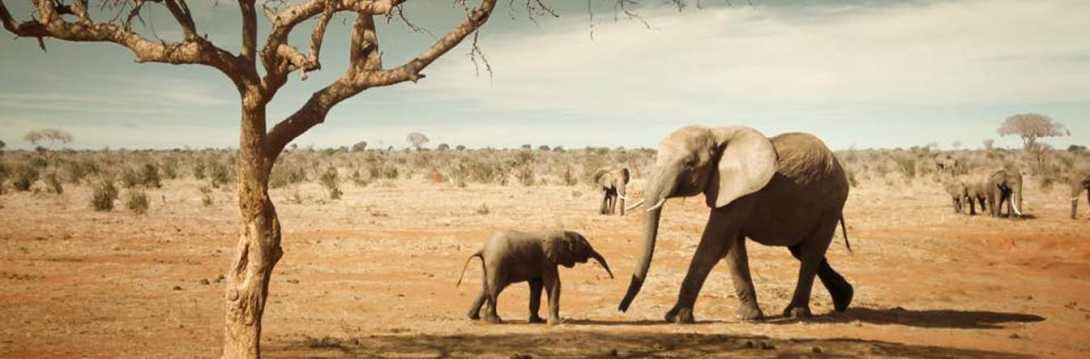
With job creation as a core conservation strategy, the Kasigau project protects an essential wildlife migration corridor that provides safe haven to thousands of elephants and dozens of other species of threatened wildlife. The project contributes to eleven of the UN’s Sustainable Development Goals.
As the carbon market's landmark forest conservation project, Wildlife Works Kasigau Corridor REDD+ Project has been responsible for many innovations, from being the first avoided deforestation project to achieve verification under the Verified Carbon Standard (VCS), to being selected by the International Finance Corporation (IFC), which issued a first of its kind $152 million Forest Conservation Bond in October 2016 to support the project.
“Our community partners have been with us every step of the way and deserve all the credit for this award, having made the brave decision to forego short term gain from destructive use of their forest, in favor of long term sustainability for their communities” said Korchinsky.
About Wildlife Works
Wildlife Works, established in 1997, is a for-profit private company based in Mill Valley, California committed to bringing marketplace initiatives into the fight to protect the planet’s threatened forests and the magnificent species that call them home.
The company is a recognized leader in the REDD+ sector and is the first company in the world to achieve verification of a REDD+ project under the Verified Carbon Standard (VCS) and the Climate Community and Biodiversity Standard (CCB).
Wildlife Works developed and manages REDD+ projects in Kenya and the Democratic Republic of the Congo that protect 1.24M acres of forest, reducing over five million tonnes of carbon dioxide emissions annually.
Wildlife Works protects threatened forests, the wildlife that live in them and provides communities with a sustainable and transformative development path.
|
Africa can Benefit from Nature-based Tourism in a Sustainable Manner
By
Africa’s unique natural assets — its iconic wildlife, snow-capped mountains, waterfalls, rapids, majestic forests, unique bird populations, pristine beaches and coral reefs—represent tremendous value. Wonders of nature such as Mt Kilimanjaro, Mt Kenya, and the Victoria Falls, as well as Zanzibar’s Stone Town and its beautiful beaches, and the wildebeest migration between the Masai Mara and Serengeti, are some of the world’s best-known tourist attractions.
Indeed, tourism, primarily nature-based in East and Southern Africa, significantly contributes to GDP, jobs, and livelihoods. The World Travel and Tourism Council says that in 2016 the total contribution of travel and tourism was 7.8 percent of GDP and 6. percent of total employment, including its wider effects from investment, supply chain, and income.
In some countries, this contribution is significantly higher. In Namibia, 19 percent of all employment is directly or indirectly linked to tourism. In Tanzania, tourism is the largest foreign exchange earner, competing with gold. Importantly, the spillover effects of tourism throughout the economy can be significant. There is also a strong gender dimension: half of the world’s hotel and restaurant employees are women.
Tourism has been growing faster in emerging and developing regions than in the rest of the world, especially in countries proactively supporting tourism, according to the UN’s World Tourism Organization. Africa is at the forefront of this trend, with the role and value of nature-based tourism likely to increase even more than the global average because of the scarcity of unique wildlife and natural assets.
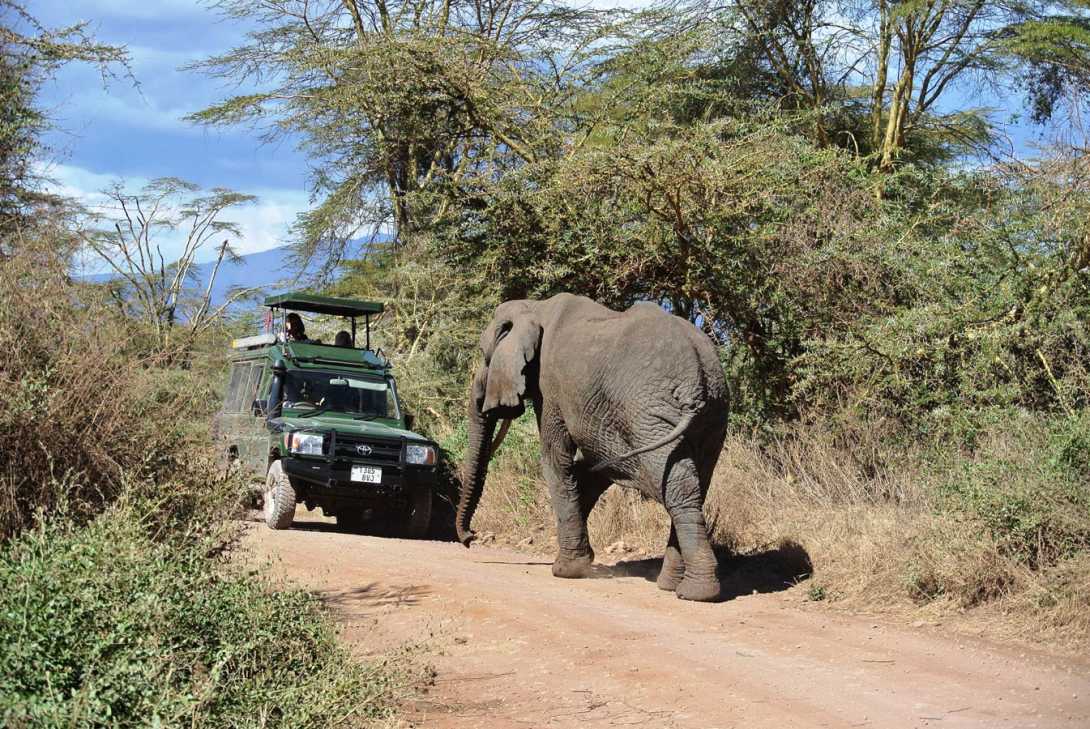
Nowhere else in the world can tourists experience the same thrill of encounter with wild animals. They can go gorilla trekking in Rwanda, walk with cheetahs in Zambia, observe lions resting in trees in Uganda, or lounge on the pristine beaches of Mozambique’s Maputo Special Reserve while watching wildlife. For this experience, tourists have been willing to pay a premium, and some African countries have been able to corner a high paying niche of the tourism market.
What is needed for Africa to use its huge potential for capitalizing on its natural assets in a sustainable manner?
First and foremost, this requires strong protection and the sustainable management of these assets. Threats such as the rampant poaching of wildlife, the clearcutting of forests, and the pollution of beaches should not only be a concern for environmentalists, but for ministers of finance, planning, and tourism. They should also worry the private sector and local communities, as this sort of damage can deprive them of opportunity. Understanding the value of natural assets and the potential revenues they can generate can help mobilize broad support for protection and conservation efforts.
Investing in protecting a country’s natural assets is equally important for the local and global good.
Role in Protecting Biodiversity
The World Bank has been protecting biodiversity for decades, in the past ten years through a portfolio of projects worth US$2bn globally, leveraging additional resources. But an urgent response is needed to help people protect against large-scale poaching and illegal wildlife trade.
Many countries have introduced anti-poaching programs and stepped up efforts to curb international networks dealing in the illegal trade of wildlife products, particularly ivory and rhino horn. The World Bank-led, Global Environment Facility-supported, and partnerships such as the International Consortium on Combatting Wildlife Crime, have brought together CITES, UNODC, the Interpol, and the World Customs Organization to help.
Devising sustainable tourism strategies, targets, and plans also helps. Policymakers need to understand that increasing the number of tourists is not always the best target. Other considerations are important, too, such as an ecosystems’ carrying capacity and the need to maintain a unique tourist experience; these attract low impact, high value tourism, especially in areas with unique assets. Revenue per tourist rather than the number of tourists should be used as the benchmark for success. The country’s image should be built, promoted and linked to this vision.
The local economy and local communities need to share the benefits from tourism. There are many opportunities for this, including sourcing supplies and labor, which can be supported by targeted training and capacity building to increase local value addition. My visit to a Bank-supported small training facility in Botswana, one where youth are trained in tourism, showed an uplifting example of what can be done with limited resources. More systematic vocational training can do much more.
Local conservancies have also evolved in countries from Namibia to Kenya to provide sustainable models of community involvement in conservation and tourism. Beyond this, tourism revenue needs to be managed in a transparent and equitable manner to generate broad, local support.
The regulatory environment for businesses to start up and operate needs to be simple and accommodating. Overly comprehensive regulations too often inhibit and discriminate against local business development. Policy reforms can improve the business climate and allow local businesses to thrive.
Investment in services (health, finance, hospitality, safety, and visas) and infrastructure (transport, accommodation, safe water and sanitation) are the basic foundations for attracting tourists. The role of public-private partnerships also needs to be strengthened to ensure that scarce public resources are used for the highest priority public goods, as well as to help leverage private investment.
Nature-based tourism can offer a bright future for Africa. A step in this direction is the US$150m Tanzania Resilient Natural Resource Management for Tourism and Growth Project, the largest nature-based tourism project in the Bank’s portfolio, to be approved by the Board on, September 28, 2017.
Banner and thumbnail photo credits to Magda Lovei/World Bank
You can also read Magda Lovei's blog post on the World Bank Group website.
#Uniting4Climate Panel at UNGA72 SDG Media Zone: Highlights
[video:https://vimeo.com/236289413]

Karina Holden talks about finding new ways to communicate environmental issues #SaveOurOcean
"If you're coming on set with me, you're not going to be eating swordfish or bluefin tuna. You will not be going to drink your coffee out of the toss-away cup. We try to put in practice what we preach and minimize our footprint. Every single time our crew got in the water to film something whether it was with seals, dolphins, or if it was a story about coral bleaching, we were taking plastic out of the ocean."
Uniting4Climate Panel at UNGA72 SDG Media Zone
Uniting4Climate Panel at UNGA72 SDG Media Zone Panel composed by:
|
Mobilizing Finance for Climate Action Through the Invest4Climate Platform
By
Meeting the Paris Agreement’s climate commitments requires climate-resilient, low-carbon investments at an unprecedented speed and scale. The demand from countries to finance these investments – including through their Nationally Determined Contributions (NDCs) - is large and growing and, if well planned, can support sustainable growth and improved livelihoods and jobs while delivering climate benefits. There is abundant financial capital available but much of it is currently earning low or even negative returns. For many reasons, including inappropriate policy environments and the lack of appropriate risk mitigation mechanisms, this capital is not flowing to investments with climate benefits at sufficient scale. Globally, there is a failure to match demand for climate action with supply of finance.
Complementary to existing climate financing mechanisms, the Invest4Climate platform provides an opportunity to further mobilize, coordinate and deliver the finance needed to help countries make the transition to a low-carbon resilient future, while creating jobs and building prosperity. Acting as a broker, and without its own balance sheet, the platform aims to:

bring visibility to potential investments and identify opportunities for action and investment
mobilize multiple sources of finance and combine them most effectively to maximize deployment and impact
identify barriers to scaled up investment and develop solutions and political support to address them
facilitate the identification and allocation of risk to those who can best bear and manage them and hence facilitate appropriate financial structuring to crowd in additional fundingTo make this happen, the World Bank Group will partner with the UN development system in jointly convening the platform, bringing together key decision-makers in countries and various kinds of financial institutions (including private sector investors and foundations) to identify and implement potential transformational investments. These include for example the accelerated roll out of renewable energy, large-scale development of battery storage, electric vehicles, and low-carbon air conditioning systems.
Invest4Climate will bring together established development and climate finance institutions (DFIs), such as the World Bank Group, other MDBs, the GCF and DFIs, and other actors in the development and climate finance space including philanthropic foundations, to work together with private sector companies and country and sub-national representatives on this agenda.

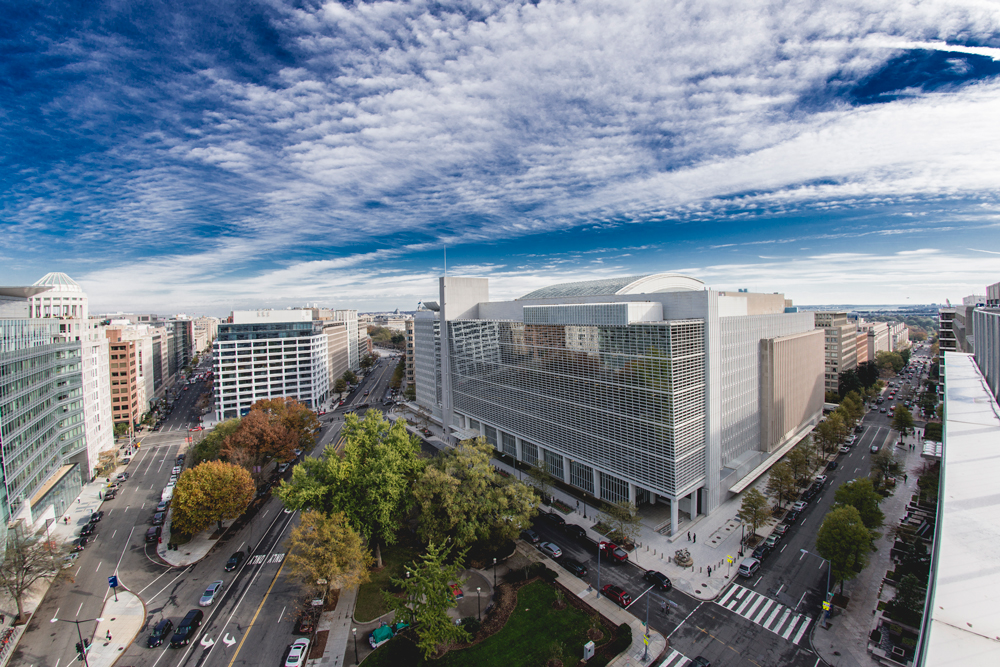
Overview of World Bank Group headquarters in Washington, D.C. Photo Credits: Franz Mahr/World Bank
The World Bank Group and UN partners will jointly convene the platform. In support of potential deals, concessional and development finance providers, could provide institutional backing and risk-reducing instruments to investors, countries and other partners. They will work, on demand, with country partners to help build the enabling conditions for finance to flow.
Capital providers and development partners can draw on each other’s comparative advantages and engage flexibly and creatively to provide grants, concessional finance, development finance, guarantees and commercial finance to accelerate climate action, including:

Providing long-term development finance with different degrees of concessionality through a range of instruments (loans, grants, guarantees, policy lending etc);
Providing grant financing and capacity building support and providing know-how, technical assistance and advocacy to operate at the national and global levesl;
Targeting interventions to help stimulate innovation and crowd in private sector finance;
Promoting commercially viable projects and increasing confidence in the contractual environment;
Financing and scaling up innovation. The benefits of Invest4Climate include:

Developing new solutions and knowledge to “crowd-in” private capital, know-how, and mobilizing resources to accelerate and scale early-stage climate entrepreneurship in frontier markets, creating jobs and stimulating green growth;
Accelerating cost reductions to make renewables and other new technologies competitive with fossil fuels and older technologies by working with committed governments to support sound policies, and by using concessional, philanthropic and development finance judiciously to crowd in private finance;
Accessing the input from the best innovation and innovators at the start of creating investment plans;
Using experiences to share best practice and accelerate learning by making available transaction and associated documentation, as appropriate, as templates on an open source basis. Invest4Climate will be supported by national finance ministers, climate thought leaders, chief executives of firms, foundations and financial institutions, as well as senior representatives from the UN and the World Bank Group.
It will not have its own funding sources but will complement existing climate and development finance initiatives and institutions.
The platform will be further developed in close collaboration with partners at the forthcoming World Bank/IMF Annual Meetings and COP23. The first Invest4Climate initiatives are expected to be highlighted at the Climate Summit in Paris in December 2017.
Banner Photo Credits: Yenilenebilir Enerji, #Photo4Climate Instagram Challenge
Thumbnail Photo Credit: Allan F. Castañeda (#Photo4Climate winner under the theme Energy)
|
Heads of UN and World Bank Announce Initiative to Ramp Up Finance for Climate Action
By
NEW YORK, September 20, 2017 – United Nations Secretary General António Guterres and World Bank Group President Jim Yong Kim today announced plans to accelerate the flow of finance for climate action through a new platform dedicated to identifying and facilitating transformational investments in developing countries.
Following meetings this week with world and business leaders, state and city representatives, and civil society, the two leaders pointed to the urgency for climate action and the need for a massive ramp-up of investment.
“Countries are successfully reducing emissions and building resilience to climate change, but getting to the level of action needed to reach the global goals set in Paris two years ago will require a huge leap in the flow of financing and investment for implementing the National Determined Contributions,” said Secretary General Guterres. “The disasters we are currently seeing – including storms, floods and drought – are also demonstrating just how urgent the need is especially for the Small Islands Nations.”
President Kim speaking during the Bloomberg Global Business Forum said: “There are vast opportunities in developing countries in areas like clean energy and climate-smart agriculture that will lay the groundwork for a more prosperous and sustainable future. Our challenge is to create the conditions for investment to flow, and to get all forms of finance working together for maximum impact.”
The new Invest4Climate platform is designed to bring together national governments, financial institutions, private sector investors, philanthropies, and multilateral banks to support transformational climate action in line with the Paris Agreement. The platform will bring together investors with high-impact opportunities in developing countries such as large-scale development of battery storage, electric cars, and low emission air conditioning. It will also facilitate such investments through the development of risk mitigation instruments and, based on demand, will work with national governments to improve policy environments.
“Cities are leading the way in confronting climate change, and they would be doing even more, even faster, if they had greater access to funding,” said Michael R. Bloomberg, UN Special Envoy for Cities and Climate Change. “This is a big challenge that we can start to address with practical steps, like helping cities improve their credit rating, measure their funding needs, and connect specific projects with lenders. The World Bank and UN are taking an important step forward by bringing people together who are in a position to help achieve those goals."
Invest4Climate will be supported by national finance ministers, climate thought leaders, chief executives of firms, foundations and financial institutions, as well as senior representatives from the UN and the World Bank Group. It will not have its own funding sources but will complement existing climate and development finance initiatives and institutions.
The platform will be further developed in close collaboration with partners at the forthcoming World Bank/IMF Annual Meetings and COP23. The first Invest4Climate initiatives are expected to be announced at the Climate Summit in Paris in December 2017.
Agriculture & Climate Change: How Multi-stakeholder Actors Are Driving Positive Change & Innovation
Timezone:
On September 20th, the Global Alliance for Climate-Smart Agriculture (GACSA) with The Earth Institute Columbia University are hosting a side event at the Climate Week NYC (September 18-24) to share information for sound implementation and scaling up of Climate-Smart Agriculture (CSA).
WASHINGTON, September 11, 2017 – The world’s six largest multilateral developments banks (MDBs) continued to make a strong contribution to the global climate challenge in 2016, increasing their climate financing in developing countries and emerging economies last year to $27.4 billion from $25 billion in 2015.
Of this total, $21.2 billion or 77 percent was dedicated to climate mitigation finance, with the remaining 23 percent devoted to climate adaptation.