This report looks at whether and how public funds, utilizing pay-for-performance mechanisms, may be used to incentivize reductions of methane emissions. This report documents the discussions of the Methane finance study group.

This report looks at whether and how public funds, utilizing pay-for-performance mechanisms, may be used to incentivize reductions of methane emissions. This report documents the discussions of the Methane finance study group.
As a development institution focused on reducing poverty and boosting shared prosperity, the World Bank is working in many countries that suffer from a lack of basic services such as waste management, transportation, and access to modern energy. Addressing these development challenges often has an impact on the emission of short-lived climate pollutants (SLCPs) among them methane and tropospheric ozone, black carbon (BC), and hydrofluorocarbons (HFCs).
Stabilizing climate change entails reducing net emissions of carbon dioxide (CO2) to zero. This report outlines three principles to guide countries in their efforts to create a zero-carbon future: (a) planning ahead with an eye on the end goal; (b) going beyond carbon pricing with a policy package that triggers changes in investment patterns, technology, and behaviors; and (c) protecting poor people and avoiding concentrated losses. Although countries at different levels of income and with different endowments will adopt different strategies, all have a role to play.
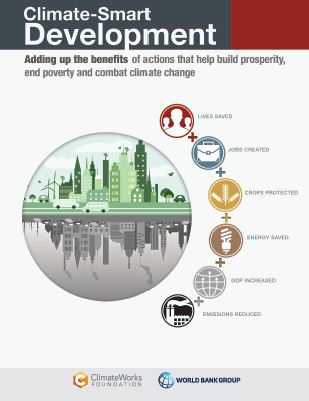
This report describes efforts by the ClimateWorks Foundation and the World Bank to quantify the multiple economic, social, and environmental benefits associated with policies and projects to reduce emissions in select sectors and regions.
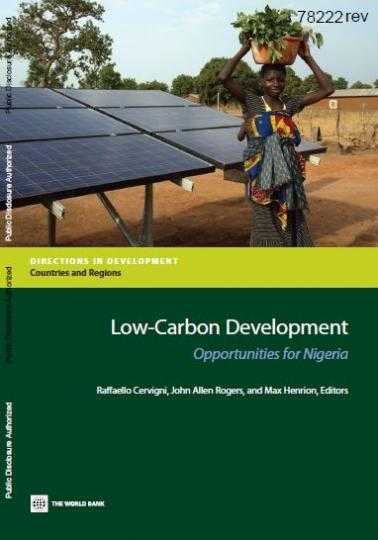
The Federal Government of Nigeria (FGN) has formulated an ambitious strategy, known as Vision 20: 2020, which aims to make Nigeria the worlds 20th largest economy by 2020. This book argues that there are many ways that Nigeria can achieve the Vision 20: 2020 development objectives for 2020 and beyond, but with up to 32 percent lower carbon emissions. A lower carbon path offers not only the global benefits of reducing contributions to climate change, but also net economic benefits to Nigeria, estimated at about 2 percent of gross domestic product (GDP).
Natural disasters and climate change are among the greatest threats to development. Although natural disasters have always presented risks, climate change increases those risks and compounds them by adding a greater level of uncertainty. As a result of their increased frequency, the economic and social costs of disasters are mounting (World Bank 2010). Natural disasters and climate change can push people into chronic and transient poverty and force them to adopt negative coping strategies.
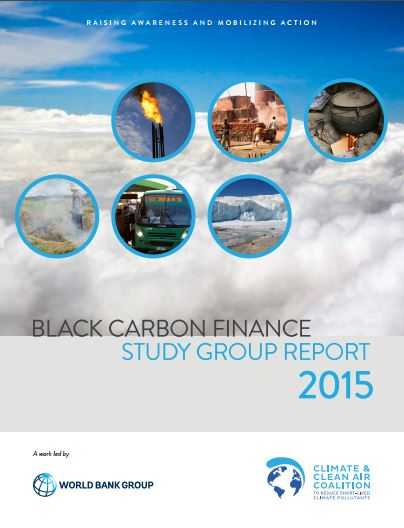
The Black Carbon Finance Study Group report finds that existing funds are already in a position to finance businesses, activities, technologies, and policies that will contribute to cutting black carbon emissions, and that several black carbon-rich sectors are sufficiently mature to absorb finance. The report also outlines key strategies and steps needed to scale up black carbon finance over time.

The United Nations today announced a campaign to encourage young people to step up their actions to address climate change and ensure a sustainable and happier future for all.
The campaign is launched in partnership with the Angry Birds – the globally renowned mobile game characters – to make a direct link between tackling climate change and people’s happiness and well-being on the occasion of the International Day of Happiness.
[video:https://youtu.be/c6p7jxpzwhs]
“The Angry Birds have entertained millions of people around the world – and now they are part of making the world a better place,” said Secretary-General Ban Ki-moon, who appointed Red of the Angry Birds as an Honorary Ambassador for Green at a launch event at UN Headquarters in New York.
“We are proud to give Red a reason to go Green. There is no better way to mark the International Day of Happiness than to have our animated ambassador raise awareness about the importance of addressing climate change to create a safer, more sustainable and happier future for all,” Mr. Ban said.
The campaign, in partnership with Sony Pictures Entertainment, the UN Development Programme and UN Foundation, asks the general public across the world to make the Angry Birds happy by taking actions on climate change and sharing their photos and commitments on social media platforms using the common hashtag #AngryBirdsHappyPlanet. By recycling, taking public transportation and conserving water, for example, individuals can share tips on how they can live sustainably and happily in their everyday lives.
As part of his ambassadorial duties, Red will go on a “virtual world tour” starting on 21 March, highlighting various ways to take climate action. His tour will take him to Paris, where countries adopted an historic agreement to address climate change in December, and will end in New York, where world leaders will sign the Paris Agreement at UN Headquarters on 22 April.
During the launch event, the voice actors from the upcoming Angry Bird movie, Jason Sudeikis, Josh Gad, and Maya Rudolph, and producers John Cohen and Catherine Winder gave hundreds of students gathered in the iconic UN General Assembly Hall a sneak preview of the #AngryBirdsHappyPlanet campaign materials, including public service announcements created to support the campaign. They also asked the young audience for their support to the campaign by doing their part to make a difference on climate change.
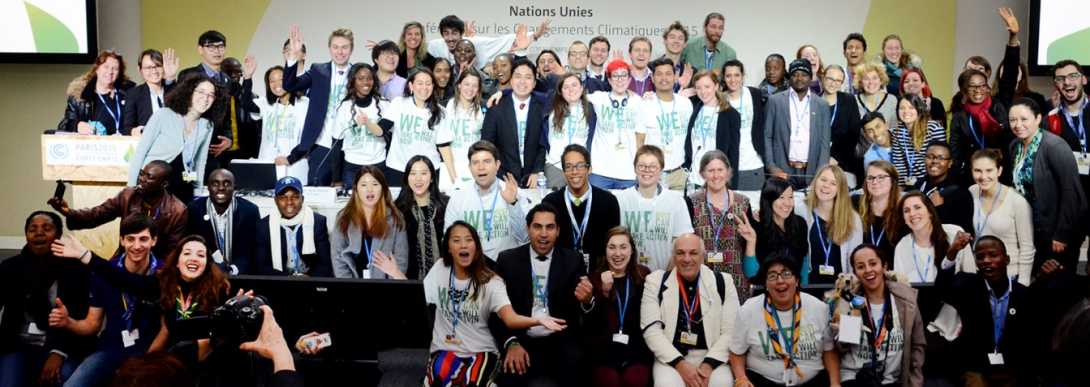
Last December, 195 countries reached an unprecedented agreement on climate change. Now that three months have passed since this victory, parties are faced with another, perhaps greater challenge: ensuring the implementation of the pledges made at the summit, now that the media spotlight and public attention has moved to other issues.
Bottom up initiatives will be crucial to achieving the goals set by each party, as climate change is a global challenge with local roots. Global youth have become a key actor at the local level, inspiring communities around the world to adopt environmentally friendly ways of living. All over the world, youth initiatives have grown, driven by determined young people eager to support climate action and have their say in COP negotiations.
This eagerness to impact change and be involved in deciding the future of our planet inspired Fannie Delavelle to set up an initiative aimed at bringing the voice of the global youth to the climate negotiations.
Young people from all around the world were invited to send her questions about climate change. She got lots of replies from every corner of the world: from Ethiopia to China, from Peru to Bulgaria, from the US to Australia, young professionals responded enthusiastically.
During the second week of COP21 in Paris, she asked high-level participants such as Rachel Kyte - CEO of Sustainable Energy for All and former Vice President of the World Bank- to answer their questions.
The Green and Smart Urban Development Guidelines provide a simple yet high-quality formula to set a new default for Chinese cities.
City life in today’s China is taking new shapes. Chenggong, a new city district outside of Kunming, is being built in small blocks to tilt transportation towards walking and away from driving. Board a bus in Guangzhou, and the doors open all at once in subway-like fashion before the bus motors down an exclusive BRT lane, cutting congestion and costs. Other neighborhoods, such as Liuyun Xiaoqu, are reinventing their cityscapes by creating car-free zones where pedestrians can walk and shop without the hazards and omnipresent pollution of cars.
While we are continuously learning more about what makes human habitats both livable and sustainable, a consensus has emerged on the most foundational and necessary design principles. Last year, China Development Bank Capital, Energy Innovation, and Energy Foundation created the Guidelines for Green and Smart Urban Development to outline these design principles. The guidelines are highly aligned with the Chinese government’s recent efforts to redirect cities away from sprawl and towards sustainability.
We found that there are 12 that are the most important for urban designers, planners and developers to incorporate into the planning stage. Our approach quantifies these principles to prevent greenwashing. The beauty of these design principles is that they are simple – anyone can understand them and evaluate the sustainability of their own city.
Please download the full report here for details on metrics, best practices, and case studies.
Here is a quick rundown of our 12 Green Guidelines:
1. Urban Growth Boundary: We recommend that every city has an urban growth boundary to prevent sprawl, encourage infill development, and preserve natural resources.
2. Transit-Oriented Development: Transit capacity must be matched to density. This provides better access to public transit and decreases car use. Ensuring that the greatest number of people have access to the best transit options is vital to decreasing car use.
3. Mixed-use: The intermingling of residential, commercial, and residential uses guarantees residents access to amenities. We recommend that all residents should be at least within 500-meter radius of at least five basic amenities.
4. Small Blocks: Small blocks create a dense mesh of narrower streets and paths that are more pedestrian friendly. They shift people away from cars, which can also improve air quality. They also optimize the flow of traffic.
5. Public Green Space: Attractive public spaces can bring vitality to any city space. Oriol Bohigas, a famous Spanish urban planner, said that “public space is the city.” Without enough public green space, high levels of density can make urban areas feel crowded and uncomfortable. Green space also improves local air quality.
6. Non-motorized Transit: Of the Theory of Relativity, Albert Einstein said, “I thought of that while riding my bike.” The most attractive cities in the world emphasize the pedestrian environment at a human scale. Walking and biking require less energy than any other type of transportation. Before cars, cities were designed for people. For example, as shown in the photo below, older areas in Shanghai tend to have more people-friendly design characteristics that make them more walkable, bike-friendly, and livable than newer areas.
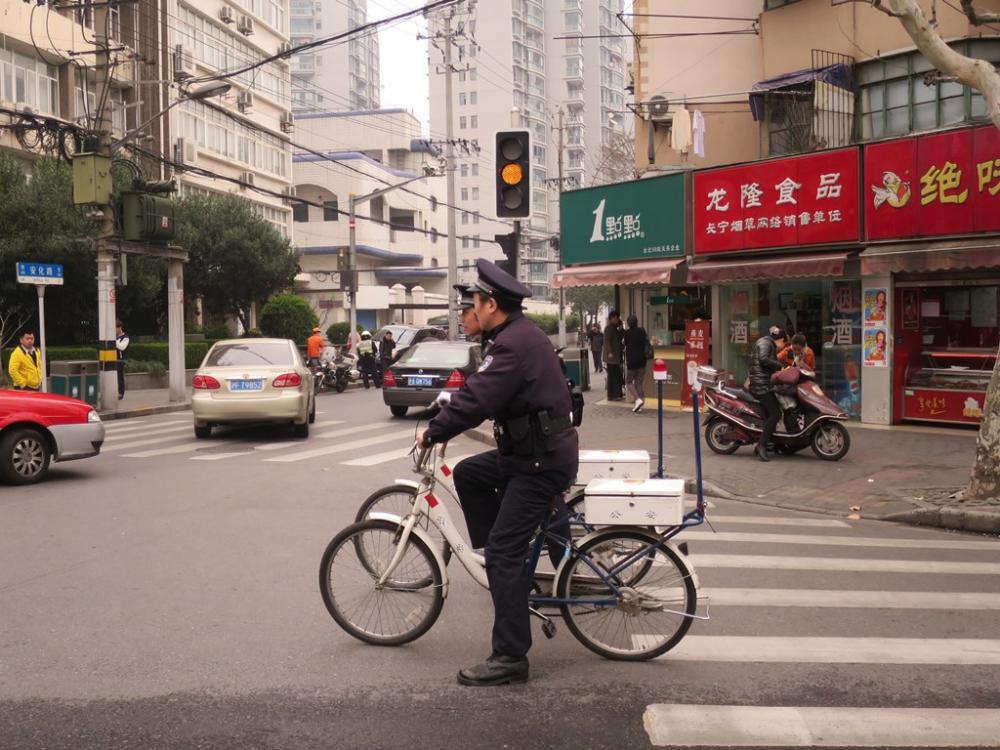
Older parts of Shanghai boast narrower roads, more storefronts, and well-designed sidewalks and pedestrian crossing areas (Source: CC Huang).
7. Public Transit: If public transit is a first-class option, people will often choose not to drive. However, public transit must be well-integrated with biking and walking to solve the “last-mile” question of how people will get to their final destinations.
8. Car Control: Even with just one-tenth of Chinese currently owning a car, the major cities already have serious pollution and congestion. Car control will be essential to make streets safer for children and the elderly, alleviate costly congestion and pollution, and rejuvenate public space.
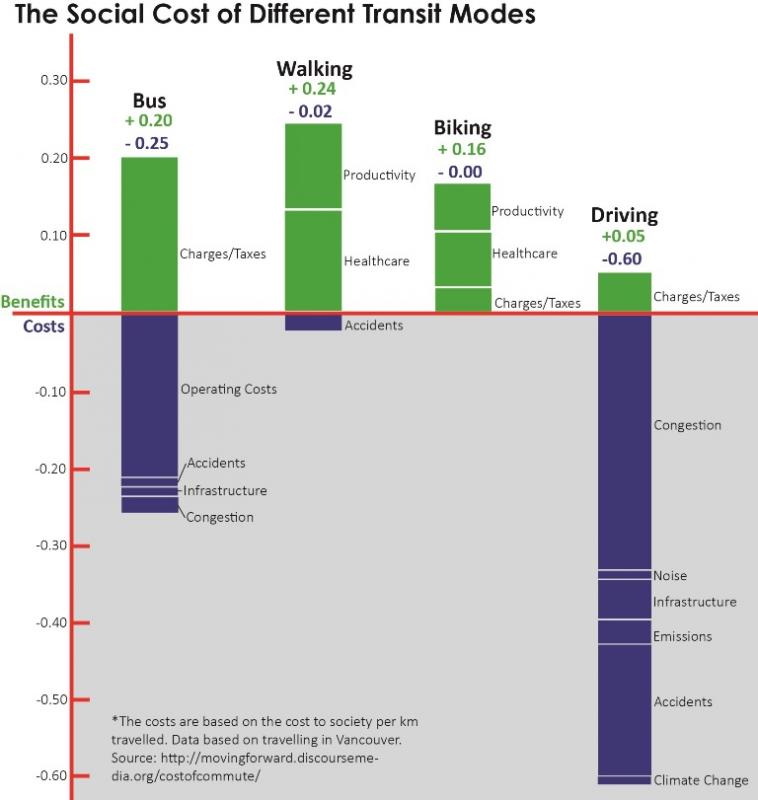
The social cost of driving is often not accounted for when cities are making economically based decisions around urban development (Source: CC Huang).
9. Green Buildings: Buildings account for a significant amount of urban emissions. Green buildings, especially when their energy use is properly monitored and managed, can mean significantly less emissions, improved air quality, and more comfort for users.
10. Renewable and District Energy: District energy can result in 30-50 percent reduction in primary energy consumption. Renewable energy is also falling rapidly in cost and increasing in efficiency.
11. Waste Management: For waste management to be sustainable, a significant amount of waste must be diverted from landfills. All buildings should have a waste classification system so that most waste is either composted or recycled.
12. Water Efficiency: Water-efficient fixtures, appliances, and plants can easily decrease water use. Buildings should implement water-saving appliances and green spaces surrounding buildings should use low water-use plants. Wastewater and rainwater should also be recycled and re-used.
Cities around the world have already put all 12 guidelines into practice, demonstrating their success in creating holistic sustainability, prosperity, and livability. Portland and Stockholm are two leading examples. Benefits include decreased climate impact, improved conservation, economic savings, and higher quality of life. Even car-centric cities like Los Angeles are now developing public transit and adding more biking and walking paths.
Chinese cities are also going green. Few have been able to put all of the pieces together as of yet, but new opportunities are arising. The 12 Guidelines are being implemented in a pilot project tin Shijiazhuang, the capital city of Hebei province, over the coming years. With the urban population expected to swell in China over the next 15 years, the guidelines offer these growing cities a roadmap for how to proceed towards a sustainable future.
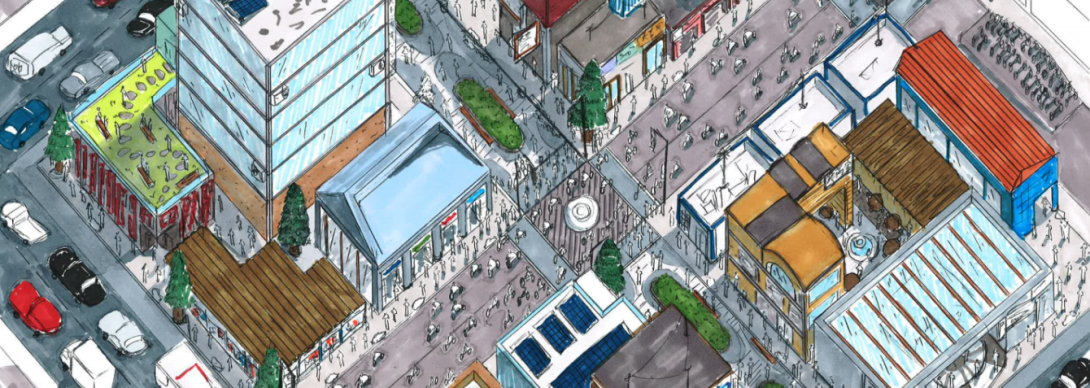
Banner image: This artistic rendition of a walkable urban area shows paths dedicated to biking and walking, small blocks, car control, and public space (Source: Boshi Fu).