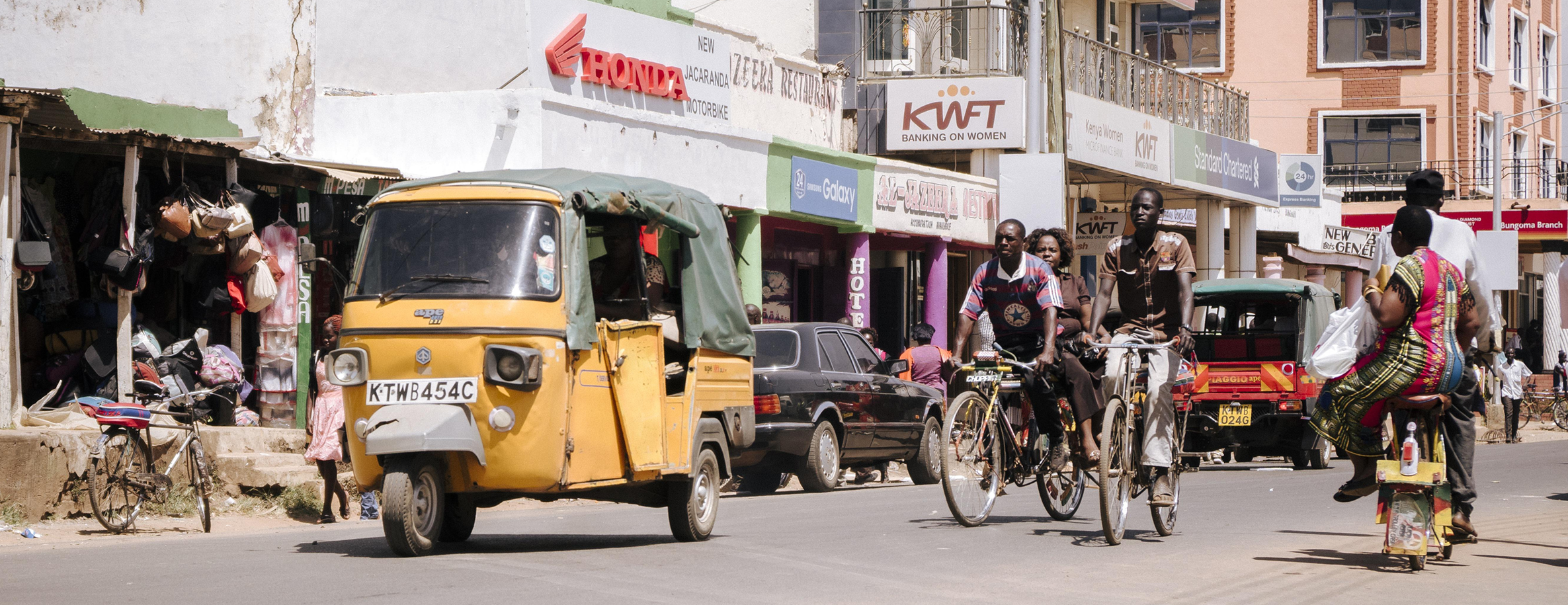
In Nairobi’s Mukuru slums, smoke-filled kitchens and unsafe appliances were once seemingly unavoidable risks of daily life. For Charlot Magayi, the turning point came when her two-year-old daughter suffered severe burns from a stove. Charlot’s grief resolved into determination, setting her on a path to reimagine household energy as a matter of health, safety, and dignity.
“My commitment to climate action began with a deeply personal moment,” Charlot reflects. “That experience was devastating, and it forced me to confront what I had grown up surrounded by in Mukuru.”
In 2017, Charlot founded Mukuru Clean Stoves, a social enterprise built on the belief that families deserve safe, affordable cooking solutions. What began as a community-rooted innovation has now reached millions across Africa, proving that transformative ideas often emerge from lived realities rather than privileged spaces.
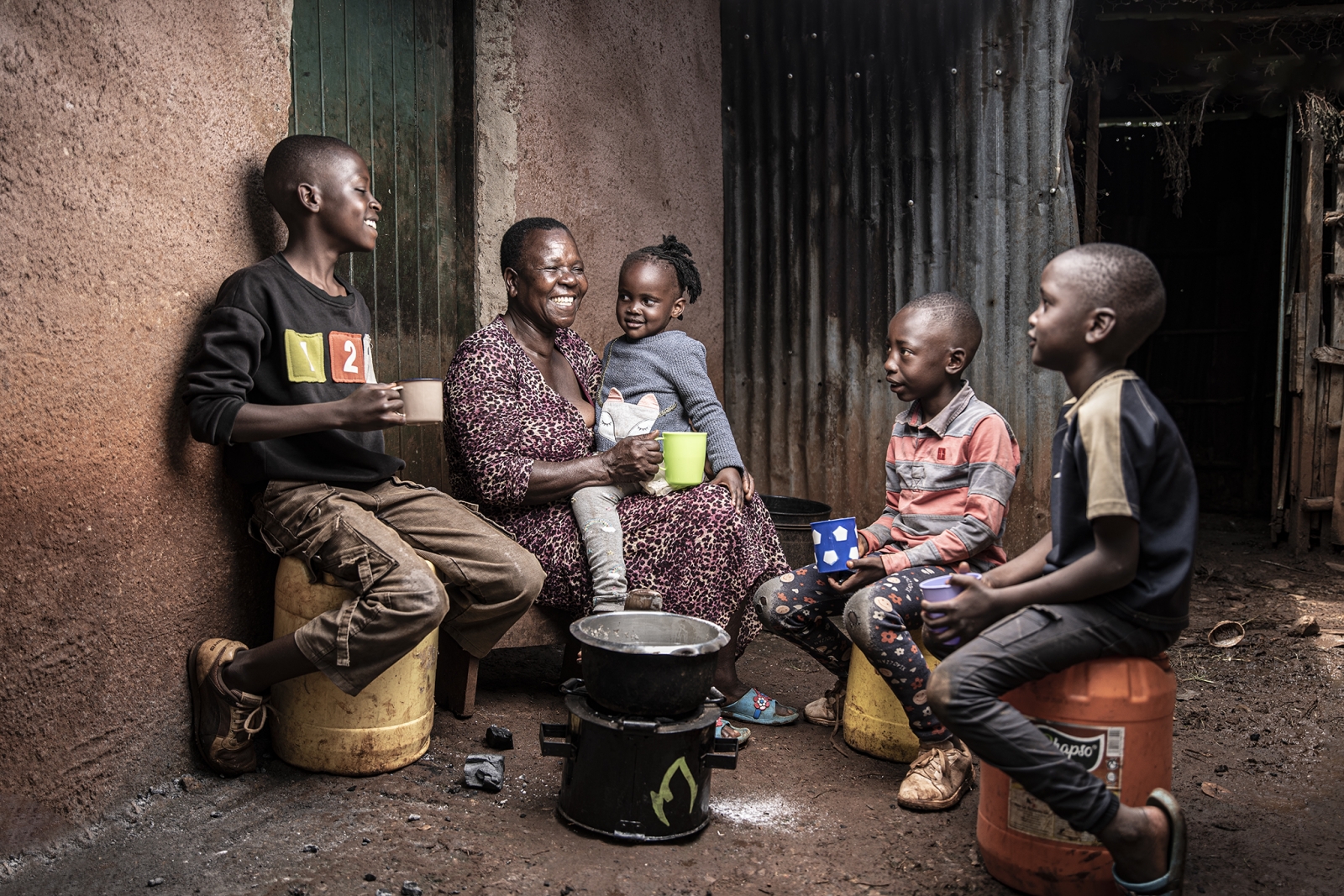
A family gathers around a Mukuru Clean Stove at their home in Kenya. (Credit: Charlot Magayi, Mukuru Clean Stoves).
Designing for Reality
Mukuru Clean Stoves begin with affordability. Stoves retail at $10, and they are distributed through women-led networks that ensure trust and accessibility. Manufacturing is local, using recycled waste metal, while Mukuru’s biomass briquettes offer a sustainable, cleaner-burning alternative to traditional solid fuels.
This patented mosquito-repellent fuel exemplifies the business’s creativity, addressing not just air pollution but also malaria, a daily risk in many communities. Such innovation results in practical solutions that people can afford, trust, and use every day. “The communities we serve live with overlapping risks,” Charlot notes. “Recognition is meaningful, but the moments I hold closest are the quiet ones: when families tell me their home finally feels safe.’’
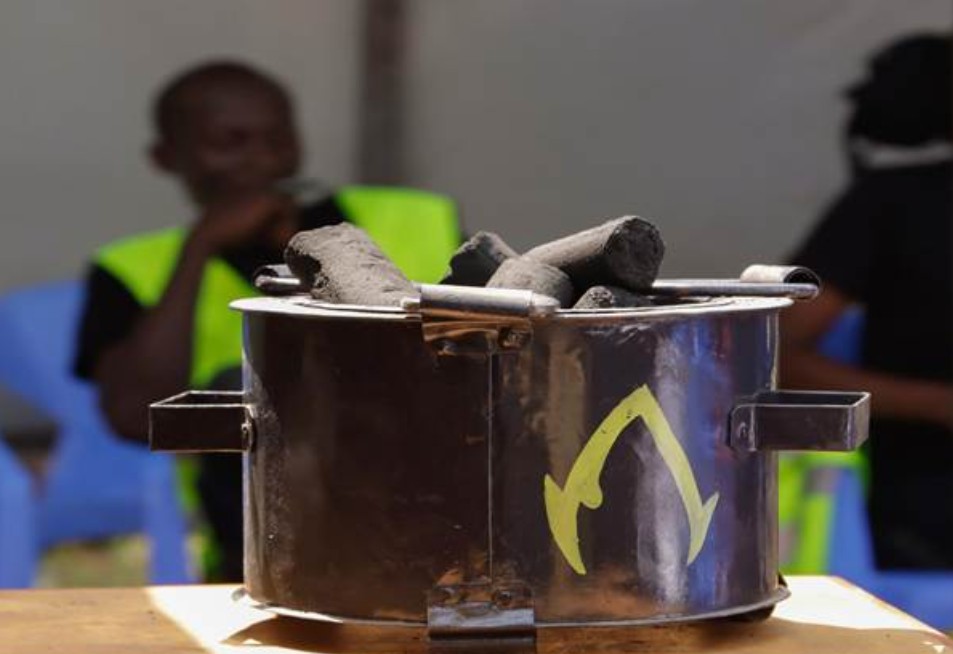
A Mukuru Clean Stove and fuel briquettes on display during a demonstration (Credit: Charlot Magayi, Mukuru Clean Stoves).
Numbers That Tell a Powerful Story
Since 2017, Mukuru Clean Stoves has sold 850,000 stoves, reaching 4.25 million people. Data from the Company reveals the following outcomes:
- Health: 40% reduction in serious stove burns among children.
- Environment: 3.4 million tonnes of CO₂ emissions avoided.
- Disposable income: $100 million saved collectively by households through reduced fuel costs.
- Livelihoods: Over 2,000 jobs created, primarily for women and youth.
- Time management: Women spend 50% less time collecting fuel and cooking, saving an estimated 100 million hours.
These results resonate globally. According to the WHO, 2.1 billion people worldwide still cook with open fires or inefficient stoves, causing 2.9 million deaths annually, including over 309,000 children under five. The International Energy Agency reports that more than 2 billion people lacked access to clean cooking in 2023, and household air pollution is linked to 3.7 million premature deaths each year.
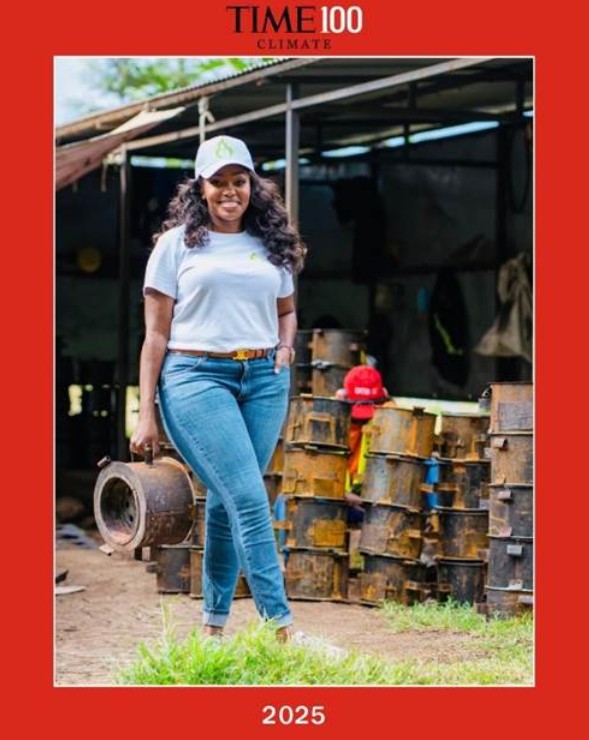
Charlot Magayi was included in the 2025 Time100 Climate list (Photo Credit: charlotmagayi.com)
Carrying Forward a Legacy of Leadership
Charlot Magayi’s vision is deeply shaped by women who have demonstrated courage and integrity in leadership. She cites Wangari Maathai as her greatest role model, admiring how Maathai stood firm in her principles and championed community-driven environmental action even when faced with resistance. For Charlot, Wangari’s example proves that women can lead transformative change grounded in everyday realities. She also draws inspiration from Indra Nooyi’s My Life in Full, a book she treasures for its candid exploration of resilience, leadership, and scaling impact without losing sight of core values. Together, these influences speak to the foundation of Charlot’s mission: courage, integrity, and a commitment to building enduring change.
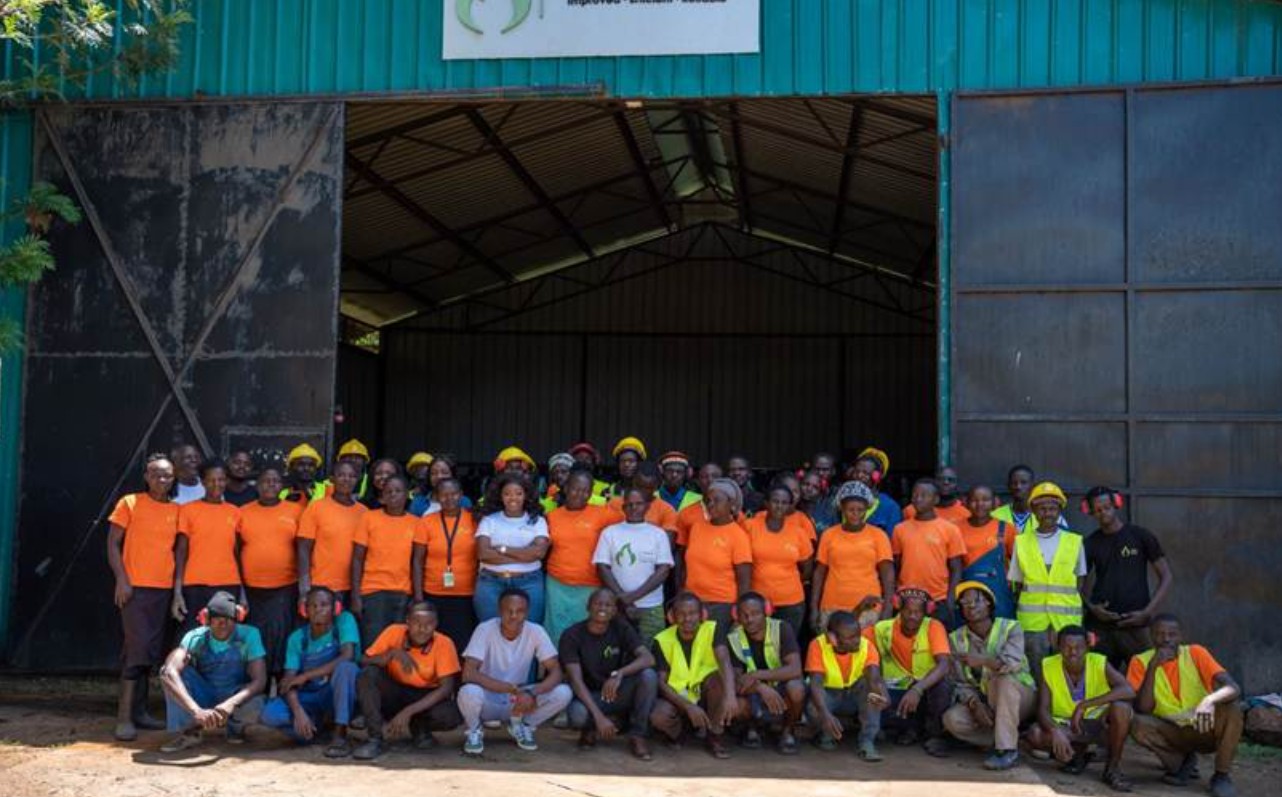
The Mukuru Clean Stoves team at the company’s headquarters and cookstove factory in Kalandin, Siaya County, Kenya (Credit: Charlot Magayi, Mukuru Clean Stoves).
Breaking Through Barriers
Unsafe cooking practices are deeply normalized in informal settlements, making behavior change difficult. Affordability is paramount — even small price increases can exclude families — and trust at the household level is essential, since clean cooking enters the most intimate space of daily life.
Charlot’s strategy has been to embed solutions within communities: local manufacturing, distribution through women entrepreneurs, and designs that match real cooking practices. Her insight is clear: “If a solution is clean but people can’t afford it, it won’t scale. And if communities don’t have ownership through jobs, local manufacturing and entrepreneurship … it won’t last.”
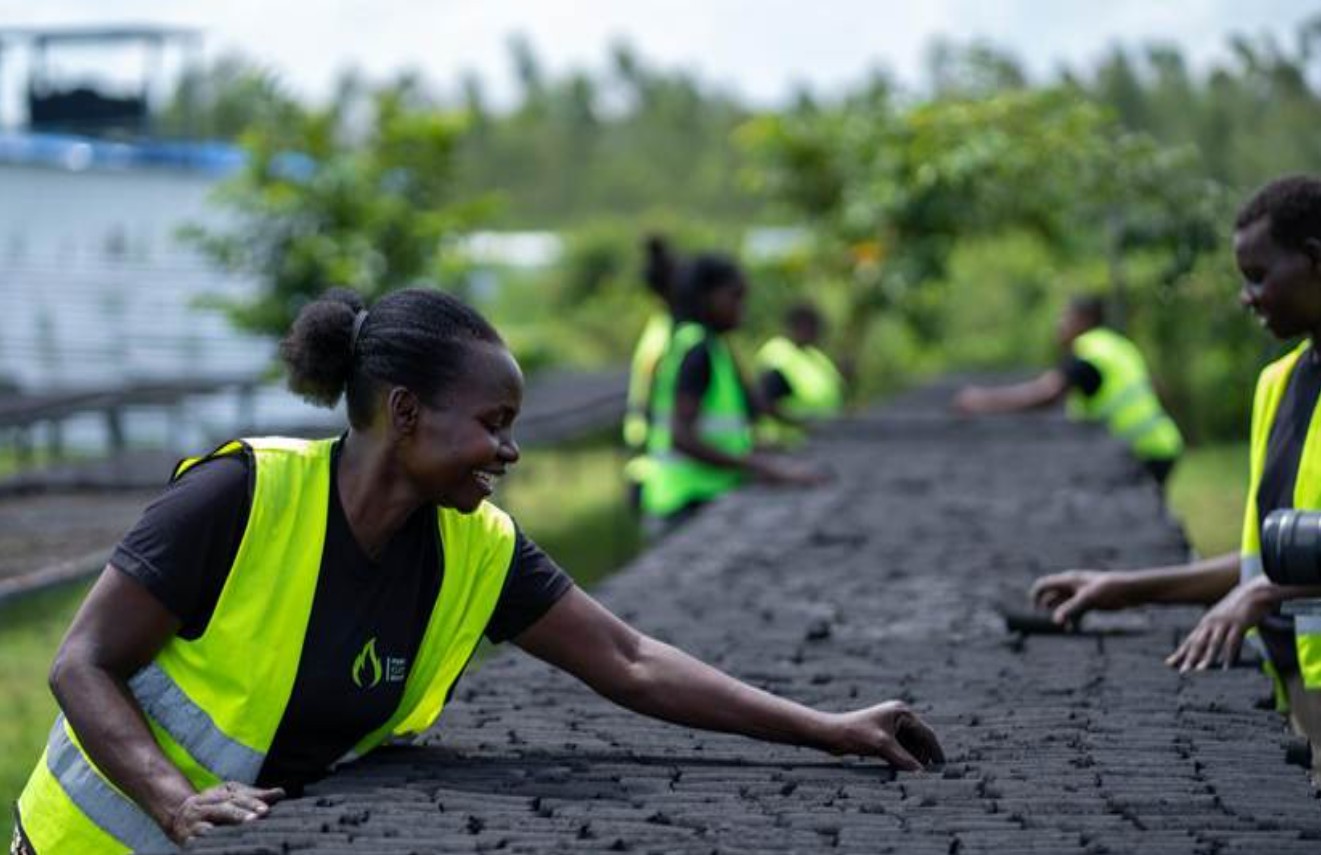
Mukuru Clean Stoves workers place briquettes on drying racks at the Company’s Sustainable Energy Campus in Homa Bay, Kenya (Credit: Charlot Magayi, Mukuru Clean Stoves).
Scaling Responsibly
Looking ahead, Mukuru Clean Stoves is expanding production capacity in Kenya and Ghana to meet growing demand across East and West Africa. At the same time, the enterprise is building partnerships with public institutions to embed clean cooking into health and social services.
This ambition aligns with Sustainable Development Goal 7, which calls for universal access to affordable, reliable, sustainable, and modern energy by 2030. Current projections from the United Nations suggest only 77% of the global population will have clean cooking access by 2030, leaving nearly 1.9 billion people behind, including 1.1 billion in sub-Saharan Africa — Mukuru Clean Stoves’ model demonstrates how community-led innovation can help close this gap.
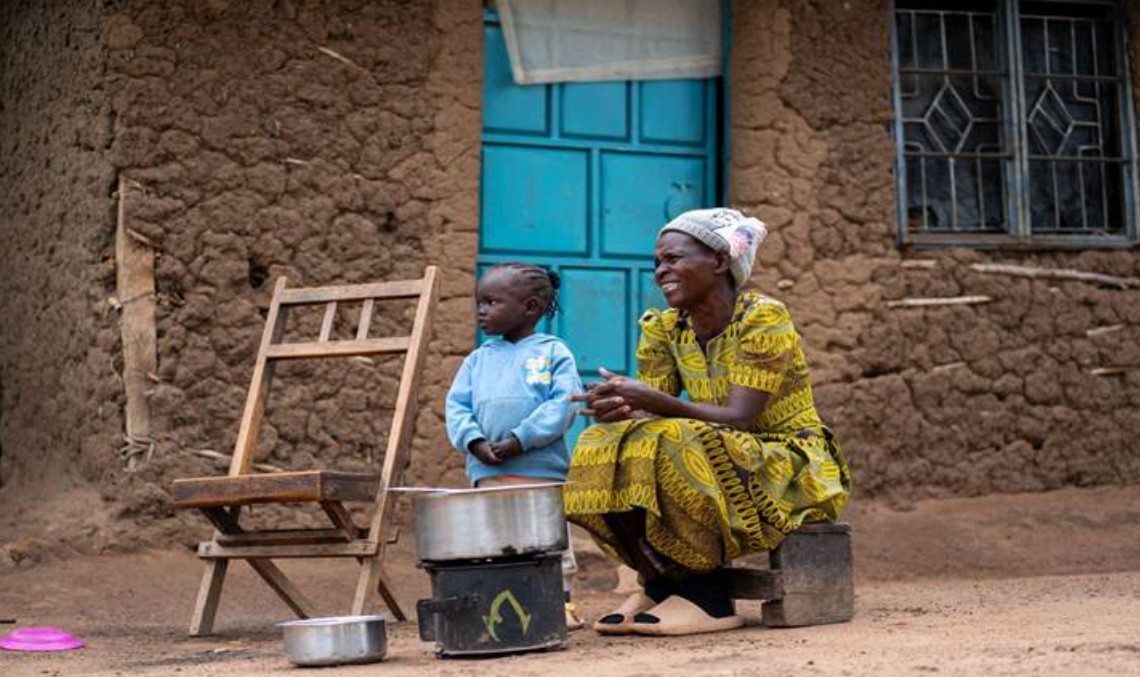
A mother and her child sit beside a Mukuru clean stove outside their home in Siaya, Kenya (Credit: Charlot Magayi, Mukuru Clean Stoves).
Lessons for Other Young Leaders
Charlot’s journey offers lessons for entrepreneurs and policymakers alike. First, innovation must be grounded in lived experience. Second, affordability is not an afterthought — it is foundational. And finally, community ownership is essential for durability.
Her advice to those looking to follow in her footsteps is pragmatic: start with a problem you know closely, build with the people living it, and design for reality. “Coming from Mukuru doesn’t make your vision smaller — it makes it real,” she asserts.
You can connect with Charlot via LinkedIn to follow her journey and learn more about her work in clean cooking and sustainability. And if you know of any other young innovators I should interview, reach out to me there as well!
Ezinne is a passionate advocate for sustainable development and human rights, actively contributing to global initiatives led by PwC, the UN, and the World Bank, among others. She has received international recognition for leadership and innovation and has represented her native Nigeria at global climate fellowships. With a strong interest in technology-driven solutions, Ezinne supports Micro, Small, and Medium Enterprises (MSMEs) and shares insights through global platforms like the UN and Google Women Tech Makers.
Banner image courtesy of Tri Le, Pixabay.